Best 24VDC to 220VAC Inverter Solutions for Home, RV, and Off‑Grid Power
Discover reliable 24V DC to 220V AC inverters designed for home backup, RV life, and off‑grid solar setups. This guide highlights five top models, explaining who each is best for, what to watch for, and practical usage tips. Whether you need a compact unit for a camping trip or a heavy‑duty inverter for a full household load, these options cover a range of wattages and protections to help protect your devices and keep power flowing. The buyer‑friendly comparisons below focus on output, efficiency, protections, and ease of use.
| Product | Continuous Power | Peak Power | Best For |
|---|---|---|---|
| VariCore 1800W Pure Sine Wave Inverter | 1800W | 3600W | RV and mobile setups with moderate loads |
| BAIYITONGDA 6000W Pure Sine Wave Inverter | 3000W | 6000W | Heavy loads, off‑grid houses, big appliances |
| Y&H 4200W Solar Inverter | 4200W | **6000W** | Off‑grid homes with solar integration |
| JARXIOKE 4000W Pure Sine Wave Inverter | 4000W | 8000W | Family vehicles and RVs with multiple outlets |
| Upgraded 10000W Pure Sine Wave Inverter | 10000W | 12000W | Large off‑grid systems and whole‑home backups |
VariCore 1800W Pure Sine Wave Inverter
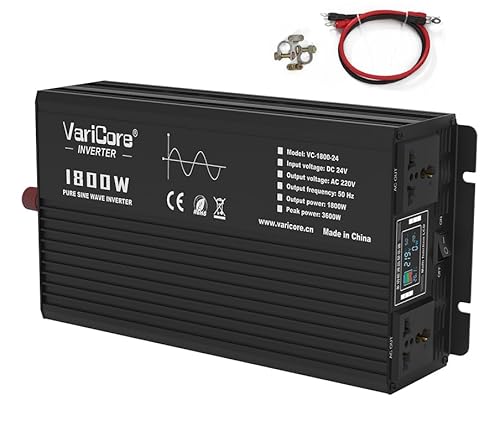
This 24VDC to 220VAC inverter delivers 1800W continuous power with 3600W peak, using pure sine wave output. It is designed to protect connected electronics with LED indicators for low voltage, overvoltage, overtemperature, and overload, plus short‑circuit indication. The unit includes cooling and a ground fault circuit breaker (GFCI) for safety. It is best for mobile and light home backup where quiet operation and clean power are important. A limitation is its moderate continuous rating, which may restrict larger appliances during peak demand.
BAIYITONGDA 6000W Pure Sine Wave Inverter

This inverter supports 12V, 24V, 48V, 60V, and 72V DC inputs with 110/120V and 230V AC outputs. It claims high efficiency (>90%), with pure sine wave output of up to 3000W continuous and 6000W peak. It includes protections for short circuits, over/under voltage, overload, and overheating, with a durable aluminum housing. Choose this for demanding off‑grid loads or larger vehicle setups. A potential drawback is the higher size and weight relative to smaller models.
Y&H 4200W Solar Inverter with MPPT

This all‑in‑one solar inverter combines a 4200W pure sine wave inverter with a built‑in 120A MPPT charger. It outputs single‑phase 230VAC and supports up to 6200W PV input power, with a wide PV voltage range and cold‑start function. It includes built‑in protection devices and lightning protection for safer wiring. Best for off‑grid systems that rely on solar, with multiple charging modes. Limitations include a complex configuration that may require careful setup for optimal MPPT performance.
JARXIOKE 4000W Pure Sine Wave Inverter

This model provides 4000W continuous power and 8000W peak, delivering true pure sine wave with high efficiency (>90%). It features remote control, LED indicators, and protections for overload, short circuit, and overheat. It suits vehicle or home setups needing reliable power with remote operation. A caution is that the remote control range and setup require attention to initial wiring and safety checks before use.
Upgraded 10000W Pure Sine Wave Inverter

This high‑power inverter converts 12/24/48V DC to 110/120/220/240V AC with 95% efficiency. It includes an LCD display showing battery voltage, output voltage, load, and warnings, plus protections for overvoltage, undervoltage, overload, over‑temperature, and short circuits. Best for large off‑grid or backup systems with substantial continuous loads. A limitation is the increased footprint and potential heat generation at maximum output, requiring adequate venting.
Buying Guide
What size should you choose? Match inverter continuous power to the expected running wattage of your devices, with a margin for startup surges. If you use many appliances at once, consider higher continuous watts and a higher peak rating.
What about pure sine wave vs modified sine wave? Pure sine wave inverters deliver clean power suitable for sensitive electronics and motors, reducing noise and wear. This is typically better for laptops, TVs, and medical devices.
Which protections matter? Look for low voltage and overvoltage protection, overload and short‑circuit protection, overtemperature protection, and, when possible, GFCI or leakage protections for safety in wet or damp environments.
How important is MPPT charging if you have solar? An MPPT charger optimizes solar input, improving charging efficiency and overall system performance, especially in variable sunlight conditions. Ensure voltage ranges and input power align with your panels.
Portability vs. capacity: Smaller units are easier to transport for camping or road trips, while larger units are suited to stationary setups or RVs with multiple high‑wattage devices. Factor weight, size, and mounting options into your decision.
FAQ
- What is the difference between continuous and peak power in inverters?
Continuous power is the steady output the inverter can sustain, while peak power is the maximum short‑term output during startup or brief surges.
- Do all these inverters require a battery for operation?
Yes. All 24V DC to 220V AC inverters need a 24V (or compatible) DC source, typically from a battery bank or vehicle battery system.
- Is a pure sine wave inverter necessary for home appliances?
Not always, but it’s recommended for sensitive electronics and high‑load appliances to prevent damage and ensure smooth operation.
- Can I run a microwave or air conditioner directly from these inverters?
Many can handle basic loads, but high‑wattage appliances require a high‑capacity inverter and adequate cooling. Check the maximum continuous power and surge ratings.
- What safety protections should I look for?
Protective features include overvoltage/undervoltage protection, overcurrent/short‑circuit protection, overtemperature protection, and ground fault or leakage protection where applicable.