Best Pre Insulated Underground Heating Pipe Options for Winter Protection
For homeowners and professionals seeking reliable underground pipe freeze protection, pre insulated underground heating pipe systems offer efficient, inside-the-pipe or line-side solutions that reduce heat loss and prevent bursts. This guide highlights five strong choices, explains who they’re best for, and compares key features. Use the buying guide to choose based on installation type, pipe material, and required length. The top picks cover in-pipe self-regulating heat cables and insulated pipe assemblies ideal for underground or enclosed runs.
Summary table of selected products
| Product | Best For | Length | Key Pros | Notable Limitation |
|---|---|---|---|---|
| HEATIT NSF/ANSI/CAN 61 Certified Heating Cable — 150FT | Underground or enclosed pipe runs | 150 ft | NSF61 certified, in-pipe installation, durable fluoropolymer sheath | Long length may require careful routing |
| HEATIT In Pipe Heating Cable — 85FT | Hidden or underground pipes | 85 ft | In-pipe installation, self-regulating, reliable protection | Install inside the pipe only; needs suitable pipe size |
| HEATIT NSF/ANSI/CAN 61 — 65FT | Drinking water safety with pipe protection | 65 ft | Comprehensive certification, in-pipe design, durable | Shorter length than some broader runs |
| TOPDURE In-Pipe Heating Cable — 10FT | Small or difficult-to-reach underground sections | 10 ft | CSA NSF61 certified, fast protection, self-regulating | Very short length; best for localized sections |
| Heat Mizer Insulated PEX Pipe — 50ft | Outdoor underground or exposed outdoor boiler lines | 50 ft | Three-layer insulation; reduced heat loss | Not a self-contained heat trace; insulation-focused |
HEATIT NSF/ANSI/CAN 61 Certified Heating Cable for Drinking Water
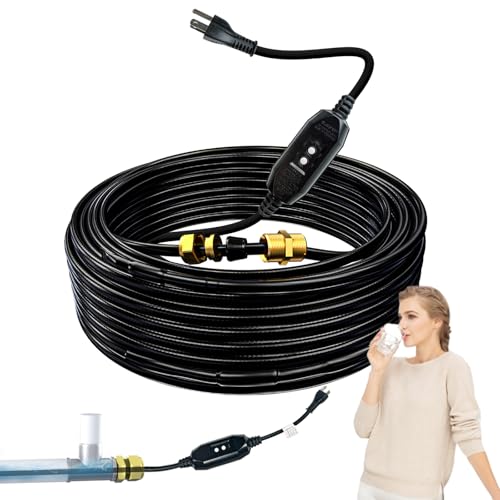
In-pipe self-regulating heating cable designed for underground or enclosed pipelines. The entire cable carries CSA NSF61 certification, ensuring water safety. The fluoropolymer sheath is built for durability in harsh environments, delivering long-term pipe protection. This model is best for projects requiring inside-pipe installation in drinking-water lines where safety certifications are essential.
Best for: Projects prioritizing fully certified drinking-water safety and hidden pipe protection. It is chosen for its robust certification and in-pipe design, which minimizes exposed components.
Limitation: Its longer length is great for long runs but may require careful routing and containment within existing conduits.
HEATIT In Pipe Heating Cable — 85FT
This in-pipe self-regulating heating cable is built for underground or concealed pipelines. It emphasizes inside-pipe installation to protect water lines from freezing while staying hidden from external damage. The cable adjusts heat output based on temperature, supporting energy efficiency and longer life.
Best for: Hidden or underground pipes where external heating elements aren’t feasible or desirable.
Caution: Ensure pipe interior dimensions allow for the cable’s placement and that complete internal installation is practical for the project.
HEATIT NSF/ANSI/CAN 61 Certified Heating Cable — 65FT
Another in-pipe heating option with full NSF61 certification and a fluoropolymer sheath. It’s designed for underground or enclosed installations where external exposure is minimized. The 65-foot length makes it suitable for moderate runs without excessive cable volume.
Best for: Moderate-length underground runs needing certified drinking-water safety with in-pipe protection.
Limitation: Shorter than the 150 ft option, which may require two sections for longer networks.
TOPDURE In-Pipe Heating Cable — 10FT
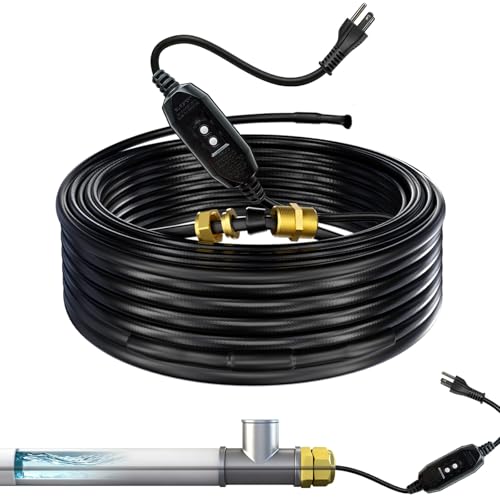
CSA NSF61 certified in-pipe heat trace designed for hidden or underground installations. Its self-regulating technology adjusts heat with ambient temperature, offering efficient protection and energy savings. The 10-foot length is ideal for targeted sections or short runs where the main line is already protected.
Best for: Quick arrests of freezing risk in tight or difficult-to-reach sections. Choose this if you need precise, localized protection.
Caution: The short length means it’s not suitable for long stretches without additional cable sections.
Heat Mizer Insulated PEX Pipe — 50ft

Insulated PEX pipe designed for underground or outdoor boiler and heating lines. It features three layers of insulation to reduce heat loss and protect against freezing. While not a self-regulating cable, the insulation-focused design helps minimize heat loss along long runs and provides a practical alternative for reducing freeze risk.
Best for: Applications needing robust insulation around PEX piping to sustain warmth along underground routes. Avoid this if you specifically need an integrated heat trace; it’s insulation-first.
Buying Guide
Key considerations when choosing pre insulated underground heating solutions include installation method, certification, length, material compatibility, and budget.
- In-pipe vs. external heating: In-pipe cables protect pipes from inside, offering concealed protection; external cables are easier to retrofit but may be exposed.
- Certifications: For drinking-water safety, prefer products with CSA NSF61 or equivalent. Full-system certification (cable and plug) matters for true safety compliance.
- Length needs: Plan for total run length plus bends and connection points. Longer cables must be managed to prevent overheating at any single section.
- Material compatibility: Ensure the cable or insulation is compatible with pipe material (PVC, copper, PEX, steel) and operating temperatures.
- Installation ease: Some models come with pre-assembled configurations or simple install kits; others require professional installation for internal routing.
- Energy efficiency: Self-regulating cables adjust heat output and can save energy, but overall efficiency depends on insulation and weather exposure.
Frequently Asked Questions
- What is the advantage of an in-pipe heating cable?
In-pipe cables heat directly from inside the pipe, reducing external exposure and often delivering faster freeze protection for underground runs. - Are these products safe for drinking water?
Yes, if they hold CSA NSF61 certification, indicating safety for drinking-water applications. - Do I need insulation with a heat cable?
Insulation helps minimize heat loss; pairing a self-regulating cable with adequate insulation improves efficiency. - Can I install these myself?
Some models are designed for DIY in-pipe installation, while others may require professional help for proper routing and safety compliance. - Which length should I choose?
Choose a length that covers the entire run plus a margin for bends and connections; longer runs may offer more even protection but require careful planning. - What is a limitation of very short cables?
Short cables are best for localized protection; for longer underground runs you’ll need multiple segments or a longer model.