Best RV Inverter Charger 3000 Watt: Top Off-Grid Power Picks
The best RV inverter charger 3000 watt combines a pure sine wave inverter, a battery charger, and a power-transfer switch into one compact unit. This guide highlights five dependable models ideal for RVs, camping, and off‑grid homes. It targets buyers seeking reliable surge power, compatibility with multiple battery chemistries, and simple installation. Each pick is best for specific uses—whether you need quiet operation, remote control, or strong peak performance. The following summary table helps compare core features at a glance.
| Product | Brand | Continuous Power | Battery Types | Special Note |
|---|---|---|---|---|
| Ampinvt 3000W | AMPINVT | 3000W | SLA/AGM/GEL/Li‑ion | High transfer efficiency; LCD display |
| VEVOR Pure Sine Wave | VEVOR | 3000W | LiFePO4/Lithium/Gel/AGM etc. | 5 smart modes; low noise |
| BELTTT 3000W | BELTTT | 3000W | 12V lead-acid varieties | Dual AC outlets; USB and remote |
| Redodo 3000W | Redodo | 3000W | Lithium & Various Batteries | Integrated UPS; 45A charger |
| Renogy REGO 3000W | Renogy | 3000W | Gel/AGM/SLD/FLD/LiFePO4 | Bluetooth monitoring |
Ampinvt 3000W Peak 9000W Pure Sine Wave Inverter Charger

The Ampinvt model integrates an inverter, battery charger, and AC auto-transfer switch for smooth power switching. It features a continuous pure sine wave output with high transfer efficiency (above 90%) to protect sensitive appliances. Suitable for RVs, campers, and small off-grid setups that demand reliable surge handling. Battery type selection supports SLA, AGM, GEL, and Li-ion, with a configurable charging current (0–35A). Best for users needing robust surge support and a versatile battery strategy. Caution: charging current can be left off by setting to 0A, which disables charging.
VEVOR Pure Sine Wave Inverter Charger, 3000W
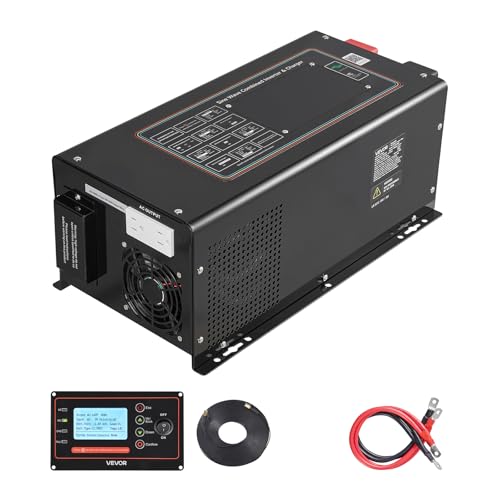
The VEVOR unit delivers 3000W continuous pure sine wave output with an LCD display and remote control. It supports multiple battery chemistries including LiFePO4, Lithium, Gel, AGM, and SLA. Features five smart operating modes (Unattended, AC Priority, Battery Priority, ECO, Generator) suitable for RV travel, camping, and home backup. Designed for quiet operation with less than 60dB noise, it is a strong choice for noise-sensitive environments. Best for flexible mode operation and quiet charging. Limitation: best performance when used with 12V battery systems within recommended load guidance.
BELTTT 3000W Pure Sine Wave Inverter

BELTTT’s inverter provides a steady 3000W continuous output from 12V DC to 110–120V AC, with peak surge up to 6000W. An intelligent LCD displays input/output voltages and battery/load status, with the option to adjust output voltage within a small range. It includes 2 AC outlets, a hardwire port, USB, and a remote controller. Best for RVs and off-grid homes that need easy monitoring and multiple connection options. Caution: higher surge handling relies on proper surge-capable loads to avoid overload.
Redodo 3000W Pure Sine Wave Inverter Charger
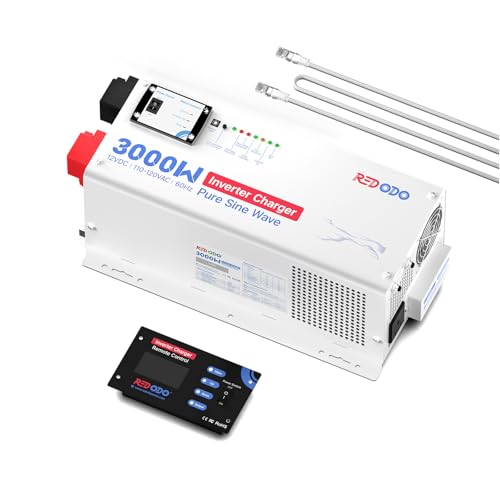
Redodo combines a 3000W inverter with a 45A charger to form an all-in-one UPS-like unit. It detects outages and switches to battery quickly, ensuring continuous power for essential devices. With a surge rating up to 9000W, it handles heavy loads such as air conditioners and refrigerators when used in off-grid or RV setups. Best for uninterrupted backup and compatibility with a wide range of battery chemistries including LiFePO4. Limitations: check charging current compatibility with your battery bank to maximize efficiency.
Renogy REGO 3000W Pure Sine Wave Inverter Charger

The Renogy REGO offers 3000W continuous output with up to 9000W surge and an efficiency greater than 90%. It supports a broad battery lineup, including Gel, AGM, SLA, FLD, CAL, and LiFePO4, with user-customizable charging modes. Built-in Bluetooth enables monitoring via the Renogy App, and it’s compatible with Renogy ecosystem accessories. Best for tech-savvy users who want app-based monitoring and flexible battery compatibility. Caution: ensure your Bluetooth setup aligns with Renogy’s app ecosystem for optimal use.
Buying Guide
What to consider when choosing a 3000W RV inverter charger
- Power needs: Evaluate continuous power and peak surge. Choose a unit with a higher surge rating if you frequently start heavy loads like air conditioners or power tools.
- Battery compatibility: Confirm which battery chemistries you plan to use (LiFePO4, GEL, AGM, SLA, CAL) and pick a model with broad compatibility.
- Efficiency and heat: Higher efficiency reduces heat and energy loss. Look for units with safeguards against overheating and high transfer efficiency (>90%).
- Controls and monitoring: LCD displays and Bluetooth or app integration help you monitor battery status and load in real time.
- Modes and transfer behavior: Features like AC priority, battery priority, ECO mode, and unattended operation influence how smoothly power transfers when mains fail.
- Installation and space: All-in-one inverter chargers save space but verify mounting dimensions and wiring requirements for your RV or off-grid setup.
FAQ
- What does 3000W continuous power mean? It indicates the inverter can sustain 3000 watts of AC power continuously; peak power may be higher for short startup surges.
- Can I use these with LiFePO4 batteries? Yes, most models in this category support LiFePO4 and other common chemistries; check each product’s battery compatibility list.
- Do these units include a transfer switch? Yes, most integrate an automatic transfer switch to switch between mains and battery power without rebooting connected devices.
- Is pure sine wave necessary for sensitive electronics? Yes. Pure sine wave is gentler on electronics and reduces hum, flicker, and long-term wear.
- How do I size the charger in amps? The charger amperage (5–45A) should match or exceed your battery charging needs while staying within your battery bank’s limits.
- What maintenance is required? Regularly inspect wiring, monitor battery state of charge, and ensure ventilation to prevent overheating.