Best Carbon Monoxide and Gas Alarm Options for Home Safety
Answering your search for reliable carbon monoxide and gas alarms, this guide highlights top alarms that detect CO, natural gas, propane, and explosive gases. Best for homeowners, renters, travelers, and families seeking plug‑in or portable options with digital readouts and backup power. The following selections emphasize clear displays, easy installation, and strong screening for common household gas and CO risks. A concise summary table below helps you compare key features quickly.
Product Comparison Snapshot
| Product | Best For | Power | Display | Alarm Type |
|---|---|---|---|---|
| First Alert GCO1CN | Homes needing versatile CO and gas sensing | AC with backlight display | Backlit digital | Combined CO and gas alarm |
| Kidde Carbon Monoxide & Gas Alarm (Plug-in) | Homes with standard outlets and outages | AC with 9V backup | Digital LED | CO + explosive gas |
| Kidde AA Battery Portable CO Detector | Travelers or portable setups | Battery powered | LED indicators | Portable CO detector |
| Kidde Plug-in CO Detector with 2x AA Backup | Fixed installations requiring backup power | AC with AA backup | LED indicators, digital | Plug-in CO detector |
| Kidde COP Rotating Plug CO Detector | Flexible outlet orientation and travel use | AC with 2x AA backup | LED status, test/hush | Plug-in CO detector |
First Alert GCO1CN Combination Explosive Gas And CO Alarm

The First Alert GCO1CN combines carbon monoxide monitoring with detection for propane, natural gas, and methane. It features a crisp backlit digital display to view current CO levels and peak readings. It can be remotely muted using a compatible household remote control. Best for households needing both CO and gas detection in one device. Limitations include reliance on power for continuous operation; consider batteries or a backup if power outages are frequent.
Kidde Carbon Monoxide + Explosive Gas Alarm (Plug-in)
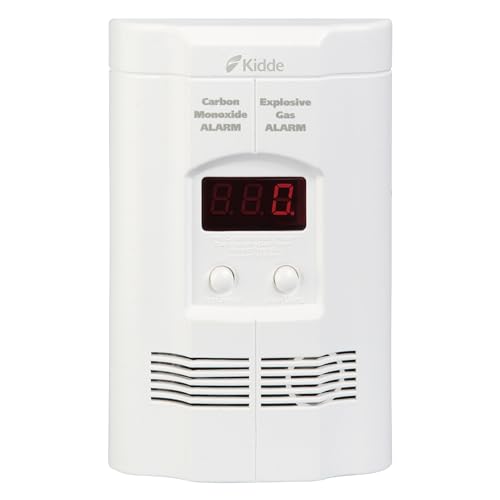
Designed for plug-in installation with a 9V battery backup, this Kidde model provides a digital LED display that shows CO levels and displays “GAS” when explosive gas is detected. It is ideal for rooms without easy access to outlets during outages. Best for houses with frequent power interruptions where continuous CO monitoring matters. Caution: ensure proper outlet spacing to avoid blocking second outlets or competing devices.
Kidde CO Detector (AA Battery Powered, Portable)
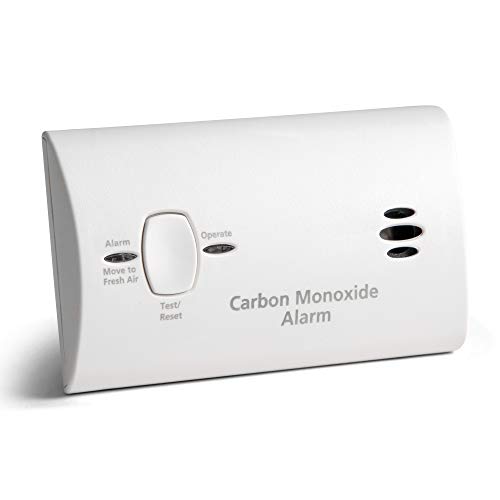
This portable CO detector runs on two AA batteries, making it suitable for travel or temporary placements around a home. It uses an electrochemical sensor and includes a green power indicator with an 85 dB alarm and red LED when CO is detected. Best for travelers or temporary setups where you want CO monitoring without permanent wiring. Limitation: battery life depends on usage; plan for replacement and carry spare units when traveling.
Kidde CO Detector Plug-in with AA Backup (85 dB)
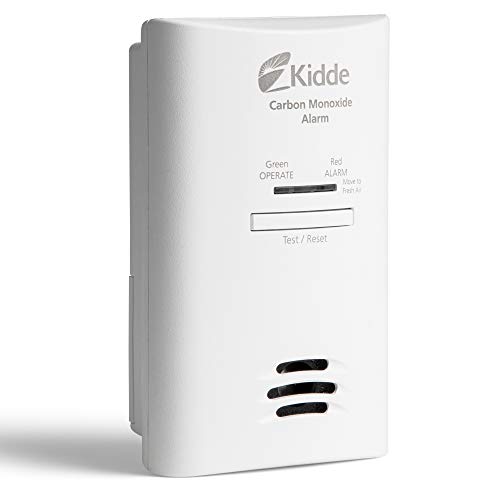
This plug-in CO detector offers a full 120V AC power source with AA battery backup for detection during outages and an 85 dB alarm. It includes a rotating plug to fit vertical or horizontal outlets and a straightforward LED status indicator. Best for fixed home installation, especially in living areas or hallways where a visible CO alert is essential. Caution: rotating plug may slightly protrude in tight spaces.
Kidde AA Battery Portable CO Detector
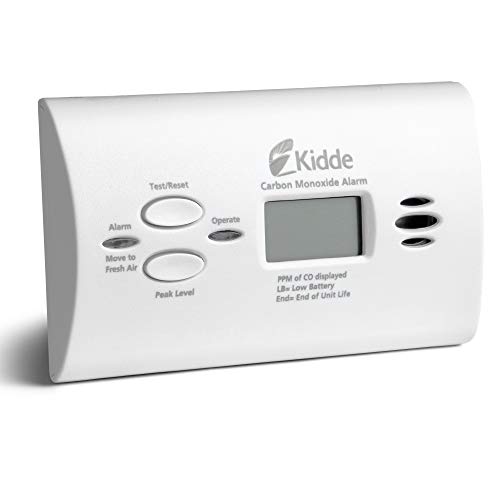
Operate on two AA batteries for portable carbon monoxide monitoring. The device provides portability for travel and temporary placements around a home. It is best for travelers or renters who need CO awareness in multiple spaces without dedicated power outlets. Limitation: not as robust for permanent, fixed installation as plug-in models.
Kidde COP Rotating Plug CO Detector

The COP model offers a rotating plug-in design with a 120V AC supply and two AA backups, along with LED warning lights and a test/hush feature. It is suitable for flexible outlet orientation and travel-friendly use. Best for users who want a plug-in detector that can adapt to different outlet configurations. Limitation: ensure outlet availability does not conflict with nearby devices or power strips.
Buying Guide: Key Purchase Considerations
- Power source and backup: Decide between plug-in with battery backup, battery-powered portable, or a hybrid. Backup power matters during outages.
- Sensor type and detection scope: Look for electrochemical CO sensors and gas detection for propane/natural gas. Some models combine CO with gas sensing in one unit.
- Display and alerts: A digital display helps monitor CO levels and gas status. Consider LED indicators and audible alarm levels (85 dB is common).
- Installation and form factor: Choose plug-in units for permanent placement or portable units for travel. Rotating plugs provide outlet flexibility.
- Indication of gas presence: Some models explicitly show “GAS” when explosive gas is detected, which can improve rapid response.
- Remote control compatibility: Some units offer remote muting or integration with household remotes; verify compatibility if this matters for your setup.
FAQ
- What is the difference between CO detectors and gas detectors?
CO detectors monitor carbon monoxide, a toxic gas from incomplete combustion. Gas detectors sense explosive gases like propane or natural gas. Some models combine both functions. - Do I need both plug-in and battery backups?
Backup power helps during outages, but a plug-in unit ensures continuous monitoring when power is available. A backup provides protection when power fails. - How should I place CO detectors in a home?
Install one on each level, near sleeping areas, and in rooms with fuel-burning appliances. Avoid placing them in closets or near air vents that may affect readings. - Are portable CO detectors sufficient for travel?
Portable detectors are useful for temporary monitoring or travel, but for full home safety, fixed plug-in or wall-mounted detectors are recommended. - What is a CO detector’s typical alarm level?
Most detectors alarm loudly at around 70-85 dB when CO reaches unsafe levels. Check the product’s specifications for exact thresholds. - How often should CO detectors be tested?
Test monthly using the test button, and replace units per manufacturer guidelines to maintain reliable sensing.