Best LED Power Supply Options for Your Lighting Projects
Answering the common question “which power supply works best with LED lighting?” this guide highlights five reliable 12V to 24V LED power supplies that balance output, safety features, and installation practicality. Ideal for homeowners, hobbyists, and small setups, these options cover compact wall plugs, bench-grade transformers, and compact slim designs for tight spaces. Below, you’ll find quick fit guidance, a side-by-side buyer table, and practical buying tips. Choose the model that matches your LED strip type, total wattage, and mounting constraints.
| Product | Brand | Output | Best For |
|---|---|---|---|
| ALITOVE DC 12V 5A Power Supply | ALITOVE | 12V, 5A (60W) | Medium LED strips, hobby projects |
| inShareplus 12V Power Supply | inShareplus | 12V, 2A (24W) | Low-power LED strips and electronics |
| PZETCEIR LED Driver 24V 150W | PZETCEIR | 24V, 6.5A (150W) | Higher-wattage LED lighting, cabinets |
| NIYIPXL LED Driver IP67 12V 60W | NIYIPXL | 12V, 5A (60W) | Outdoor/ damp environments |
| ALITOVE 360W Universal LED Driver | ALITOVE | 12V, 30A (360W) | High-current LED systems, CCTV, multi-strip setups |
ALITOVE DC 12V 5A Power Supply Adapter

Best for mid-size LED installations where 60W output suffices. This supply accepts 100–240V input and provides a 12V DC output with a 5A max, supporting 5050 and 3528 LED strip modules. It includes overload, over-voltage, and short-circuit protection. Suitable for hobbyists and small rooms with moderate strip runs.
Who it’s best for: DIYers and homeowners wiring under-cabinet lighting or accent strips requiring a compact, reliable 12V source. Caution: Check device current draw; exceeding 5A may trigger protection or overheat in some strips.
inShareplus 12V Power Supply 2A
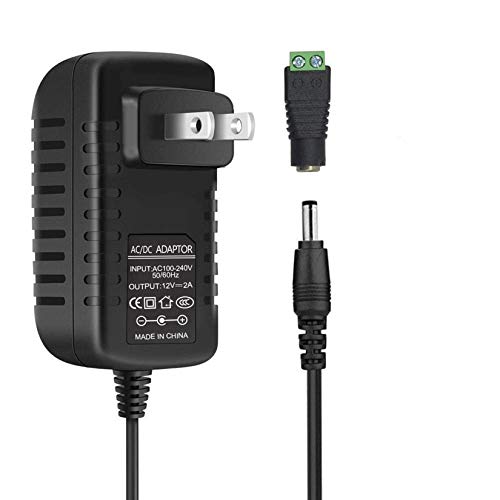
Best for compact LED strings and devices drawing up to 2A. This supply converts 110V–240V AC to 12V DC with a maximum 24W output. It’s a practical choice for 0–2A LED projects, SMD strip lights, routers, or small signage. Note that total wattage across connected LEDs must stay within the 24W limit.
Who it’s best for: small-room accents, desk setups, or projects needing a slim, simple 12V supply. Caution: Not intended for high-wattage strips; exceeding 24W reduces reliability or triggers protection.
PZETCEIR 24V 150W Slim Power Supply

Best for higher-wattage LED installations where a 24V system is preferred. This slim 23mm black metal model provides a stable 24V DC output up to 6.5A and 150W. It features efficient heat dissipation and a wide input range (100–250V). Ideal for cabinet lighting, signage, and longer LED runs.
Who it’s best for: projects needing more power in a compact form factor. Caution: Ensure compatible LED strip voltage and total current to avoid overloading the supply.
NIYIPXL LED Driver IP67 12V 60W
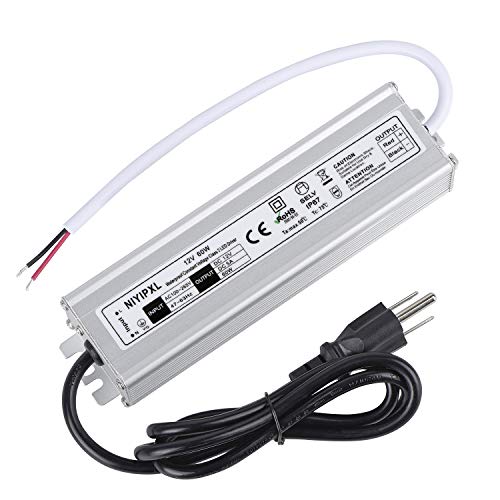
Best for outdoor or damp environments where IP67 protection is valued. This 12V DC driver offers up to 60W with short-circuit, overload, over-voltage, and over-temperature safeguards. The open-frame design helps with heat dissipation in exposed installations.
Who it’s best for: exterior lighting, garden LED accents, or waterproof installations. Caution: Ensure adequate ventilation and avoid enclosing the unit where heat can accumulate.
ALITOVE 360W Universal LED Driver

Best for high-current LED systems or multi-strip setups. This universal regulated switching power supply delivers up to 360W with a 12V output and 30A max across three channels. It provides robust voltage stability and standard safety protections. Suitable for CCTV systems, large installations, or multi-zone lighting.
Who it’s best for: projects requiring substantial headroom and flexible channel distribution. Caution: Larger footprint may limit mounting options in tight spaces.
LED LightsWorld 12V 2A 24W Power Supply (2 Pack)

Best for budget-conscious projects requiring two reliable 12V supplies with simple 5.5/2.1 DC connectors. Each unit delivers 12V at 2A (24W) and comes with power cords and connectors suitable for common LED strip setups. Non-dimmable and straightforward to install.
Who it’s best for: beginner projects, small rooms, or testing multiple strips. Caution: Do not exceed 24W per unit; distribute load across both units to avoid overloading a single supply.
Buying Guide
What to consider when choosing an LED power supply:
- Voltage compatibility: Most LED strips run on 12V or 24V. Match the supply voltage to your LED strip’s rating.
- Wattage headroom: Add 20–25% margin beyond the total wattage of your connected LEDs to prevent overheating and extend life.
- Current rating: Ensure the current (amps) does not exceed the LED strip’s draw. For higher-wattage runs, choose supplies with higher current limits.
- Form factor and mounting: Slim designs fit behind cabinets or inside enclosures; wall-mount or open-frame options suit exposed installations.
- Protection features: Overload, over-voltage, short-circuit, and auto-recovery protections improve reliability in varied environments.
- Input range: A wide input range (100–240V) is convenient for different regions and avoids swapping adapters.
- Environment: IP rating matters for outdoor or damp locations; consider heat dissipation and ventilation for high-wattage units.
Frequently Asked Questions
- What wattage should I choose for my LED strips? – Pick a supply with at least 20–25% more wattage than your total LED load to ensure safe operation.
- Is 12V always better than 24V for LED strips? – Not necessarily. Use the voltage your strips are rated for; 24V is advantageous for longer runs with less voltage drop.
- Can these power supplies run outdoors? – Only if they have appropriate protection (IP rating) and are installed per manufacturer guidelines.
- Do I need a dimmable supply? – If you plan to dim your LEDs, choose a dimmable driver compatible with your controller or dimmer circuitry.
- What is “open-frame” design good for? – It improves cooling in enclosed or hot spaces, but requires proper ventilation and mounting considerations.
- How do I prevent overloading a supply? – Calculate total load, distribute across channels if multi-output, and avoid wiring configurations that concentrate current.