Best Low Voltage High-Current Landscape Lighting Transformers for Outdoor Systems
Direct answer: If you need reliable, high-current capacity for outdoor landscape lighting, choose transformers that handle bigger loads, offer multiple zones, and provide flexible timing and photocell options. These five models are suitable for larger yards, multiple zones, and installations that demand stronger power delivery. They are best for property owners upgrading to substantial LED or mixed lighting and for installers seeking flexible control. The quick reference table below highlights key specs and intended buyers for each product.
| Product | Best For | Key Power | Zones | Output |
|---|---|---|---|---|
| SUNVIE 300W Low Voltage Landscape Transformer | Medium-to-large yards; multi-zone setups | 300W | 2 | 12/14V AC |
| DEWENWILS 300W Wi-Fi Low Voltage Transformer | Smart control fans and multi-zone plans | 300W | 3 | 12/14V AC |
| WILAWELS 600W Low Voltage Landscape Transformer | High-load installations; multiple zones | 600W | 2 | 12/14V AC |
| Malibu 120W Power Pack with Sensor | Smaller to mid-size landscapes with simple control | 120W | 1 | 12V |
| SUNVIE 100W Low Voltage Landscape Transformer | Compact setups with reliable zone control | 100W | 2 | 12V |
SUNVIE 300W Low Voltage Landscape Transformer
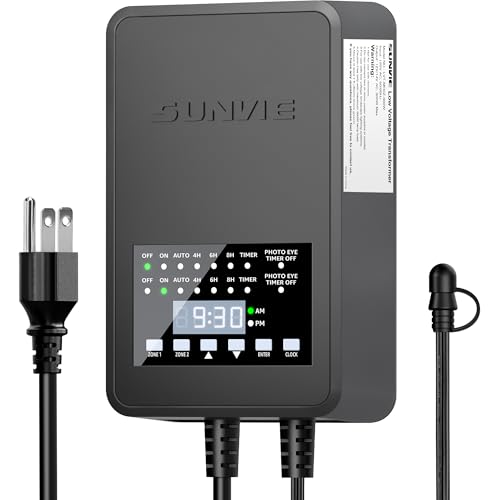
The SUNVIE 300W transformer converts 120V AC to 12/14V AC and supports two independently controlled zones. It includes a removable photocell sensor with a 6.8-foot cord for outdoor installation, indoors use, or sheltered mounting. Best for homeowners with two lighting zones that want flexible scheduling without running parallel transformers. Caution: Ensure total load per zone stays within 80% of the transformer’s rated power to prevent overloading.
DEWENWILS 300W Wi-Fi Low Voltage Transformer

This 300W transformer offers three independent zones and Wi-Fi app control with voice assistant compatibility. It supports 12V/14V outputs and provides five timer modes with flexible scheduling. Best for tech-savvy setups or installations where remote control via app or voice is advantageous. Limitation: Requires 2.4GHz Wi-Fi; ensure network reliability in outdoor spaces.
WILAWELS 600W Low Voltage Landscape Transformer
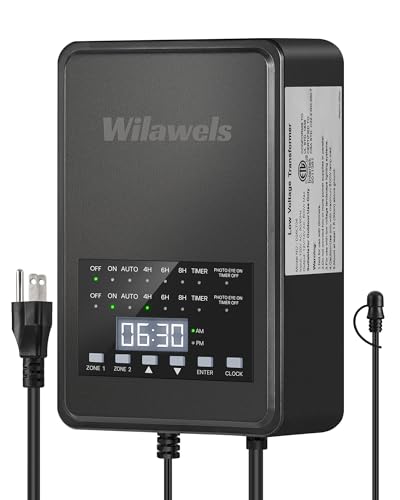
Designed for high-load landscapes, this 600W transformer delivers two independently controlled zones with 12V/14V output. It includes a removable photocell sensor and a UL-listed 6-foot cord suitable for outdoor use. Best for large driveways, gardens, or architectural lighting with heavier current needs. Caution: Ensure the total load remains within 80% of the rated power to maintain efficiency and longevity.
Malibu 120 Watt Power Pack with Sensor
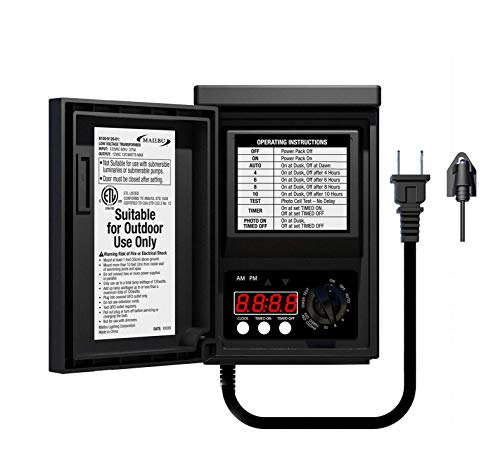
The Malibu power pack provides five functional modes and a detachable photocell sensor for dusk-to-dawn operation. Best for compact installations requiring a full feature set in a smaller form factor. Limitation: It is not recommended for Halogen fixtures and may not suit very high-load projects.
SUNVIE 100W Low Voltage Landscape Transformer

This 100W transformer is suitable for smaller landscapes with two independent zones and a reliable 12V output. It’s ideal for homeowners creating a modest lighting scheme that still benefits from zoning and timer options. Caution: Lower wattage means it’s better for light- to moderate-load installations rather than large-scale projects.
Buying Guide
- What wattage do I need? – Match transformer wattage to total planned load across all lights. For larger landscapes, prioritize higher-watt units (200–600W) with multiple zones.
- How many zones are required? – Two or three zones offer better flexibility for different areas. Consider independent control to optimize energy use and aesthetics.
- What output type is best? – Most outdoor lights use 12V or 14V AC. Check compatibility with LEDs, halogen, or fixtures in your plan.
- Is a photocell sensor important? – Photocell sensors enable dusk-to-dawn operation, reducing manual switching and saving energy when outdoor lighting is needed automatically.
- Do I need smart/app control? – If yes, choose models with app or voice control. Ensure compatibility with your home network and devices.
- Are there safety and installation considerations? – Ensure the transformer is weatherproof, UL-listed, and installed per local electrical codes. Proper wiring and avoiding overload are essential for safety and longevity.
Frequently Asked Questions
- What does “80% of the rated power” mean? – It means you should not regularly load the transformer beyond 80% of its stated maximum to prevent overheating and extend life.
- Can I run LEDs and halogens together? – Most low-voltage transformers are compatible with LEDs; verify fixture compatibility and avoid halogen-specific limitations.
- Do these transformers require professional installation? – Basic outdoor installations can be DIY if you follow safety guidelines; for larger or complex setups, consult an electrician.
- Is Wi-Fi or smart control necessary? – Not required, but it adds convenience for scheduling and integration with other smart home devices.
- How many lights can a transformer support? – It depends on total wattage. Sum the wattage of all connected lights and ensure it stays within the transformer’s capacity and per-zone limits.
- What maintenance is needed? – Periodically inspect weatherproof seals, cleanse terminals, and verify photocell and timer functions are accurate.