Best RV Fresh Water Pumps for 12V and 110V Systems
Finding the right fresh water pump for an RV ensures steady water pressure on the road or at the campsite. This guide highlights five reliable options suited for different buyer needs—from simple 12V setups to AC-powered pumps for every onboard system. Ideal buyers include weekend campers, full-timers, off-grid travelers, and boaters who need dependable pressure with straightforward installation. The table below compares core specs at a glance to help you choose quickly.
| Product | Voltage | Flow | Pressure | Best For |
|---|---|---|---|---|
| WASSERMANN RV Pump | 12V | 4.0 GPM | 45 PSI | Budget-friendly RV setups |
| ECO-WORTHY RV Fresh Water Pump | 12V | 3.5 GPM | 45 PSI | On-demand, adjustable needs |
| MAXZONE RV Fresh Water Diaphragm Pump | 12V | 4.0 GPM | 50 PSI | Quiet operation, reliable flow |
| Kohree 2026 Upgraded RV Pump | 12V | 7.5 GPM | 70 PSI | High demand, strong showers |
| MRGVFLO 12V Fresh Water Pump | 12V | 7.0 GPM | 70 PSI | Five-chamber, durable design |
WASSERMANN RV Pump, 12V Self-priming 4.0 GPM, 45 PSI

The WASSERMANN RV Pump delivers up to 4 GPM with a steady 45 PSI, designed for RVs, campers, and small yachts. This kit includes hoses, adapters, a debris filter, and a user manual for straightforward installation. Best for owners who want a complete package in a compact 12V system.
Best for: Budget-conscious RVers needing a ready-to-install pressure pump that covers all essential fittings. Choose this if you want a simple, dependable 12V solution with minimal setup.
Limitation: May deliver lower peak pressure than higher-PSI models when running multiple outlets simultaneously. Ensure your water demand aligns with 45 PSI.
ECO-WORTHY RV Fresh Water Pump 12V, 3.5 GPM, 45 PSI

The ECO-WORTHY 12V pump provides 3.5 GPM at 45 PSI with a self-priming feature and an on-demand pressure switch. It includes a 6.0 A motor, adjustable 35-80 PSI range, and thermal protection that guards against overheating. This model emphasizes safety and reliability for RVs, yachts, and campers needing flexible pressure control.
Best for: RVers who want adjustable pressure and robust protection features in a compact 12V unit. Better for those who frequently adjust water pressure for different tasks.
Limitation: Slightly lower flow than higher-GPM options; suitable for moderate water use rather than heavy demand applications.
MAXZONE RV Fresh Water Diaphragm Pump, 4.0 GPM, 50 PSI
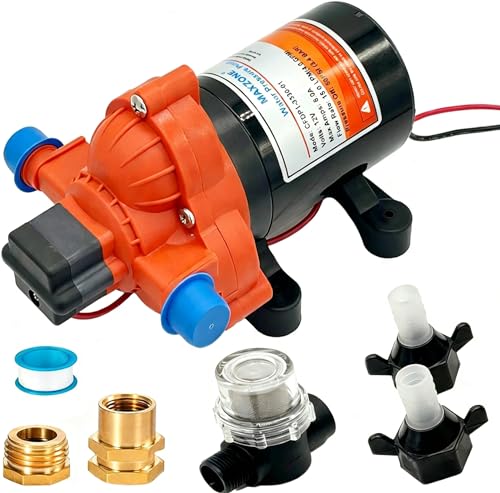
MAXZONE offers a 4.0 GPM diaphragm pump with a 50 PSI setting and self-priming capability. It emphasizes durability and quieter operation through a noise-reduction design and a vibration-damping base. Includes modest safety guidance and protective build for off-grid or marine use.
Best for: RVs or boats where quieter operation and consistent pressure matter more than maximum flow. Good for users who need reliable performance without loud pump noise.
Limitation: Some users may require additional vibration dampening in particularly noisy environments; ensure mounting location minimizes transfer of vibration.
Kohree 2026 Upgraded RV Fresh Water Pump, 7.5 GPM, 70 PSI

The 2026 Kohree model raises the bar with 7.5 GPM flow and a 70 PSI maximum. It uses a five-chamber diaphragm design, built-in thermal protection, and a smart automatic start-stop function to conserve energy. This model suits higher-demand systems in RVs or small vessels.
Best for: Users with heavy water needs, such as multiple outlets or high-flow showers. Choose this if you require strong, consistent pressure across many fixtures.
Limitation: Higher flow and pressure may be overkill for small setups; ensure your plumbing can handle 70 PSI safely and components are rated for it.
[Upgraded Version] 12V DC RV Fresh Water Pump, 7 GPM 70 PSI
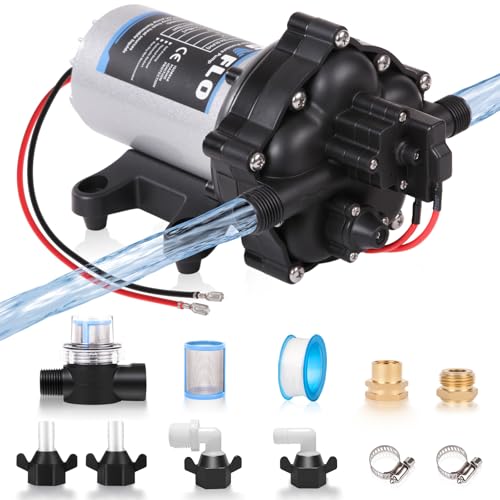
The MRGVFLO upgrade delivers 7 GPM at 70 PSI with a five-chamber diaphragm and NSK bearings for quieter operation. It includes a heavy-duty pressure switch and built-in strainer. The pump is designed for off-grid RVs and marine applications where higher pressure is needed across multiple fixtures.
Best for: RV users who want high flow with robust pressure for showers, faucets, and external water tools. Choose this if you need strong performance with smooth, quiet operation.
Caution: Follow wiring guidelines precisely; improper wiring could affect performance or safety. Ensure fuse sizing matches the 40A requirement referenced in the manual.
Buying Guide: How To Choose The Right RV Fresh Water Pump
- Voltage and power source: 12V DC pumps suit most RV systems and off-grid use. 110V AC units avoid relying on a battery but require shore power or an inverter.
- Flow rate (GPM) and pressure (PSI): Higher GPM supports multiple outlets; higher PSI improves shower and faucet performance. Match to your water fixtures and usage.
- Self-priming capability: Essential for RV installations where the pump may sit above the water line or in a tank. Look for models with reliable primaling up to several feet.
- Diaphragm vs. impeller design: Diaphragm pumps are common for RVs, offering steady pressure and better debris tolerance when paired with strainers.
- Protection features: Thermal overload protection and dry-run capability help extend pump life in varied conditions on the road.
- Noise and vibration: Consider mounting and base designs that minimize sound and vibration, especially in compact RVs or boats.
- Installation kit and accessories: Some models include hoses, adaptors, strainers, and filters—helpful for quick setup.
- Maintenance needs: Access to service parts, ease of cleaning, and availability of replacement diaphragms or seals can affect long-term value.
Frequently Asked Questions
- What is a typical RV water pump PSI? Most RV pumps operate around 40–50 PSI for normal daily use, with higher-PSI models available for powerhouse setups.
- Do I need a pressure switch? Yes. A pressure switch turns the pump on and off to maintain consistent pressure and prevent cycling damage.
- Can I run an RV pump without a battery? 12V pumps require a battery or a power source; 110V units need AC power from shore power or an inverter.
- Is it okay to run a pump dry? Some models have dry-run protection or tolerance, but continuous dry running can damage most pumps. Check the manual for safety limits.
- How do I keep debris out of the pump? Use a 50- or 100-mesh inlet strainer and ensure hoses and fittings are clean before connecting to the pump.
- What should I consider if I have multiple fixtures? Choose a higher-GPM, higher-PSI pump to maintain consistent pressure across all outlets.