Best 100 Ah Deep Cycle Batteries for RVs, Boats, and Off-Grid Power
Choosing the right 100 Ah deep cycle battery depends on your system, climate, and how you plan to use power. This article spotlights five 12V LiFePO4 and AGM options that balance cycle life, safety features, and compatibility for RVs, marine setups, trolling motors, and off-grid storage. Each pick targets a common buyer: RV owners needing reliable house power, boaters seeking light, space-saving energy storage, or off-grid enthusiasts prioritizing long life and safety. Below is a quick buying table to compare the highlighted models at a glance.
| Product | Technology | Best For | Key Benefit |
|---|---|---|---|
| SUPER EMPOWER 12V 100Ah LiFePO4 (BCI Group 24) | LiFePO4 | RV and marine house power | Long cycle life, 15000 cycles at 60% DOD |
| SUPER EMPOWER 12V 100Ah LiFePO4 (BCI Group 31) | LiFePO4 | Solar and off-grid | Extended cycles, robust temperature protection |
| yeagulch 2 Pack 12V 100Ah LiFePO4 | LiFePO4 | Expandable solar or multi-battery banks | Expandable series/parallel, high usable capacity |
| VEVOR Deep Cycle Battery 12V 100Ah | AGM | Marine and RV power with minimal maintenance | High discharge rate, no maintenance (AGM) |
| DUMFUME 12V 150Ah LiFePO4 | LiFePO4 | Higher energy needs and long life | 1920Wh, 4000+ cycles, built-in 100A BMS |
Best Overall 100Ah LiFePO4 For Long-Life RV Use

The 12V 100Ah LiFePO4 battery from SUPER EMPOWER (BCI Group 24) is designed for deep cycle energy storage in RVs and boats. It includes a built-in BMS that protects against overcharge, over-discharge, overcurrent, short circuits, and temperature extremes. It is recommended strictly for energy storage, not engine starting. Best for: RV auxiliary power and marine house loads where longevity and low maintenance matter. Limitation: not suitable for engine cranking or high-current starting tasks.
Best For Solar Or Off-Grid Systems
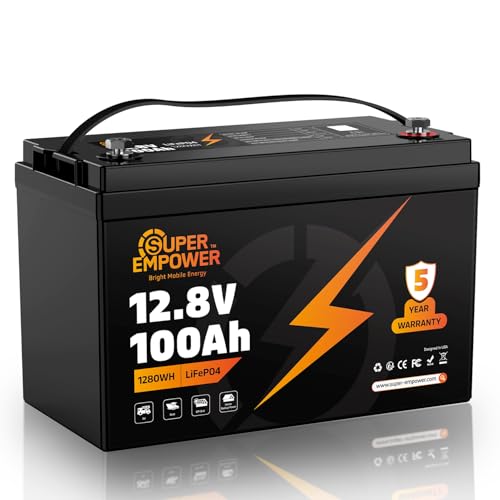
This 12V 100Ah LiFePO4 battery (BCI Group 31) is suited for solar storage and extended off-grid use. It delivers a long cycle life and detailed cycle data: about 5000 cycles at 100% DOD, 6000 at 80% DOD, and up to 15000 cycles at 60% DOD. Best for: solar-powered cabins or boats requiring robust daily cycling. Caution: proper lithium charging practices are essential; use a lithium-specific charger for optimal performance.
Expandable 100Ah LiFePO4 For Custom Banks
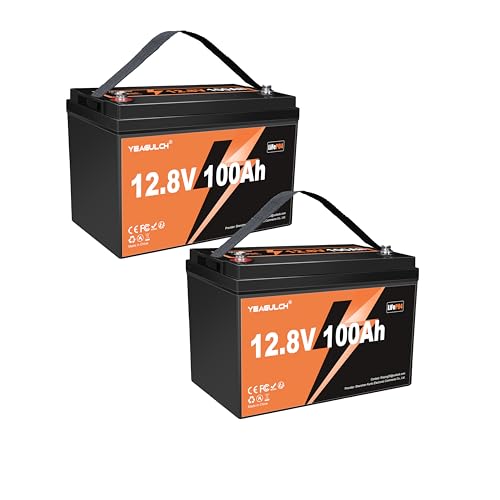
yeagulch offers a convenient two-pack LiFePO4 solution with a stated expandable series/parallel capability, enabling 48V builds via four units. Best for: users planning expandable solar storage or larger off-grid systems. Limitation: the data notes not to use in trolling motors above 700W; plan battery placement accordingly to avoid overloading.
Best AGM Option For Low-Maintenance Marine Use

VEVOR’s 12V 100Ah AGM deep cycle battery is geared toward marine and RV power needs with minimal maintenance. It offers a high discharge rate and does not require water top-ups, making it a straightforward option for users who want simple operation. Best for: boat systems that benefit from an AGM’s spill-proof design. Limitation: AGM chemistry generally has fewer cycles than high-end LiFePO4; plan for eventual replacement as cycles accumulate.
Best High-Energy 150Ah LiFePO4 For Heavy-Demand Off-Grid

DUMFUME’s 12V 150Ah LiFePO4 deep cycle battery delivers about 1920Wh and lists 4000+ cycles (to 80% capacity). Its built-in 100A BMS provides essential protection against overcharge, over-discharge, short circuits, and overheating. Best for: off-grid cabins or larger marine setups needing more energy density and long service life. Limitation: designed for energy storage; not intended as a starting battery for engines.
Buying Guide: Key Considerations For 100Ah Deep Cycle Batteries
- Battery chemistry: LiFePO4 offers longer cycle life and better safety than traditional AGM, but at a higher upfront cost. Choose LiFePO4 for long-term value in RVs and boats.
- Cycle life and DOD: Look for batteries rated for 5000+ cycles at various depth-of-discharge levels. Deeper DoD can reduce total cycles, so systems with a controlled DoD extend life.
- BMS protections: A robust Battery Management System should guard against overcharge, over-discharge, short circuits, and temperature extremes. Temperature protections are crucial for outdoor use.
- Physical fit and terminals: Check dimensions, weight, and terminal type (M8 or standard posts) to ensure compatibility with existing boxes and wiring.
- Charger compatibility: LiFePO4 requires lithium-specific charging profiles. Ensure your solar regulator (MPPT/PWM) or charger supports lithium mode.
- Expansion potential: If you plan a larger bank, consider expandable options and parallel/series connections, keeping within safe wiring practices.
- Maintenance: AGM requires less maintenance than flooded lead-acid but still monitoring is important. LiFePO4 is maintenance-free in most scenarios.
Frequently Asked Questions
- What makes 100Ah a good size for deep cycle use?
It provides a balance between energy storage, weight, and space for most RV, marine, and off-grid setups while delivering meaningful runtime between charges. - Can I mix LiFePO4 with AGM batteries?
It is not recommended to mix chemistries in the same bank because different charging profiles and capacities can lead to uneven aging and potential safety issues. - What is DoD and why does it matter?
Depth of Discharge (DoD) is how much of the battery’s capacity you use. Lower DoD generally yields longer cycle life; LiFePO4 systems often allow higher usable capacity with safety margins. - Do these batteries require specialized charging equipment?
Yes. LiFePO4 batteries perform best with lithium-compatible chargers and controllers set to lithium mode. Avoid standard lead-acid charging profiles. - Is LiFePO4 better than AGM for marine use?
LiFePO4 typically offers longer cycle life, lighter weight, and deeper discharges with stable performance, but it comes at a higher upfront cost. AGM can be simpler and maintenance-free for some applications. - What should I consider for temperature protection?
Outdoor environments benefit from BMS with low-temperature cutoffs to prevent charging at freezing temps and to protect cells during cold weather.