Best Roof Mount Wind Turbines for Ventilated Containers and Attics
Answer: Roof mount wind turbines are best for readers seeking energy-efficient, passive ventilation solutions for storage containers, rooftops, and attics. The top picks below balance durability, airflow, and weather resistance, with notes on who each product suits best. This guide helps you compare 12-inch to smaller 4-inch models, and includes a concise buying table.
| Product | Best For | Key Benefit |
|---|---|---|
| 12-Inch Wind Turbines (Container Creations) | Shipping containers needing precise venting with AdaptAIR integration | 24 curved blades for higher airflow |
| Tandefio 12 Inch Wind Turbine | Sturdy, corrosion-resistant ventilation for containers and roofs | 201 stainless steel; robust 12-inch turbine |
| GAF Master Flow 12 in. Wind Vent | Attics and roofs requiring durable dual-bearing system | Internally braced, galvanized steel |
| DioOnes Stainless Steel Turbine Roof Ventilator, 11 Inch | Weather-ready, maintenance-light attic ventilation | Premium 304 stainless steel; rainproof design |
| Tandefio 2 Pack 4 Inch Turbine Vent | Small-scale homes or offices needing extra capacity | Two pack; 201 stainless steel |
12-Inch Wind Turbines (Container Creations)
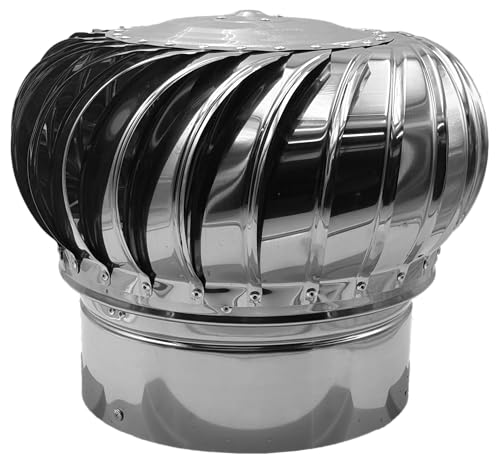
Best for: Shipping containers and conex storage requiring precise 12-inch fit with AdaptAIR adapters. This turbine is designed to minimize moisture and optimize airflow while resisting rain entry with its 24 curved blades.
- 24 curved blades increase airflow compared to 21-blade designs, improving ventilation efficiency.
- Thickened 201 stainless steel offers rust resistance for long-term outdoor use.
- Custom design for turbine roof vents with AdaptAIR compatibility.
Caution: The system depends on the accompanying AdaptAIR adapter (sold separately) for a perfect seal and performance. Ensure compatibility with your vent stack.
Tandefio 12 Inch Wind Turbine

Best for: Containers and roofs needing a durable stainless steel turbine. The 201 stainless steel construction provides corrosion resistance and longevity in harsh environments.
- 201 stainless steel structure enhances durability and weather resistance.
- Designed with a precise fit for 12-inch roof vents, supporting consistent airflow.
Caution: Dimensions are tailored for standard 12-inch vents; verify your vent diameter before purchase to avoid mismatch.
GAF Master Flow 12 in. Mill Galvanized Steel Vent

Best for: Attics and roofs requiring a heavy-duty, rust-resistant turbine with a professional appearance. Internal bracing increases wind resistance and stability in high-wind areas.
- Galvanized steel provides strong rust resistance and durability.
- Internally braced design improves structural stability in adverse weather.
Limitation: The finish is mill rather than powder-coated; consider environmental exposure when selecting for extreme climates.
Lgsixe 12” Wind Turbine Roof Vent
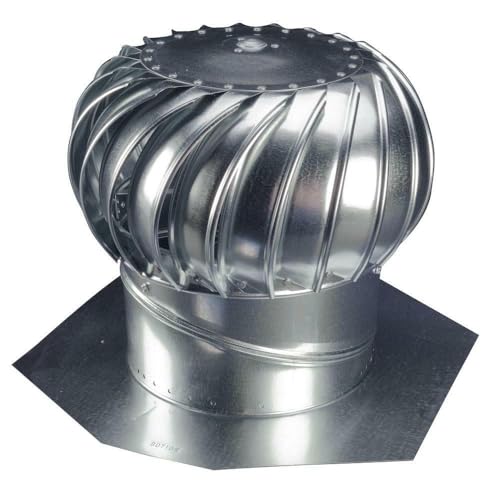
Best for: Buildings needing high-efficiency attic ventilation. This model emphasizes exhaust efficiency and weather resistance, suitable for green ventilation goals.
- Galvanized steel construction adds lasting durability.
- Wind-powered turbine design aligns with green ventilation approaches.
Caution: The product is designed for general ventilation; verify sizing to fit your roof vent opening properly.
DioOnes Stainless Steel Turbine Ventilator, 11 Inch

Best for: Attics and rooftops with weather exposure seeking a rainproof, whisper-quiet turbine. The 304 stainless steel construction adds superior durability in all seasons.
- Premium 304 stainless steel construction for corrosion resistance.
- Rainproof design and silent operation for comfortable conditions.
Limitation: Being non-powered, performance relies on outdoor wind; in very calm areas, airflow may be limited.
Buying Guide: Key Considerations For Roof Mount Wind Turbines
- Ventilation needs: Assess the size of the space (container, attic, or small building) and required airflow to avoid over- or under-ventilation.
- Material durability: Stainless steel (201 or 304) and galvanized steel offer different corrosion resistance levels. Choose based on climate and exposure.
- Wind performance: Turbines with more blades or efficient blade geometry typically move more air in light winds; consider blade count and shape.
- Size compatibility: Ensure the turbine diameter matches your vent opening. Some units are designed for 12-inch vents; others fit smaller or larger openings.
- Weatherproofing: Look for rainproof designs and sealed caps to prevent water intrusion in rainier climates.
- Installation compatibility: Some products require adapters or roving vent systems; verify compatibility with your current vent stack or roof vent.
- Maintenance: Non-powered turbines require little ongoing maintenance, but inspect fasteners and seals periodically for longevity.
FAQ
- What is a roof mount wind turbine best used for?
Passive ventilation for containers, attics, and rooftops to reduce heat and moisture buildup.
- Do these turbines require electricity?
No, most models are wind-powered and rely on natural airflow to exhaust hot air and moisture.
- Which material is most durable for outdoor use?
304 stainless steel offers the highest corrosion resistance; 201 stainless steel is a strong alternative with good durability.
- How do I know which size to buy?
Match the turbine diameter to your vent opening; common sizes include 11–12 inches and smaller 4-inch options.
- Are there any installation considerations I should know?
Some models require adapters or specific mounting configurations; ensure compatibility with existing vent adapters and roof fittings.
- What is a benefit of an internally braced wind vent?
It improves wind resistance and structural stability, especially in exposed roof locations.