Best RV Carbon Monoxide Detectors for Safe Travel and Home Use
When shopping for RV carbon monoxide detectors, focus on devices that are reliable, easy to install, and suited to mobile living environments. This guide highlights five top options, explains who each is best for, and notes practical cautions. Whether you need a portable unit for travel, a hardwired RV system, or a dual propane/CO detector, these picks help you compare at a glance. The buyer-friendly table below summarizes key reasons to choose each product.
| Product | Best For | Why It Stands Out |
|---|---|---|
| Kidde Carbon Monoxide Detector (AA Battery Powered, Portable) | Temporary or travel use; apartments or homes | Battery-powered with 85 dB alarm, easy to move, ideal for power outages |
| Safe T Alert Dual LP/CO Alarm (Flush Mount) | Full RVs and trailers needing propane and CO protection | Dual detection in one unit; 12V powered; no wiring changes |
| PROTECTMETER RV CO & LP Gas Detector (12V DC Hardwired) | Fixed RV installations requiring hardwired monitoring | Digital display; real-time readings; dedicated RV power system design |
| Kidde Portable CO Detector (AA Battery Powered) | Portable, compact backup detector | Electrochemical sensor; simple wall or tabletop placement; portable |
| Safe T Alert Mini Dual LP/CO Alarm (Flush Mount) | RVs with limited wall space | Small footprint; 12V powered; still offers dual propane and CO detection |
Kidde Carbon Monoxide Detector Portable (AA Battery)
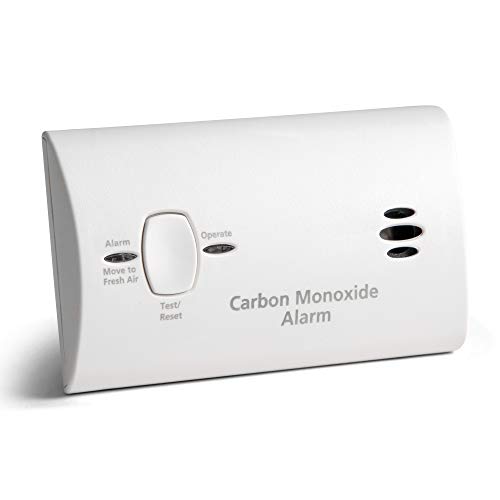
The Kidde unit uses an electrochemical sensor to detect CO gas and runs on two AA batteries, allowing operation during power outages. It’s designed for wall mounting or tabletop placement and features a green power LED plus an 85 dB alarm with a red CO indicator. Best for travelers or small spaces that need a quick, portable CO alert that does not require wiring. Caution: battery replacement is required for continuous monitoring.
Safe T Alert Dual LP/CO Alarm (Flush Mount)

This dual-detection unit combines propane gas and carbon monoxide alerts in one flush-mount device. It’s a direct upgrade for various RVs and can replace older propane alarms with no wiring changes. It’s 12V powered, reducing the risk of battery failure. Best for RVs that need both propane and CO monitoring in a single, space-saving unit. Limitation: flush-mount design requires proper installation cutout alignment.
PROTECTMETER RV CO & LP Gas Detector (12V DC Hardwired)

Designed for fixed RV installations, this 12V hardwired CO and LP detector provides a digital display for real-time readings. It’s a strong choice for RV owners who want continuous, network-ready monitoring with clear status indicators. Best for households that rely on a stable power supply and want straightforward at-a-glance CO/LP information. Caution: installation requires access to the RV’s 12V system.
Kidde Carbon Monoxide Detector (Portable, Battery Operated)
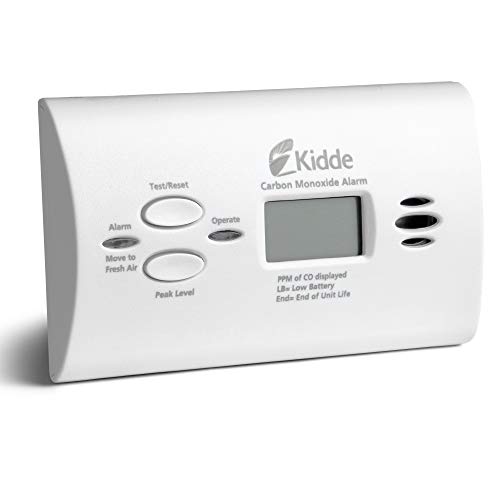
This AA battery-powered unit offers portable CO detection with LEDs, a test/reset button, and a low-battery indicator. It’s ideal for travelers or temporary setups where wired detectors aren’t feasible. Best for backup monitoring in living areas or sleeping spaces. Caution: portability may come with less durable mounting compared to fixed detectors.
Safe T Alert Mini Dual LP/CO Alarm (Flush Mount)

This compact flush-mount device provides dual propane and CO detection in a small footprint, suitable for RVs with tight wall space. It runs on 12V DC with low-voltage warning and is a practical upgrade where larger detectors don’t fit. Best for micro-RVs or tight interiors. Caution: smaller size may have fewer features than larger models.
First Alert CO400 Battery-Operated CO Detector
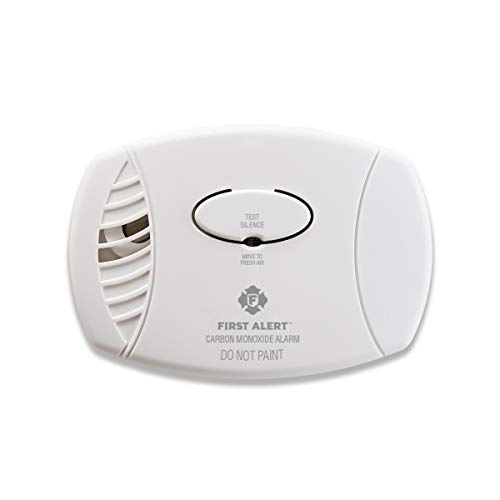
The First Alert CO400 uses a battery-powered design with an advanced electrochemical sensor to detect CO levels. It provides continuous monitoring even during power outages and includes a loud 85 dB alarm. Best for households seeking a reliable battery-operated detector with a straightforward interface. Limitation: battery maintenance is necessary for uninterrupted operation.
Buying Guide: Key Considerations For RV CO Detectors
Power source and installation: Decide between portable (battery-powered) units and hardwired RV installations. Portable detectors are flexible for travel and temporary setups; hardwired models offer continuous monitoring with fewer battery concerns.
Detection type: Electrochemical sensors are standard for CO detection and offer reliable accuracy. Dual detectors that also monitor propane or LP gas provide broader safety in RV environments.
Power management: For 12V RV systems, consider units with low-voltage warning and efficient circuitry to minimize power use. When batteries are the primary power source, check battery life and replacement cadence.
Display and alerts: A digital display or status LEDs helps users read CO levels quickly. A loud alert (85 dB or higher) is important for effective warning in noisy RV interiors.
Installation footprint: Flush-mount detectors save space but require precise cutouts. Consider wall-mount or tabletop options if you frequently rearrange living areas.
Maintenance: Regular testing and battery or sensor replacement are essential. Some devices include a test/reset button and a low-battery indicator for proactive maintenance.
Safety coverage: If your RV has multiple living zones or is used in campsites with shared electrical hookups, a dual propane/CO detector can simplify monitoring and reduce installation complexity.
FAQ
- Do I need both CO and propane detectors in my RV? Dual detectors that cover CO and propane provide broad protection in one unit, which is convenient for propane-powered appliances. Consider a dual-detection model if your RV uses propane systems.
- Is a hardwired detector better than a battery-powered one for RVs? Hardwired detectors offer continuous monitoring with fewer battery concerns, but require proper installation. Battery-powered detectors are portable and easy to install but need battery maintenance.
- How often should I test CO detectors in my RV? Test detectors monthly and replace batteries as needed. For hardwired units, run a sensor test during annual maintenance checks.
- Can I use a portable CO detector in multiple RVs? Yes, portable detectors are designed for mobility and can be moved between RVs. Ensure battery levels are adequate before each trip.
- What is a dual-detection alarm’s advantage? A dual detector alerts for both carbon monoxide and propane exposure, providing comprehensive safety in one unit and reducing space and wiring needs.
- What should I do if a detector alarms? Evacuate immediately, call emergency services if CO exposure is suspected, ventilate the area if safe, and replace the detector if needed after the all-clear.