Best Solar Panels for Domestic Use: Reliable Off-Grid Power for Home &Amp; Camps
Answering the common question “which solar panels are best for domestic use?” this guide highlights five durable, portable and install-ready options. These panels are suitable for home backup, RVs, cabins, and off-grid setups. They emphasize high efficiency, weather resistance, and easy integration with common power stations or 12V systems. The buyer profiles vary—from weekend campers needing light, portable power to homeowners building a larger off-grid array. Below, see a quick table of the selected products to compare core capabilities at a glance.
- HQST 200W Ultra-Light Portable Solar Panel
- BougeRV 200W Portable Solar Panel
- TWELSEAVAN 200W Portable Solar Panel
- ECO-WORTHY 200W Solar Panel Kit
- Callsun N-Type 200W Solar Panel (2×100W)
HQST 200W Ultra-Light Portable Solar Panel
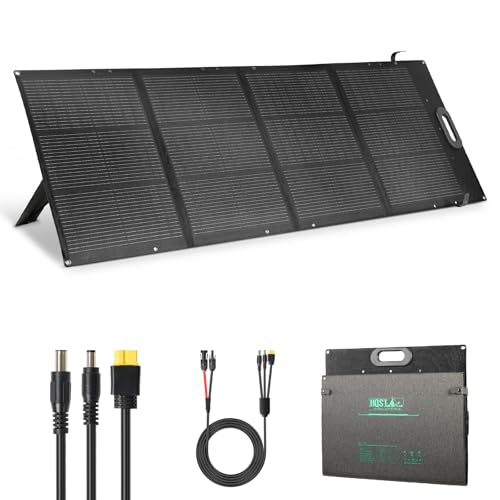
Best for: Outdoor enthusiasts who need ultra-light, high-efficiency portable power for camping, RV trips, and emergency charging. This panel uses next-gen 16BB N-Type cells delivering up to 25% efficiency, higher than standard panels, enabling faster topping up of power stations in mixed sunlight conditions.
Why selected: It’s notably lighter than many 200W panels, folds compactly, and includes a versatile 3-in-1 adapter for compatibility with popular power stations. The IP67 waterproof rating adds durability for rugged environments.
Caution: Only use with compatible solar generators and respect voltage/power limits when wiring multiple panels in series or parallel.
BougeRV 200W Portable Solar Panel

Best for: RV, van, or off-grid travelers needing a robust, foldable panel with good impact resistance. The fiberglass-reinforced design provides durability for repeated setup and transport.
Why selected: It combines high conversion efficiency with strong physical construction, and it ships with quick-connect compatibility for plug-and-play with many power stations and portable fridges.
Caution: Ensure the connectors (XT60 and DC7909) match your devices, and note that performance depends on sun angle and shading.
TWELSEAVAN 200W Portable Solar Panel

Best for: Power users who want high efficiency and multiple charging ports, suitable for camping, home backup, or emergency power. This panel claims 24% efficiency with an ETFE laminated case for light transmission improvements.
Why selected: It offers an 8-in-1 MC4 connector system and multiple USB-C/USB ports, enabling simultaneous device charging in the field along with robust solar input to power stations.
Caution: While versatile, its high output requires a compatible controller or power station to maximize safety and performance.
ECO-WORTHY 200W Solar Panel Kit
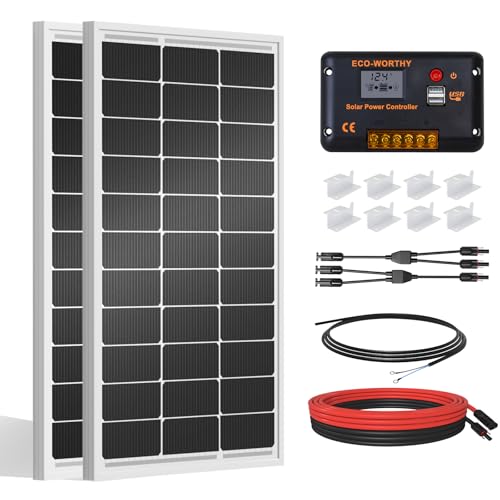
Best for: Home backup or small off-grid installations needing a complete 12V/24V system kit with a PWM controller. It targets RVs, cabins, boats, and other off-grid applications.
Why selected: The kit emphasizes high-efficiency monocrystalline cells and a durable frame designed to withstand wind and snow loads, making it suitable for decently harsh climates.
Caution: The included PWM controller is a basic charging option; for larger arrays or fast charging, pairing with a more advanced controller may be necessary.
Callsun N-Type 200W Solar Panel

Best for: RVs, vans, and cabins needing compact, space-saving 2×100W configurations with high efficiency. The 16BB cell design improves light absorption and reduces hotspots for steady long-term output.
Why selected: It’s compact for limited mounting spaces and supports flexible installation with multiple pre-drilled holes for mounting on varied surfaces.
Caution: The two-panel configuration requires careful wiring to balance output and avoid shading losses; ensure mounting aligns with your electrical plan.
Buying Guide: Key Purchase Considerations For Domestic Use
- System size and goals: Define whether you need a portable solution for camping or a stationary kit for home backup. Larger needs favor higher-watt, multi-panel sets, while portable options suit occasional power needs.
- Cell technology: N-Type cells offer higher efficiency and better performance in less-than-ideal light. 16BB busbars reduce heat spots and improve reliability, especially in shaded conditions.
- Durability and weather resistance: Look for IP ratings (IP65–IP67) and sturdy frames to withstand wind, rain, and snow. ETFE lamination and tempered glass help longevity and light transmission.
- Compatibility: Ensure the panel includes common connectors (XT60, DC7909) or adapters for your power stations. Check if a microinverter or PWM controller is included or must be bought separately.
- Portability vs. fixed installation: Foldable designs save space for travel; fixed panels are easier to install on rooftops or sheds but require mounting space.
- Expansion and future-proofing: If you anticipate adding more panels, choose a model with flexible wiring options and compatible mounting hardware for series or parallel connections.
- Maintenance: Look for corrosion-resistant frames and waterproof junction boxes. Long service life requires components that resist exposure to sun and moisture.
Frequently Asked Questions
- What is the most important feature for domestic solar panels?
High efficiency and durability, especially in your climate, to maximize energy capture and longevity.
- Are N-Type panels worth the extra cost?
They offer higher efficiency and better performance in low-light or hot conditions, which can matter for off-grid setups.
- Can portable panels replace a fixed rooftop system?
Portable panels are ideal for camping or backup charging; fixed rooftop systems provide continuous power during outages with greater capacity.
- What should I pair with a 200W panel kit?
Choose a compatible power station or 12V battery system and a charge controller suitable for the panel’s voltage and amperage.
- How do I choose between PWM and MPPT controllers?
MPPT controllers are generally more efficient, especially with higher wattage or long cable runs; PWM are simpler and cheaper for smaller systems.
- Is 25% efficiency sufficient for home backup?
It can be adequate for moderate loads with proper storage and spacing, but pairing multiple panels increases daily energy capture.