Best 12 Volt DC to 12 Volt DC Battery Chargers for Reliable Off-Grid Power
Yes, you can reliably charge a 12V battery from another 12V source with a dedicated DC-to-DC charger designed for automotive and off-grid use. This guide highlights top models that support 12V to 12V charging, suitable for RVs, boats, trucks, and auxiliary battery systems. Each pick targets different buyer needs—from off-grid maintenance and multi-battery setups to compact, install-ready units. The featured products are best for those seeking safe multi-stage charging, compatibility with various battery chemistries, and practical indicators or protections. The overview table below helps compare core options at a glance.
| Product | ||
|---|---|---|
| Schumacher Smart Battery Charger and Maintainer (SDC370) | Smart, weatherproof unit for off-grid vehicles | Three-stage charging; 25 A; IP66 weatherproof |
| VEVOR 12V 40A DC to DC Charger | On-board charging for RVs, boats, trucks | 4-stage/2-stage charging; multiple protections |
| Victron Orion-Tr Smart DC-DC Charger | Dual battery systems with Bluetooth | Three-stage charging; Bluetooth app control |
| 12V Sealed Lead Acid Battery Charger (Ailiheng) | AC-DC to 12V DC charging for SLA | LED indicators; short circuit and reverse protection |
| SinLoon Cigarette Lighter Charger Cable | Portable 12V to 12V charging via cigarette lighter | 15A fuse; waterproof SAE quick-release |
Schumacher Smart Battery Charger and Maintainer

The Schumacher SDC370 is a 25-amp DC-DC charger designed to work with smart alternators in off-grid setups. It supports three-stage charging (boost, absorption, float) for a safe, full charge. It is ideal for RVs, campers, and vehicles that host an auxiliary battery while running on an intelligent alternator. Best for buyers who need a robust, install-ready unit that maintains batteries in varying temperatures. A practical caution is that installation requires secure mounting and wiring in a vehicle’s engine area; ensure weatherproof access and proper venting in cramped spaces.
Best for: Off-grid enthusiasts and vehicle owners needing a sturdy, all-weather charger capable of maintaining auxiliary batteries. Choose this if you require a compact, weatherproof unit with smart charging and easy installation in vehicles with smart alternators.
12V Sealed Lead Acid Battery Charger (Ailiheng)
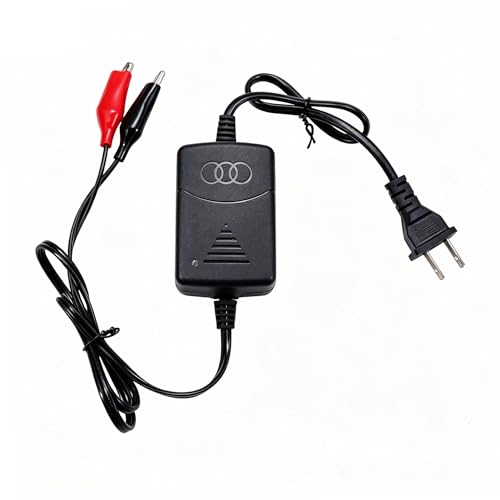
Ailiheng’s 12V SLA charger is designed for sealed lead-acid batteries with a simple indicator system. It features LED signals: red indicates charging, green shows full charge, and there’s a note that green can appear after a long idle period before charging resumes. It includes short-circuit protection and electrode-reverse protection to help avoid damage from incorrect connections. Best for docked storage or vehicles with a regular SLA battery needing a straightforward AC-to-12V charging solution. A caveat is that it may require several hours to activate an idle battery before charging begins in earnest, depending on battery state.
Best for: Those with SLA batteries seeking a basic, safe charger with clear status indicators and protective features. Choose this if you want a simple, reliable SLA-specific charger without advanced multi-stage logic.
SinLoon Cigarette Lighter SAE Charger Cable
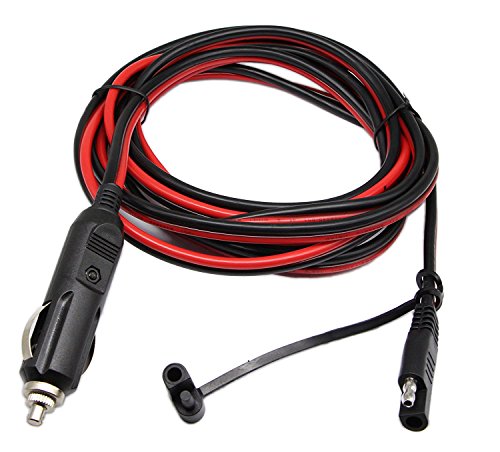
The SinLoon charger cable provides a 12V-to-12V charging path via a cigarette lighter plug with an SAE quick-release adapter. It includes a 15A built-in fuse for overload protection. This option is best for portable or occasional charging needs when you don’t want a separate wall charger installed. It’s better for temporary setups or emergency charging in vehicles where access to a standard AC outlet is limited. The limitation is that it relies on a vehicle’s electrical system to supply charging power and is not a standalone multi-stage charger.
Best for: Portable, temporary charging in vehicles where you want a simple connection between 12V sources. Avoid this if you need multi-stage charging or battery longevity optimizations beyond basic protection.
VEVOR 12V 40A DC to DC Battery Charger

The VEVOR DC-DC charger offers 40A of charging power and multi-stage charging compatible with LifePO4 (2-stage) and lead-acid (4-stage) batteries. It includes protections for over/under voltage, high temperature, and reverse polarity, and the isolated input/output helps prevent electrical interference with a vehicle’s system. It’s well-suited for RVs, commercial vehicles, boats, and yachts needing reliable on-board charging with a robust protection profile. A potential limitation is that the installation may require a dedicated space and careful wiring to ensure optimal heat dissipation in tight engine compartments.
Best for: Those who need a powerful, versatile charger that supports multiple battery chemistries and provides strong safety protections. Choose this if you operate larger systems or demand a durable on-board charger for frequent use.
Victron Orion-Tr Smart DC to DC Charger
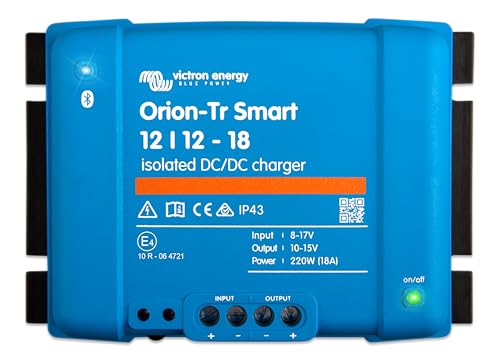
The Victron Orion-Tr Smart DC-DC Charger is designed for dual-battery setups, allowing the alternator and start battery to charge a service battery. It features built-in Bluetooth for status monitoring and adjustments via the VictronConnect app. This professional-grade option is best for installers and users seeking remote, smartphone-based control and precise battery management. It supports three-stage charging and isolated operation to minimize interference with the vehicle’s electrical system. A limitation is that some users may rely on the app for full functionality, which requires a compatible mobile device and setup.
Best for: Professional installations and users who require dual-battery charging with remote monitoring. Choose this if you want Bluetooth-enabled control and detailed battery status feedback for complex vehicle or boat systems.
Buying Guide: Key Considerations For Selecting A 12V To 12V DC-DC Charger
- Battery type compatibility: Determine whether you need to charge lead-acid, AGM, gel, calcium, or lithium packs. Some chargers support multiple chemistries, while others are more limited.
- Charging stages: Look for multi-stage charging (bulk/absorb/float) to optimize battery health and longevity. Some LifePo4 systems use fewer stages but require specific profiles.
- Power output: Choose a charger with sufficient amperage for your battery capacity and expected charge rate. Higher capacity systems benefit from 25–40A units.
- Temperature and weather resistance: For vehicles and boats exposed to the elements, IP ratings and temperature tolerance ensure reliable operation.
- Protection features: Short-circuit, reverse polarity, over/under voltage, and electrical isolation protect both the charger and the vehicle’s electrical system.
- Installation considerations: Some units are designed for permanent mounting in engine compartments; others are portable or require minimal wiring. Verify fitment with your space and vehicle wiring.
- Monitoring and control: Bluetooth or app-based monitoring is useful for frequent management and diagnostics, especially in dual-battery setups.
Frequently Asked Questions
- What is a 12V to 12V DC-DC charger used for? It charges a 12V auxiliary or service battery from a 12V source, such as a vehicle alternator, while protecting the vehicle’s electrical system.
- Do I need multi-stage charging for all batteries? Multi-stage charging helps maximize lifespan for most lead-acid and lithium batteries, but some lithium chemistries may require specific charging profiles.
- Can I use a DC-DC charger in an off-grid setup? Yes, many DC-DC chargers are designed for off-grid use with smart alternators and auxiliary batteries in RVs, boats, and trucks.
- Is Bluetooth monitoring worth it? For dual-battery systems or frequent maintenance, Bluetooth-enabled units provide convenient remote status checks and adjustments.
- What safety protections should I expect? Look for short-circuit protection, reverse polarity protection, over/under voltage protection, and electrical isolation to minimize interference.
- Do any of these models support solar charging integration? Some models focus on DC-DC charging; integration with solar charging may require a separate solar controller or a charger with solar compatibility.