Best Security Lights and Motion Lights for Home Safety
For homeowners seeking reliable outdoor illumination, the right security lights with motion sensing offer daytime energy savings, enhanced safety, and easy installation. This guide highlights five top options that balance brightness, motion detection range, durability, and ease of use. It helps buyers choose the best fit for garages, yards, porches, and driveways. The top picks cover varied power sources, from wired installations to solar-powered models, so you can select based on preferred energy usage and mounting location.
Buyer summary table
| Product | Best For | Power Source | Key Benefit |
|---|---|---|---|
| LUTEC 72W 7500LM (Black) | Large spaces, garages | Wired | High brightness and wide 180° sensing |
| LEPOWER 38W (White) | Budget-friendly install, versatility | Wired | Three heads with adjustable angles |
| Abovizo 85W (White) | Strong all-weather security | Wired | High Lumen output, dusk-to-dawn or motion modes |
| Tuffenough Solar 2500LM (2 packs) | Solar-powered setups, low wiring | Solar | 270° wide angle and remote mode options |
| LUTEC 32W (Black) | Smaller areas, budget-friendly | Wired | Balanced brightness with multiple modes |
LUTEC 72W 7500LM LED Security Lights (Black)

Best for large driveways and garages, this three-head flood light delivers 7500 lumens at 5000K daylight brightness. The 180° motion sensor covers more area, with a dusk-to-dawn option and a manual override. It’s ideal for homes needing bright, broad-area illumination and flexible operation modes. The unit is energy-saving, offering significant power reduction versus traditional halogen equivalents. A potential limitation is the need for a wired installation, which may require wiring access and electrical know-how.
Who it’s best for: homeowners with sizable exterior spaces who want robust brightness and flexible modes. Why selected: high lumen output and broad sensing angle provide reliable coverage for safety and visibility. Caution: ensure weatherproof mounting and proper wiring to maintain performance in wet conditions.
LEPOWER LED Security Lights (White)

With three adjustable heads, this 38W fixture delivers up to 4200 lumens at 5500K. It combines energy efficiency with flexible aiming to cover entryways and side yards. The broad sensing angle reaches up to 72 feet at 180°, making it suitable for mid-sized properties. A practical limit is that the brightness is determined by LED efficiency; users seeking maximum brightness might prefer higher-output options. It’s easy to install on walls with standard mounting.
Who it’s best for: budget-conscious buyers needing adjustable lighting angles for entry points. Why selected: balanced output and 3-head design allow targeted coverage without overdoing brightness. Caution: verify local electrical codes during installation.
Abovizo 85W LED Security Lights (White)

Designed for high-visibility security, this 85W fixture produces about 8500 lumens at 6500K. It supports dusk-to-dawn and motion modes with multiple sensitivity levels up to 72 feet. The 3-head array provides flexible coverage for larger entrances or yards. A limitation can be the scale of the unit, which may require more substantial mounting space and wiring routing. It’s well-suited for properties needing constant high brightness with motion-triggered boosts.
Who it’s best for: homes that require strong, consistent lighting with both dusk-to-dawn and motion-based options. Why selected: very high lumen output and adjustable sensitivity provide reliable deterrence and clarity. Caution: ensure mounting surface can support the fixture’s weight and wind load in exposed areas.
LUTEC 32W 3500 Lumen Security Light (Black)
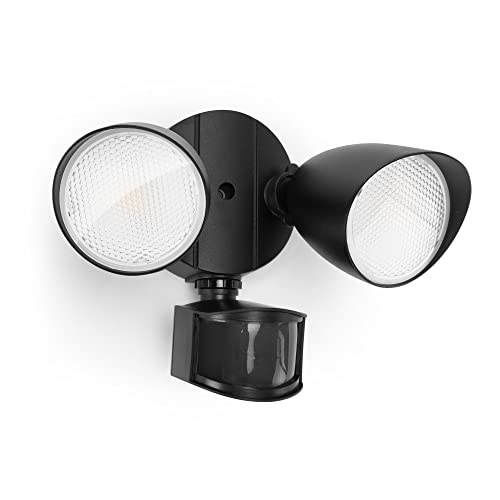
This unit offers a balanced 32W, 3500-lumen output with 5000K daylight brightness. It uses a 180° motion sensor that detects up to 69 feet, with four lighting modes including a manual override. It’s a compact option ideal for smaller entryways or decks. A potential trade-off is that lower lumens might be less suitable for very large spaces compared to higher-watt models. It’s best when a discrete but effective security light is preferred.
Who it’s best for: homeowners upgrading modest entrances or porches with a reliable, energy-efficient fixture. Why selected: reasonable brightness, multiple modes, and easy dimming/override options. Caution: for very dark, large areas, consider a higher-lumen alternative to ensure full coverage.
Buying Guide: What To Consider When Choosing Security Lights With Motion
Brightness, coverage, and energy use are the primary concerns. Choose lumens that match the size of the area you want illuminated. For driveways or garages, higher-lumen units reduce dark spots but may consume more energy unless they’re LED.
Power source and installation: Wired fixtures provide steady power for constant operation and are ideal for permanent mounts. Solar models offer easy, wire-free installation but depend on sun exposure and battery capacity. Consider existing electrical access and the climate in your area when deciding.
Motion sensor range and sensitivity: Look for sensors with wide angles and adjustable sensitivity. A 180° field of view is common and effective for entry points. Adjustable timing (1–10 minutes) helps balance energy use with security needs. Some units include dusk-to-dawn modes that auto-activate at low light levels.
Durability and weather sealing: IP65 or higher ratings indicate good weather resistance. Outdoor lights should tolerate rain, wind, and temperature changes. Mounting hardware and heat management also affect long-term performance.
Number of heads and adjustability: Multi-head fixtures offer flexible coverage angles and zones. The ability to adjust each head can improve accuracy and reduce light trespass onto neighboring properties.
Frequently Asked Questions
- What’s the difference between dusk-to-dawn and motion-activated lights? Dusk-to-dawn stays on at low brightness when it’s dark, while motion-activated lights remain off until movement is detected, then illuminate at full brightness.
- How bright should a security light be for a small porch? A 3000–5000 lumen range is typically sufficient for most small porches, balancing visibility and energy use.
- Are solar security lights reliable year-round? They rely on sunlight to recharge, so performance depends on weather and location. In low-sun climates, consider a wired option or higher-capacity solar panels.
- Can I install these lights myself? Most wired fixtures require basic electrical knowledge and adherence to local codes. Solar and plug-in models are simpler for DIY installation.
- How do I choose the right motion-sensor range? For walkways and entry doors, aim for 20–40 feet of detection with a broad angle to cover approach paths without triggering from distant areas.
- What maintenance is needed? Regularly clean lenses, inspect seals for wear, and test motion sensitivity after seasonal changes or bulb replacement.