Best RV MPPT Solar Charge Controllers for Efficient Battery Charging
Answering the common buyer question, these MPPT solar charge controllers optimize how RV solar panels convert sunlight into usable battery energy. They’re best for RV owners who want reliable, scalable power management, especially when camping in shady sites or under mixed sun. The top picks below include models from Victron Energy, Renogy, and EcoSolLi, each selected for clear value, compatibility with common battery chemistries, and practical features for mobile setups. A quick reference table follows to compare the core specs at a glance.
| Product | Max Voltage | Current (A) | Ideal For | Notes |
|---|---|---|---|---|
| Victron SmartSolar MPPT 100V/50A | 100V | 50 | Large RV solar arrays | Bluetooth; synchronized charging |
| Victron SmartSolar MPPT 75V/15A | 75V | 15 | Compact setups | Bluetooth; easy install |
| Renogy Rover 30A | 12/24V auto | 30 | Mid-size RV systems | Storm-ready; Li/LiFePO4 capable |
| Renogy Rover 40A | 12/24V auto | 40 | Moderate RV arrays | Lithium recovery; strong shading performance |
| EcoSolLi 120A MPPT | 12/96V (varies) | 120 | High-capacity systems | Broad voltage range; multiple protections |
Victron Energy SmartSolar MPPT 100V, 50A

The Victron SmartSolar MPPT 100V/50A delivers high-efficiency charging for larger RV solar arrays. Its MPPT algorithm tracks the optimum point quickly, maximizing energy harvest even with partial shading. Synchronization lets multiple Victron controllers operate as a single system, helping protect battery longevity while optimizing energy flow across the entire RV setup. Best for full-time, power-hungry rigs with sizable solar arrays and a desire for scalable, networked charging. A potential limitation is the need for a larger installation space and compatible battery management for advanced configurations.
Best for: RV owners with substantial roof space and higher energy needs who value advanced synchronization and Bluetooth monitoring for remote management.
Victron Energy SmartSolar MPPT 75V, 15A

This compact Victron unit is suited for smaller RV solar setups or upgrades where space is at a premium. It provides efficient MPPT tracking, ensuring the best possible charging even when some panels are shaded. Synchronization capability adds flexibility for expanding systems later. Caution: the 15A maximum current may limit harvest if you later add additional panels beyond its rating.
Best for: RVers with modest solar arrays who want a space-efficient, Bluetooth-enabled MPPT with reliable performance and easy future expansion.
Renogy Rover 30A MPPT Charge Controller

The Renogy Rover 30A is well-suited for mid-sized RV systems. It handles 12V/24V auto-detection and supports gel, sealed, flooded, and lithium batteries. Its 99.9% multi-peak tracking helps maximize output under partially shaded conditions, making it a strong choice for RVs with varied sun exposure. Limitation: 30A may constrain larger systems unless panels are carefully sized and managed.
Best for: RV owners with medium solar arrays who value robust shade performance and lithium compatibility for future battery upgrades.
Renogy Rover 40A MPPT Charge Controller

The Renogy Rover 40A provides higher current capacity, making it a better fit for RVs with larger solar arrays or future battery expansion. It includes advanced charging stages (Bulk/Absorption/Float/Equalization) and lithium recovery features, along with temperature compensation for LiFePO4 packs. A practical limitation is higher potential heat generation in hot climates, so proper ventilation is recommended.
Best for: RV setups needing more headroom than the 30A model and planning to use lithium or other high-demand battery banks.
EcoSolLi 120A MPPT Solar Charge Controller
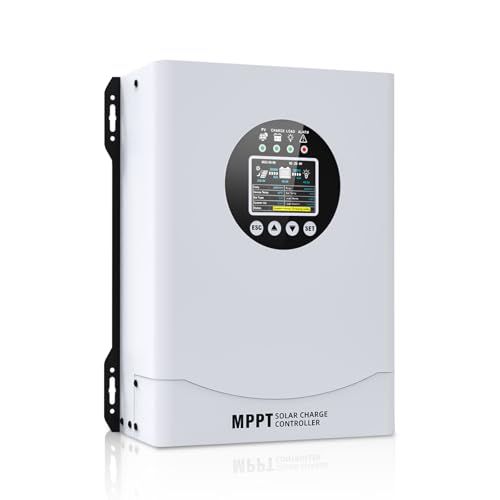
The EcoSolLi 120A MPPT controller is geared toward high-capacity RV systems, offering a broad voltage range and substantial current headroom. It includes comprehensive protection features, including overcurrent, over/under voltage, and temperature safeguards, making it suitable for demanding environments. Caution: its higher power rating requires careful installation planning and heat management to avoid thermal throttling in confined spaces.
Best for: RVs with large solar arrays or future expansion plans, where maximum charge efficiency across multiple battery chemistries matters and space for cooling is available.
Buying Guide: How to Choose the Right RV MPPT Controller
What size controller do I need? Start by calculating your panel array’s total wattage and the system’s voltage (12V vs 24V). Multiply the two to estimate current, then pick a controller with a higher rated continuous amperage to allow for sunny days and temperature effects. Consider future expansion when selecting a model to avoid premature upgrades.
Which features matter most for RV use? Bluetooth or mobile app monitoring helps with remote management. Synchronization across multiple controllers can simplify larger setups and optimize system-wide energy flow. Temperature compensation and battery-type support (gel, flooded, AGM, lithium) ensure proper charging profiles for longevity and safety.
What about shade performance? Look for MPPT controllers with multi-peak tracking and fast MPPT algorithms. These features maximize harvest in intermittent sun and cloudy conditions, which are common in RV parks and campgrounds.
How important is protection? Choose units with protective features like overcurrent, reverse polarity, surge, and thermal protection. For RVs in humid or storm-prone areas, rugged design and surge protection help reduce risk of damage during storms.
FAQ
- What does MPPT stand for? Maximum Power Point Tracking. It optimizes the solar array’s operating point to harvest the most energy.
- Can I run multiple MPPT controllers on one RV system? Yes, many models support synchronization, which lets controllers coordinate charging as if a single unit.
- Is lithium battery support essential? If you plan to use lithium or LiFePO4 packs, choose a controller that supports lithium charging profiles and recovery features.
- Do I need air flow for a high-capacity controller? Yes. High-current controllers can generate heat; ensure adequate ventilation or mounting away from enclosed spaces.
- Will these controllers work with 12V or 24V systems? Most listed models auto-detect or support both 12V and 24V, but always verify compatibility with your battery bank.