Best Electric Sprayer Pump Motors for Reliable Fluid Delivery
If you’re shopping for an electric sprayer pump, you’re looking for dependable water or chemical propulsion that can handle everyday spraying tasks. This guide highlights five top options, each suited to different needs—from lightweight garden use to heavier-duty spraying on farms or boats. The best fit depends on flow rate, pressure range, and chemical compatibility. The table below compares key specs to help you decide quickly.
| Product | Brand | Flow Rate | Max PSI | Best For |
|---|---|---|---|---|
| Chapin International 6-9206 | Chapin International | 1.0 GPM | Not specified | Light garden and small sprayers |
| Pumpoasis 12V Sprayer Pump (2.5 GPM) | Pumpoasis | 2.5 GPM | 0-60 PSI | General spraying, RVs, boats, irrigation |
| Pumpoasis 12V Sprayer Pump (5.4 GPM) | Pumpoasis | 5.4 GPM | 0-60 PSI | Higher-output spraying |
| Fimco 2.4 GPM Hi Flo | Fimco | 2.4 GPM | 60 PSI | Degreasing and irrigation with Roundup compatibility |
| VEVOR 5.5 GPM | VEVOR | 5.5 GPM | 70 PSI (40-100 PSI adjustable) | Heavy-duty, variable pressure needs |
| Ceelpeopar 2.5 GPM | Ceelpeopar | 2.5 GPM | 60 PSI | Agricultural spraying and soft wash |
Chapin 12V Diaphragm Pump: Durable, Self-Priming
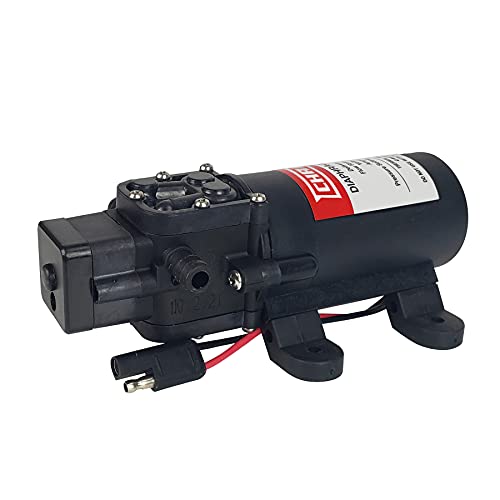
The Chapin 6-9206 is a 12V diaphragm pump designed for reliability in small systems. It features self-priming operation and a diaphragm design that minimizes shaft wear and maintenance. Best for buyers who want a simple, USA-engineered option backed by local support. A potential limitation is that detailed specifications beyond flow are not listed, so match with your system’s needs before buying.
Pumpoasis 12V Sprayer Pump 2.5 GPM

Best for mid-range spraying tasks, this 12V pump delivers 2.5 GPM with adjustable pressure up to 60 PSI. It has a corrosion-resistant diaphragm and self-priming capability, making it suitable for agricultural spraying, RVs, boats, and garden use. It’s a solid choice when you need dependable performance at a moderate flow. Best for users who want versatility with durable construction; caution: ensure compatibility with your chemical accounts and ensure inlet/outlet matching in your setup.
Pumpoasis 12V Sprayer Pump 5.4 GPM
Designed for higher-output needs, this 5.4 GPM pump delivers robust flow and features a 0-60 PSI range with auto shutoff for longevity. Best for larger spray jobs, agricultural tasks, or applications requiring more volume. Choose this if you regularly spray wide areas; limit: higher flow means greater system demand and potential wear if not matched with appropriate hoses and valves.
Fimco Hi Flo 2.4 GPM Pump

Fimco’s 2.4 GPM unit with 60 PSI max offers improved motor life and flow optimization. It’s a well-rounded choice for users needing reliable performance across standard sprayers and Roundup-compatible setups. Best for those who want a balance of flow and durability; limitation: warranty details are not expanded here, so verify coverage with the seller if warranties matter to you.
VEVOR 12V DC Diaphragm Pump

VEVOR’s 12V diaphragm pump delivers 5.5 GPM at up to 70 PSI, with auto start/stop pressure switching and self-prime capability. Best for scenarios needing steady delivery with higher flow, such as mobile wash or large irrigation tasks. It includes protective features and FCC certification for safety. Better for high-demand setups; caution: ensure your system’s wiring and power supply can handle the 17A motor draw.
Ceelpeopar 2.5 GPM Self-Priming Pump

Ceelpeopar combines 2.5 GPM flow with 60 PSI, offering corrosion resistance and a self-priming design suitable for agricultural spraying and soft wash. Best for users needing durable materials capable of handling agricultural chemicals, including Roundup. A limitation to watch: ensure the integrated pressure switch matches your spray configuration, and expect extended run times to require proper cooling.
Buying Guide: How To Choose The Right Electric Sprayer Pump
What flow rate do I need?
Flow rate determines how much liquid moves per minute. For small, hobby-grade spraying, 1-2 GPM is often enough. For larger areas or heavier tasks, 3-5 GPM or more provides faster coverage. Match flow to pump capacity and hose diameter to prevent cavitation.
Which pressure range is best?
Most sprayers operate between 0-60 PSI, with some models offering up to 70 PSI. Higher PSI is useful for reaching distant nozzles or dense sprays, but increases wear on seals and hoses. Consider a pump with a pressure switch that auto-regulates to your intended range.
What about chemical compatibility?
Diaphragm pumps with corrosion-resistant diaphragms and Viton valves resist common agricultural chemicals and water-soluble detergents. If you plan to spray bleach, Roundup, or other harsh liquids, verify material compatibility in the product data.
Self-priming and dry-running features matters?
Self-priming capability enables operation above water sources and reduces priming time. Dry-running protection helps prevent damage when water runs low, extending pump life in field use.
What about installation and power?
Most pumps run on 12V DC, requiring a compatible battery or power source. Check current draw (amps) to ensure your wiring, fuses, and battery can handle peak loads without overheating. Secure mounting and correct inlet/outlet orientation improve efficiency and longevity.
Durability and warranty considerations
Look for corrosion-resistant housing, quality diaphragms, and robust seals. While warranties vary, a longer-term protection plan indicates confidence in reliability. For frequent, heavy use, prioritize models with higher motor amperage and proven endurance.
Quick comparison by use case
- Home garden sprayer: Chapin 12V or Ceelpeopar 2.5 GPM
- Farm spraying or larger yards: VEVOR 5.5 GPM or Pumpoasis 5.4 GPM
- RVs, boats, or soft wash: Pumpoasis 2.5 GPM or Ceelpeopar
FAQ
- What is a self-priming diaphragm pump?
It can draw liquid from a source above the pump and continue operation without manual priming, reducing setup time.
- Can I use these pumps with Roundup or bleach?
Some models advertise compatibility with Roundup and harsh chemicals; always verify material compatibility in the product specs before use.
- Do these pumps require maintenance?
Diaphragm pumps are designed for durability, but routine checks on seals and diaphragms help prevent leaks and failures.
- Is higher GPM always better?
Not necessarily; larger spray projects may benefit from higher flow, but the system must support it without excessive pressure or heat.
- How do I know which PSI to choose?
Consider nozzle type, hose length, and spray distance. A broader PSI range provides flexibility for different tasks.
- Are these pumps water-powered or chemical-powered?
Most are electric 12V DC powered; they move liquids using an internal diaphragm and do not run on external fuels.