Best 30 Amp RV Inverter Generators for Reliable Campground Power
Find the best 30 amp RV inverter generator to power your RV or campsite without sacrificing quiet operation or clean power. This guide highlights five top options, each with RV-ready outputs and inverter technology suitable for sensitive electronics. Ideal for campers, small-home backup needs, and mobile enthusiasts who require stable 120V power with low noise and portable design.
The following table provides a quick comparison of the selected models to help you decide at a glance.
| Model | Fuel | Starting Watts | RV 30A Outlet | Approx. Weight |
|---|---|---|---|---|
| PowerSmart 3600-Watt | Gas | 3600 | Yes | ~95 lbs |
| EFURDEN 4300 | Gas | 4300 | Yes | ~45 lbs |
| WEN DF360iX | Gas/Propane | 3600 | Yes | ~80 lbs |
| Champion 4000 | Gas | 4000 | Yes | ~49 lbs |
| Westinghouse 2550 | Gas | 2550 | Yes | ~42 lbs |
PowerSmart 3600-Watt Portable Inverter Generator

Best for: Campers and small RV setups needing a reliable 30A RV-ready outlet with clean power. The PowerSmart model provides 3600 starting watts and 3200 running watts, backed by advanced inverter technology that keeps THD under 3% for sensitive devices. Its 1.3-gallon tank supports up to about 8 hours at 25% load, making it suitable for overnight camping and light home backup. Choose this if you want a compact unit with solid runtime and compatibility with electronics such as laptops and smartphones.
Why selected: It combines high surge capabilities with stable inverter output and a dedicated 30A RV outlet, giving you robust performance for mid-size appliances like air conditioners and refrigerators.
Caution: The 1.3-gallon tank limits runtime at higher loads; plan refueling stops for longer use.
EFURDEN 4300 Watts Portable Inverter Generator
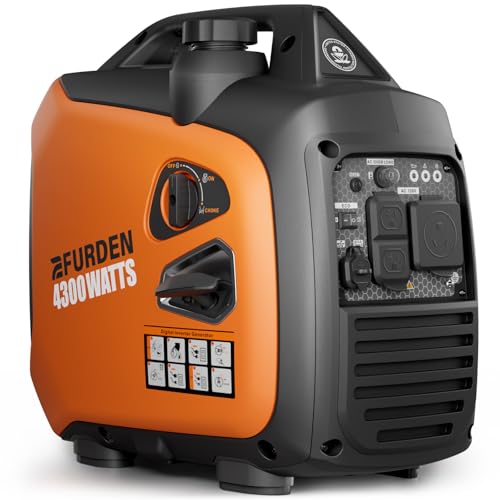
Best for: Home backup and RV use where higher peak power is needed while maintaining 30A RV readiness. The EFURDEN unit delivers 4300 peak watts and 3300 running watts with EPA compliance. It offers a 30A RV outlet and multiple ports, ensuring compatibility with various devices. It’s suitable for powering a small fridge, essential electronics, and tools during outages or camping trips.
Why selected: Higher peak output than typical 30A units provides a comfortable buffer for simultaneous loads, while its EPA compliance adds a level of regulatory assurance.
Caution: Check local noise restrictions, as some environments may require extra quieter operation.
Champion Power Equipment 4000-Watt RV Ready Inverter

Best for: Campers and outdoor enthusiasts seeking a lightweight option with reliable runtime and a flexible parallel kit option. At under 49 pounds, this inverter delivers 4000 starting watts and up to 10 hours of run time. Its CO Shield sensor adds an extra safety layer, and the optional parallel kit lets you double output by pairing with another 4000-watt Champion inverter.
Why selected: The unit balances weight, power output, and safety features, making it a strong all-around choice for portable RV use and short-term home backup.
Caution: Running at or near maximum output for extended periods can impact fuel economy; consider pairing with a second unit for sustained high demand.
WEN 6800-Watt Dual Fuel RV-Ready Inverter

Best for: Users needing higher output for RVs with higher power demands or as a backup EV charging option. The WEN DF680iX runs on gasoline or propane, delivering 6800 surge watts and 4500 running watts, with a CO Shutdown Sensor for safety. It provides a low-power Level 2 charging capability when paired with suitable equipment, and it’s designed for electric vehicle backup scenarios as well as camping.
Why selected: The dual-fuel design and higher surge capability make this a flexible choice for heavier loads and longer outages, particularly if you require more headroom for simultaneous devices.
Caution: Heavier unit and more complex fuel choice may require careful handling and storage planning when camping or traveling.
WEN 3600-Watt Dual Fuel RV-Ready Generator

Best for: Those who want a compact, quiet option with dual-fuel flexibility for RVs and small homes. The DF360iX runs on gasoline (3600 surge, 2900 rated) or propane (3500 surge, 2600 rated) with very low THD output. It’s ideal for sensitive electronics such as phones and laptops, and its quiet operation makes it suitable for camping.
Why selected: A balanced mix of portability, RV-ready features, and clean power. It’s a practical choice for users who value low noise and inverter stability.
Caution: Lower running wattage means managing loads more carefully to avoid tripping on high-demand devices.
Buying Guide: Key Considerations For 30 Amp RV Inverter Generators
- Power needs: Assess starting and running watts to ensure the unit can handle your RV air conditioner, fridge, and other essentials simultaneously.
- RV readiness: Look for a dedicated 30A TT-30 outlet and proper RV wiring compatibility for a safe hookup.
- Fuel type: Gasoline vs dual-fuel; dual-fuel offers flexibility but may add weight and complexity.
- Noise level: Consider dBA ratings at a practical distance; camping and quiet neighborhoods benefit from lower noise.
- Runtime and fuel capacity: Larger tanks extend runtime, but higher wattage units may require more frequent refueling on long trips.
- Electrical purity: Inverter technology with THD under 3% is better for electronics, laptops, and medical devices.
- Portability: Weight and handle design impact transport to campsites or storage in vehicles.
- Safety features: CO shutdown sensors, low-oil shutoff, and automatic shutdowns enhance safe operation.
- Expandability: Parallel capability may double power when needed, depending on your load profile.
Frequently Asked Questions
- What does 30A RV-ready mean on generators? It indicates a dedicated 30-amp RV outlet (TT-30R) designed to power typical RVs without adapters.
- Are inverter generators quieter than conventional models? Yes, inverter generators typically run at variable speeds, reducing noise and improving fuel efficiency.
- Can I run all RV appliances on a 30A inverter generator? It depends on the combined running watts; verify your sum of loads before starting multiple devices.
- Is dual-fuel better for RV use? Dual-fuel provides flexibility and fuel options, but some users prioritize lightweight portability and simplicity.
- Should I buy a higher-wattage model for future needs? If you anticipate upgrading to more demanding appliances, a higher-wattage unit offers headroom and reduces stress on the generator.
- What maintenance practices extend inverter generator life? Regular oil changes, air filter cleaning, proper fuel stabilization, and keeping the unit dry and clean.