Best 24 Watt Solar Panel Options for Off-Grid Power and Charge Maintenance
Answering the common buyer question: which 24 watt solar panels offer dependable charging for 12V and 24V systems? This guide highlights five practical 24W- or closely matching panels, emphasizing off-grid usability, compact size, and reliable performance. Best for RVs, boats, trailers, cabins, and maintenance charging—depending on your voltage and storage needs.
Below is a quick comparison of the selected products, focusing on who they’re best for and why they stand out. The table also helps you quickly compare key specs like Pmax, Vmp, Imp, and form factor.
| Product | Best For | Key Specs |
|---|---|---|
| Newpowa 35W 24V High-Efficiency Monocrystalline Solar Panel | Off-grid systems needing 24V battery charging | Vmp 34.40V, Imp 1.02A, 20.67 x 15.75 x 1.10 in |
| SUNER POWER 24V 30W Solar Battery Charger Maintainer | Trickle charging with smart MPPT for 24V batteries | Ultra-Smart MPPT, 99% tracking, 3-stage charging |
| SOLPERK Solar Panel Kit 30W 24V | Permanent 24V charging for outdoor installations | 30W at 24V, IP67, 10A PWM controller, 25-year life |
| BLAVOR 30W Solar Charger | Portable charging for camping and gadgets | 24W USB-C and USB-A outputs, foldable, IPX4 |
| Newpowa 20W 12V Solar Panel | 12V off-grid applications and small battery charging | Vmp 19.08V, Imp 1.05A, easy install |
Newpowa 35W 24V High-Efficiency Monocrystalline Solar Panel

- Brand: Newpowa
- Power: 35W, Vmp: 34.40V, Imp: 1.02A
- Design: 10BB solar cells for higher efficiency and longer lifespan
- Best for: RVs, boats, campers needing 24V charging in limited space
- Limitation: Maximum power is lower than many 50W options; best used where 24V charging is preferred
Renogy Solar Panel 50 Watt 12 Volt
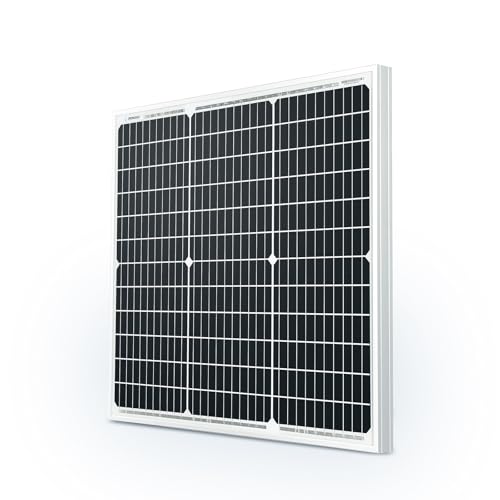
- Brand: Renogy
- Power: 50W, Monocrystalline PV module
- Features: Advanced encapsulation, EL testing, anti-reflective glass, aluminum frame
- Best for: Off-grid setups where 12V battery charging is standard, with robust low-light performance
- Limitation: Not a 24V-specific panel, consider system voltage compatibility
SUNER POWER 24V 30W Solar Battery Charger Maintainer

- Brand: SUNER POWER
- Power: 30W, 24V system compatibility
- Features: Ultra-Smart MPPT up to 99% tracking, improved 3-stage charging, full safety protections
- Best for: 24V battery maintenance and trickle charging in RVs, cabins, and remote deployments
- Limitation: 30W provides modest charging rate for larger batteries; plan for longer fill times
SOLPERK Solar Panel Kit 30W 24V
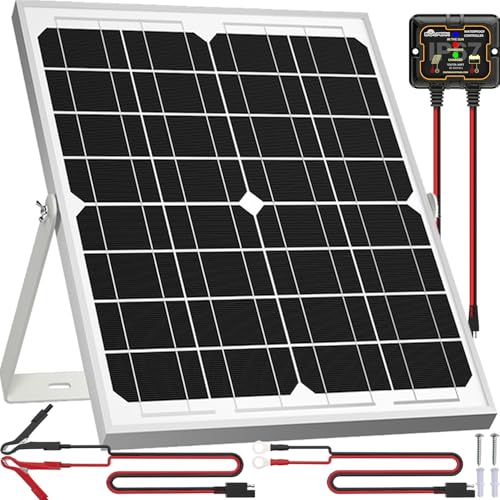
- Brand: SOLPERK
- Power: 30W at 24V with IP67 waterproof rating
- Controller: 10A PWM smart controller, adjustable mounting
- Best for: Outdoor installations on RVs, boats, or cabins with reliable weather resistance
- Limitation: PWM controller is less efficient than MPPT in some conditions; expect slower peak charging in shaded areas
BLAVOR 30W Solar Charger

- Brand: BLAVOR
- Power: 30W, USB-C and USB-A outputs; foldable design
- Best for: Portable charging of phones, tablets, and small devices while camping or at a campsite
- Limitation: Not a fixed-roof panel; best for portable, on-the-go use rather than permanent off-grid installations
Newpowa 20W 12V Solar Panel

- Brand: Newpowa
- Power: 20W, Vmp 19.08V, Imp 1.05A
- Best for: Small 12V off-grid setups and quick battery topping
- Limitation: Lower wattage; not ideal as a primary charging source for larger systems
Buying Guide
Key considerations for choosing a 24 watt panel and matching system:
- System voltage compatibility: Ensure the panel’s voltage aligns with your battery bank (12V vs 24V). 24V panels are typically paired with larger bank setups or DC-DC charging for higher efficiency.
- Power needs and charging rate: A 24V 30W panel provides modest charging. For larger battery banks or faster replenishment, consider higher wattage panels or multiple panels.
- Technology: Mono vs poly cells. Mono-crystalline panels (like most listed) offer higher efficiency and better performance in limited space, making them favorable for RVs and boats.
- Controller type: MPPT controllers optimize power conversion and are advantageous in variable light; PWM controllers are simpler and often sufficient for trickle charging or small systems.
- Durability and weather resistance: Look for waterproofing, corrosion-resistant frames, and tempered glass if you’ll expose panels to outdoor conditions.
- Portability vs fixed installation: Foldable or portable panels are ideal for campers and emergency kits, while fixed panels suit permanent outdoor setups on vehicles or sheds.
- Installation considerations: Pre-drilled mounting holes, included wiring, and mounting hardware reduce installation effort and ensure a solid mount against wind and weather.
FAQ
- What is a typical use case for a 24V solar panel?
24V panels are best for larger 24V battery banks or systems that utilize high-voltage charging, providing improved efficiency and compatibility with certain off-grid equipment.
- Can a 24V panel work on a 12V system?
Yes, but it requires an appropriate charge controller or converter to step voltage down safely and effectively to 12V charging levels.
- Is MPPT worth it for a 24W panel?
MPPT controllers increase efficiency, especially in partial shade or fluctuating light. For small 24W panels, MPPT can offer noticeable gains in real-world conditions.
- What are the downsides of PWM controllers?
PWM controllers are simpler and cheaper but can be less efficient, particularly when sun conditions are suboptimal or when panel voltage is much higher than the battery.
- How should I choose between a fixed panel and a portable kit?
Fixed panels are better for long-term installations on RV roofs or cabins; portable kits suit frequent travel, camping, and emergency setups where relocation is common.
- What maintenance is required for these panels?
Keep panels clean, ensure mounting hardware is secure, and inspect wiring for wear or corrosion to maintain optimal performance.