Best Mains Powered Carbon Monoxide Alarms for Home Safety
Answering the search intent for reliable mains-powered CO alarms, this guide highlights five practical options suited to different needs—from travelers seeking portable units to homeowners needing wall-mounted protection with backup power. Each product includes how it works, ideal user profiles, and key limitations to consider. The quick buyer’s table below helps you compare core features at a glance.
| Product | Best For | Power | Key Benefit |
|---|---|---|---|
| Kidde 3rd Edition AA Battery Powered (Travel/Home) | Apartment dwellers and travelers | AA Batteries (portable) | Portable with simple wall/table placement |
| TOPTES CT-580 Portable CO Detector | Workshops, camping, and small business use | Rechargeable battery | High-sensitivity DDS sensor, vibration alert |
| Kidde 5th Edition COB (AA Battery Powered) | Vacation rentals and frequent travelers | AA Batteries | Compact, travel-ready with LED indicators |
| Kidde 1-Button Portable CO Alarm (AA Battery) | Basic portable CO surveillance | AA Batteries | Simple, portable with test/hush |
| Kidde 30CUDR Smoke & CO Detector (AA Battery) | Homes needing dual protection | AA Batteries | Smoke and CO with faster detection |
Kidde Carbon Monoxide Detector, 2-AA Portable Alarm
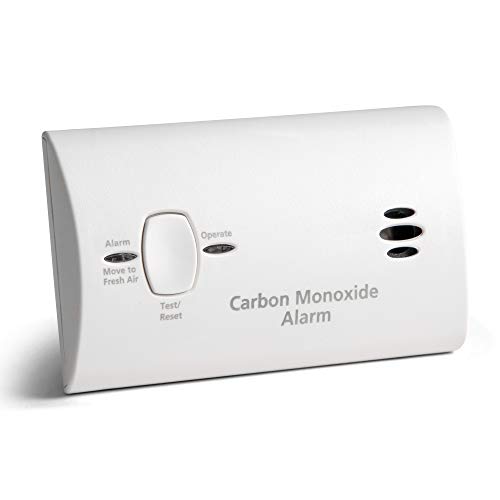
The Kidde model with an electrochemical sensor provides reliable CO detection and runs on two AA batteries, enabling both wall mounting and tabletop placement. It includes green power indication and an 85 dB alarm with a red LED to signal CO presence, making it a good fit for renters and travelers who want a straightforward, no-wiring setup. A potential limitation is reduced longevity compared to 10-year battery units, requiring more frequent battery checks.
Best for: Renters and travelers who need a simple, portable CO alarm that works during power outages without wiring.
TOPTES CT-580 Portable CO Detector

The TOPTES CT-580 is a high-sensitivity CO detector with a TFT color display and multiple alarm modes, including audible, visual, and vibration alerts. It supports 0-1000 PPM detection and offers user-friendly calibration options, history logs, and zero/standard gas calibration. This makes it suitable for personal use and small business environments where rapid CO assessment is needed. A caveat is that it’s a portable device with rechargeable power rather than a fixed home-installed unit, which means it won’t provide hard-wired protection.
Best for: Individuals or small setups that want quick CO checks and flexible installation across rooms or vehicles.
Kidde Carbon Monoxide Detector, AAA Battery-Powered COB

This AA-powered detector uses an electrochemical sensor with a loud 85 dB alarm and clear LED indicators. Its compact, travel-friendly design makes it ideal for hotels, vacation rentals, and other temporary living spaces where you need reliable CO surveillance away from home. The device is straightforward to install and operate but, like other AA-powered options, requires periodic battery replacement rather than a long-life power solution.
Best for: Renters and travelers who want a compact, easy-to-carry CO alarm for use in multiple locations.
Kidde Carbon Monoxide Detector, AA Battery Powered CO Alarm
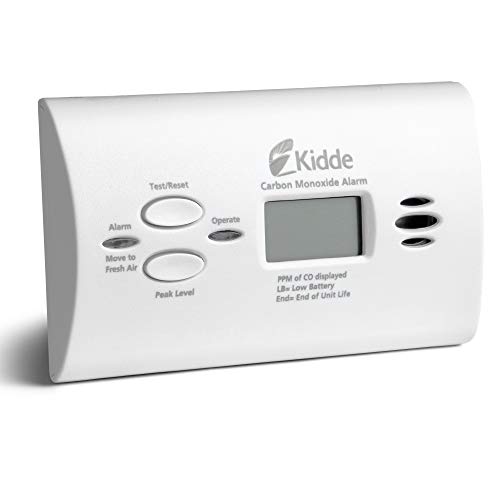
This model uses an electrochemical sensor for accurate CO detection and operates on two AA batteries, allowing flexibility in placement without wiring. It is portable and suitable for quick deployment in bedrooms or living rooms where wall outlets are scarce. A limitation is reliance on battery power, so users must monitor battery life and replace batteries as needed to maintain protection.
Best for: People who want a dependable, easy-to-install CO alarm that can be moved between rooms or accommodations.
Kidde Smoke and Carbon Monoxide Detector (AA Battery)

This 2-in-1 detector provides both smoke and CO detection with an 85 dB alarm and a red LED warning. It uses AA batteries for easy installation away from wiring. The combination sensor helps streamline protection, though users should note that dual-sensor devices can sometimes require more frequent battery checks and calibration to minimize false alarms in busy kitchens or damp environments.
Best for: Homes seeking consolidated safety with both smoke and CO protection in a single device.
X-Sense 10-Year Battery CO & Smoke Alarm

The X-Sense SC07 combines a photoelectric smoke sensor with an electrochemical CO sensor in a single unit with a ten-year sealed battery. It is UL 217 and UL 2034 certified for safety, offering long-term protection without battery changes for the decade. It does not support wireless interconnection, so it is best for standalone protection in a fixed location. For interconnection, consider models designed for networked setups.
Best for: Homes that want long-term, low-maintenance protection with both smoke and CO detection in one device.
Kidde Carbon Monoxide + Explosive Gas Alarm (Plug-in)
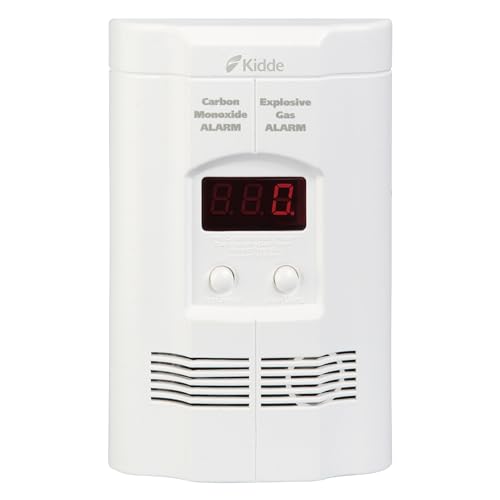
This plug-in CO alarm includes a 9V battery backup and a digital LED display showing CO levels or indicating GAS for explosive gas scenarios. It provides convenient, temporary protection during power outages while staying connected to the home’s electrical system. A potential limitation is reliance on the home’s wiring for primary power, which may be disrupted during power outages in certain conditions.
Best for: Homes needing an easy, plug-in solution with battery backup for outages and a clear digital readout of CO levels.
Buying Guide: Key Considerations for Mains Powered CO Alarms
- Power source and backup: Decide between hard-wired, plug-in with battery backup, or battery-only units. Backup power is crucial during outages.
- Sensor type and longevity: Electrochemical sensors are common for CO. Look for 10-year or longer-life designs to reduce maintenance.
- Alarm features: Consider loudness (dB), visual indicators, and optional vibration alerts for hard-of-hearing users or noisy environments.
- Interconnection: Some models support wireless interconnection for multi-room protection; others are standalone. Plan based on home size and wiring capability.
- Dual protection options: If you also want smoke detection, review combined units like 2-in-1 detectors, noting potential false alarm considerations in busy kitchens.
- Installation: Wall mounting versus tabletop placement; ensure the device is mounted at an appropriate height per your room layout and local guidelines.
- Maintenance: Check battery status regularly if not using long-life power sources. For plug-in or hard-wired units, periodic testing is still essential.
- Certification and standards: Look for UL 217 (CO) and UL 2034 (CO alarms) compliance where applicable for reliability and safety.
Frequently Asked Questions
- What is the difference between a CO detector and a CO alarm?
CO detectors primarily alert you to the presence of carbon monoxide, while CO alarms emphasize immediate audible warnings; many devices combine both functions. - Do CO alarms require professional installation?
Not necessarily. Battery-powered or plug-in models are designed for easy self-installation; hard-wired units may require professional setup, depending on the home’s electrical system. - How often should CO detectors be tested?
Test monthly or as recommended by the manufacturer to ensure proper operation and battery integrity if applicable. - What does a digital CO readout indicate?
Some models show the current CO concentration, which helps track changes in the environment and assess potential source risk. - Can CO alarms protect against gas leaks?
Most CO alarms do not detect natural gas or propane leaks; use specialized gas detectors for explosive gas monitoring in addition to CO alarms. - Is a long-life battery worth it?
Yes, for low-maintenance protection. Look for sealed 10-year batteries where available, especially in hard-to-reach locations.