Best Smoke Alarms With Escape Light for Safer Homes
Find the right smoke alarm with an escape light by prioritizing visibility during an emergency. These devices combine smoke detection with a built-in light to illuminate your path, helping with safe evacuation. The top picks below cover options for general households, accessibility needs, and easy maintenance. Each product listing includes who it’s best for and why it was selected, plus a practical caveat where applicable.
Summary of selected products:
| Product | Best For | Key Benefit |
|---|---|---|
| First Alert SM210L | Families seeking a long-life, maintenance-free alarm | 10-year sealed battery plus safety path light |
| First Alert SM110LED-AC | Homes needing hardwired reliability and a visual alert | LED strobe plus 10-year battery backup |
| First Alert SMI100 | Budget-friendly, easy installation | Battery-operated with simple maintenance |
| Kidde 20SD10 | Homes prioritizing fast smoke detection with LED indicator | 10-year battery and red LED visual cue |
| Kidde 20SDR | AA-battery setups needing quick install | Faster detection with LED status and 85 dB alarm |
First Alert SM210L: 10-Year Sealed Battery With Safety Path Light

The SM210L combines advanced sensing with a built-in safety path light to guide occupants to safety during a home emergency. It uses a 10-year sealed battery, eliminating the need for battery replacements and reducing the chance of a chirp during a crisis. This model is best for households that want long-term, low-maintenance coverage and a clearly lit escape route during power outages or emergencies.
Best for: Families that value continuous protection without frequent maintenance and need visible guidance in low-light conditions. Caution: The unit relies on a sealed battery; ensure the installation location complies with local electrical codes and mounting guidelines.
First Alert SM110LED-AC: Hardwire With LED Strobe
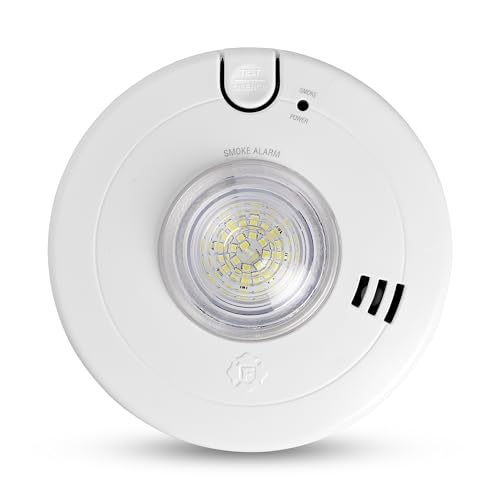
This hardwired model offers continuous protection with a 10-year battery backup for power outages. The integrated LED strobe provides a bright, continuous visual warning, making it ideal for hearing-impaired residents or any space where audio alarms may be less noticeable. It combines reliable sensing with a prominent light cue to help occupants locate exits quickly.
Best for: Homes needing a dependable hardwired solution with a powerful visual alert. Caution: Requires professional or compliant electrical installation; verify junction box compatibility and local electrical requirements.
First Alert SMI100: Battery-Operated On a Budget

The SMI100 is a straightforward battery-operated option with easy installation and front-access battery replacement. Its simplicity makes it a practical choice for small apartments or rooms where wiring is not feasible. While it lacks a dedicated escape light, its compact design and reliable sensing still support quick evacuation in typical setups.
Best for: Renters or homeowners seeking an uncomplicated, low-cost smoke alarm with easy maintenance. Caution: It does not include a built-in escape light, so consider pairing with portable lighting or selecting a model with visual signaling if light guidance is important.
Kidde 20SD10: 10-Year Battery With LED Status

The 20SD10 features a 10-year battery and a red LED status indicator for clear visual warnings. It is designed to detect smoke more quickly than standard models and provides a long-lasting, low-maintenance solution for general homes. The advanced sensing helps reduce false alarms while preserving rapid detection.
Best for: Homeowners who want a reliable, long-life battery option with a visual indicator for quick status checks. Caution: LED status light is helpful, but may be less noticeable in very bright rooms or direct sunlight; place it where it remains visible.
Kidde 20SDR: AA Battery Powered With LED

The 20SDR uses two AA batteries for easy, no-wiring setup and includes LED status lights plus an 85 dB alarm. It balances quick smoke detection with practical battery-powered operation, making it a versatile option for rooms where wiring may be inconvenient. The 10-year warranty adds value for long-term protection.
Best for: Quick-install, battery-powered setups in homes where wiring is impractical. Caution: As with all AA-powered alarms, battery life and replacements should be monitored to maintain reliability.
Buying Guide
- Power source: Choose hardwired with backup (SM110LED-AC, 7020BSL) for continuous operation, or battery-powered (SM210L, SMI100, 20SDR, 20SDR) for easier installation. Consider households with power-outage concerns when selecting a backup option.
- Escape lighting: If visual exit guidance matters, prioritize devices with integrated LED strobes or safety path lights (SM210L, SM110LED-AC, 7020BSL).
- Detection technology: Look for Precision Detection or similar advanced sensing to reduce nuisance alarms while maintaining quick response to real smoke.
- Battery life and maintenance: A 10-year sealed battery means less upkeep, but ensure installation height and location comply with local codes and maintenance expectations.
- Accessibility needs: For hearing-impaired occupants, a bright LED or strobe can be crucial. Consider models with visible signals beyond the audible alarm.
- Installation considerations: Verify the number of devices needed for bedrooms, living areas, and hallways, and confirm compatibility with existing wiring or mounting boxes if upgrading.
FAQ
- Do smoke alarms with escape lights require professional installation?
Hardwired units may require professional installation. Battery-powered models are typically easier to install without wiring.
- How long do the batteries last on 10-year models?
10-year sealed batteries are designed to last the life of the alarm, reducing maintenance frequency.
- Can I mix models with and without escape lights?
Yes, but using escape-light models in sleeping areas or near exits can improve evacuation visibility.
- What is the advantage of a built-in LED strobe?
The LED strobe provides a clear visual alert, which is especially helpful for people with hearing impairment or in loud environments.
- How do I know if a device meets current safety standards?
Look for compliance with local codes and standards and consult product documentation for sensing technology details.
- Should I replace all alarms at the same time?
Replacing multiple alarms in a house at the same time ensures consistent detection technology and escape signaling across zones.