Best Auto Water Level Controller Solutions for Reliable Tank and Pool Management
Answering the common need for affordable and automatic water level control, this guide highlights five reliable auto water level controllers. These devices help prevent overflows, dry running, and wasted water, making them ideal for homeowners, hobbyists, and small-scale operators. The top picks cover battery-free float valves, wireless sensors, and DIN-rail level relays to fit pools, tanks, ponds, and irrigation systems. Below is a quick buyer summary to compare core strengths and target users.
| Product | Best For | Key Benefit |
|---|---|---|
| Stropum GL-1 Automatic Water Level Controller | Home aquariums, small tanks, garden hoses | Automatic management with multiple modes |
| HuseWming 1/2″ 3/4″ Float Valve (1 Pack Short) | Non-pump tanks, ponds, livestock troughs | No electricity, pressure-based shutoff |
| Stropum FL-1 Sump Pump Float Switch Controller | Sewage or wastewater systems, basins | Corrosion-resistant float switch, automatic control |
| Luubom Long-Range Wireless Controller | Remote tanks, wells, cisterns | 3 km range, solar-powered sensor, auto refill |
| GOOGIES Float Valve Mini (2 Pack) | Compact, easy-install tanks and pools | Sturdy 304 stainless steel float valves |
Stropum GL-1 Automatic Water Level Controller

The Stropum GL-1 offers four modes plus an auto/manual switch, enabling water supply, drain, low-water stop, or joint mode. This makes it suitable for small domestic systems where automatic water level management prevents overflow and dry running. The built-in detector sensors prioritize accurate level detection for long-lasting performance. Best for: small tanks, garden irrigation, and domestic water features where straightforward, automatic control is needed. Caution: verify compatible power supply (AC 110V) and sensor placement to ensure reliable sensing.
HuseWming Auto Water Level Control Float Valve (1 Pack Short)
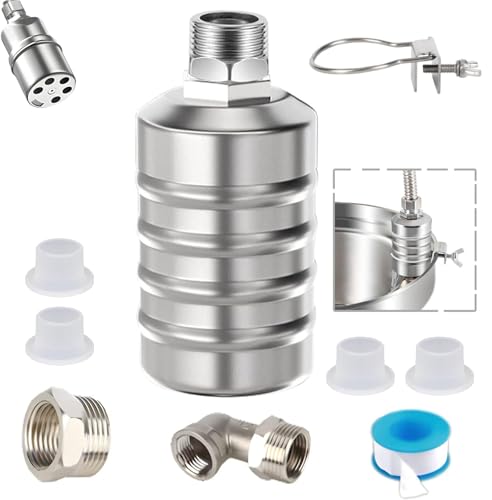
This valve uses smart auto-shutoff driven by water pressure, eliminating electricity needs for operation. It includes 1/2″ and 3/4″ interfaces and a multi-interface kit for top-entry or side-entry tanks. Best for: water tanks, fish ponds, and livestock troughs where a simple, non-electrical float valve is preferred. Limitation: leakage can occur if threads are not properly sealed; follow the included guidance on sealing and tape winding for best results.
Stropum Automatic Sump Pump Float Switch Controller (FL-1)

The FL-1 model provides corrosion-resistant float switch technology with automatic water level management. It is designed to prevent overflow and dry running in sump, sewage, or septic setups. Best for: basins and wastewater-related applications where robust, automatic sensing is required. Caution: ensure the float switch is properly positioned to avoid obstruction or false readings from debris.
Luubom Long-Range Wireless Auto Water Level Controller

This system actively controls pumping, refilling, and dry-run protection with a long-range wireless sensor up to 3 km and a solar-powered detector. Best for: remote tanks, wells, and cisterns where mains power is unreliable or unavailable. Limitation: wireless systems may require line-of-sight or clear outdoor conditions to maintain the full 3 km range in practice.
HuseWming 2 Pack Auto Water Level Float Valve Set

This two-pack extends the single-valve approach, offering redundancy for two tanks or zones. It includes 1/2″ and 3/4″ interfaces plus sealing guidance. Best for: multiple tanks, ponds, or troughs where a compact, non-electric valve system saves space. Caution: confirm thread compatibility with existing hoses and fittings before installation.
GOOGIES Mini Float Valve Set (2 Pack)

This set features small-diameter 304 stainless steel float valves with 1/2″ to 3/4″ adapters for BSP threads. Best for: compact water tanks, pools, and hydroponic systems requiring a lightweight, corrosion-resistant solution. Limitation: smaller size may limit flow or require frequent adjustment in high-demand systems.
Buying Guide
- What type of system are you controlling? Consider whether you need a mechanical float valve, a relay-based controller, or a wireless sensor system for remote monitoring.
- Power source and installation. Do you prefer non-electrical, pressure-driven shutoff (float valves) or an electrically powered controller with sensors and relays?
- Environment and medium. Are you dealing with clean water, wastewater, ponds, or pools? Choose materials (304 stainless steel, corrosion resistance) and IP ratings accordingly.
- Range and remote operation. For distant tanks, a long-range wireless option may reduce wiring and maintenance.
- Maintenance and durability. Look for corrosion resistance, easy sealant maintenance, and simple replacements to minimize downtime.
Frequently Asked Questions
- What is an auto water level controller?
An auto water level controller automatically detects and maintains a target water level by controlling a valve, pump, or relay based on sensor readings. - When should I choose a float valve over an electronic controller?
Choose a float valve for simple, non-electric, gravity-based shutoff. Electronic controllers are better for remote monitoring, automatic refilling, and integration with pumps or relays. - Can wireless level controllers work in remote locations?
Yes, some models offer long-range wireless sensors (up to several kilometers). Ensure Line-of-Sight and environmental conditions support the range. - What maintenance is required?
Regular seal checks, cleaning debris from sensors, and inspecting threads and gaskets help prevent leaks and ensure reliable operation. - Are these devices suitable for pools and ponds?
Many models are designed for pools, ponds, and tanks, but verify suitability for potable water, chlorine exposure, and pump compatibility in your setup. - Do these devices require manuals or wiring?
Some options are plug-and-play float valves; others require electrical wiring to relays or controllers. Follow specific product instructions for safe installation.