Best 105 Amp Hour Marine Battery for Boats and RVs
If you need long-lasting power for marine or RV use, a 105 amp hour battery is a solid choice. This article identifies five top picks that balance deep-cycle endurance, starting power, and maintenance needs. It’s ideal for boaters who run trolling motors, lights, pumps, and electronics, as well as RV owners who rely on reliable starting power and extended runtime. The selections below are chosen for different needs—from pure lithium chemistries to proven AGM options—so you can compare performance, lifecycle, and compatibility at a glance. The buyer intent is clear: find a dependable 105Ah-class option that matches your setup and maintenance preferences.
Summary table of chosen products:
- Interstate Batteries Marine/RV Battery 12V 100Ah AGM Dual Purpose
- Interstate Batteries Marine Deep Cycle Battery 12V 100Ah AGM 925CCA
- VEVOR 12V 105Ah LiFePO4 Dual Purpose Battery
- WEIZE 12V 100Ah Deep Cycle Battery, Group 31
- BUKNUWO 12.8V 100Ah LiFePO4 Battery with 100A BMS
Interstate Dual-Purpose AGM 100Ah Marine Battery

Best for: Boat owners who want a single battery that starts the motor and powers the trolling motor and onboard accessories. This 100Ah AGM battery is marketed as a two-in-one solution for cranking and deep cycle needs, meaning you can rely on it to start engines while delivering steady current to trolling motors, electronics, and lights. It’s built to tolerate rugged marine environments and fast recharging.
Why selected: It combines pure lead AGM construction with robust cycle life claims, aiming to reduce the number of batteries needed on a vessel. The emphasis is on durability and durability-based longevity, making it suitable for weekend boaters who value reliability over a long season.
Caution: As with many AGM batteries, charging and discharging within recommended voltage windows is important to maximize life. Confirm your charger is compatible with AGM 12V systems to avoid overcharging.
Interstate Deep Cycle AGM 100Ah Marine Battery
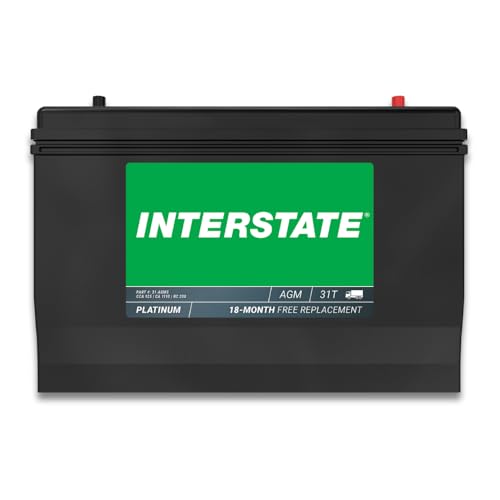
Best for: Owners who prioritize deep-cycle performance for accessories like fish finders, radios, and pumps, while still needing reliable starting power for engine cranking. This 100Ah AGM option emphasizes extended discharge capabilities and thicker plates designed to withstand repeated cycles without quickly losing capacity.
Why selected: It explicitly targets deep-cycle use with high-cranking capabilities, aligning with vessels that run multiple devices for hours. The dual-purpose framing is attractive for boats with limited space and a desire to minimize battery count.
Caution: The label notes not to use it as a replacement in automotive or mobility devices, so it’s best reserved for marine and RV 12V systems only.
VEVOR 12V 105Ah LiFePO4 Dual Purpose Battery

Best for: RVs, boats, and off-grid setups where weight savings and long cycle life are priorities. This LiFePO4 battery provides high starting current (1000CCA) and a substantial 105Ah capacity, paired with a built-in BMS for protection against overcharge, over-discharge, short circuits, and temperature extremes.
Why selected: LiFePO4 chemistry offers longer lifecycle and faster, more efficient charging than lead-acid equivalents. The Bluetooth monitoring feature appeals to tech‑savvy buyers who want real-time insight into capacity and health.
Caution: LiFePO4 systems require compatible chargers and BMS-aware connections. Check that your boat or RV’s charging setup supports LiFePO4 charging protocols and voltages.
WEIZE 100Ah Deep Cycle Group 31 Battery

Best for: Marine and RV users who want a sealed, maintenance-free option with a strong depth-of-discharge profile and reliable performance for trolling motors and onboard equipment.
Why selected: It emphasizes sealed lead-acid (SLA) reliability, safety, and a compact form factor. The 1100A peak discharge (rating context) helps clarify its suitability for high-demand start and cycle scenarios. It’s a practical choice for those who prefer traditional AGM/SLA chemistry.
Caution: Slower recharge rates and higher weight compared to LiFePO4 options are typical. Ensure your charging system supports 12V AGM batteries, especially for high-cycle use.
BUKNUWO 12.8V 100Ah LiFePO4 Battery

Best for: Enthusiasts who want the lightweight advantage of LiFePO4 with a generous 100Ah capacity and high cycle life. Suitable for both marine and off-grid RV scenarios, especially where weight is a constraint and long lifespan matters.
Why selected: It offers a strong cycle life, high number of allowable cycles, and expandable potential. The BMS provides comprehensive protection, which is important for protecting both the battery and connected electronics.
Caution: The 12.8V designation indicates a LiFePO4 chemistry; ensure your equipment supports higher voltage nominally around 12.8V and that chargers are compatible with LiFePO4 specific settings.
Buying Guide: Key Purchase Considerations
How to choose between AGM, Deep-Cycle Lead Acid, and LiFePO4 for marine or RV use?
- Chemistry type: AGM offers robust durability and simplicity; LiFePO4 provides longer life and weight savings but requires compatible charging systems.
- Capacity needs: If you rely on many devices for extended trips, aim for 100–105Ah or higher with a favorable depth of discharge (DoD).
- Weight and space: LiFePO4 is significantly lighter; consider mounting and weight distribution on boats and in RV compartments.
- Charging compatibility: Verify that your charger and alternator support the battery chemistry (AGM vs LiFePO4) and voltage ranges.
- Cycle life and maintenance: Lithium options typically offer more cycles; AGM batteries require less precise charging and maintenance.
- Protection features: A built-in BMS (for LiFePO4) or high-quality AGM construction helps guard against overcharge, undercharge, and short circuits.
Practical Comparison Questions
- Which battery is best for starting a marine engine and powering a trolling motor? – A dual-purpose AGM or LiFePO4 battery with solid cranking and deep-cycle specs.
- Is lighter always better? – LiFePO4 typically reduces weight and extends life but requires compatible charging equipment.
- Need maintenance-free operation? – AGM and LiFePO4 both offer maintenance-free designs; ensure proper installation to prevent leaks or shorts.
- Can a single battery cover everything? – For smaller boats, a 100Ah dual-purpose unit can cover many needs; larger systems may still need a second battery.
- How important is cycle life? – Higher cycle life reduces replacements over time, especially for frequent anglers or long RV trips.
Frequently Asked Questions
- What does 105Ah mean for marine power? – It indicates the battery’s capacity to supply current over time; higher Ah means longer runtime between charges.
- Can I mix battery chemistries on the same system? – It’s generally discouraged; mismatched chemistries can lead to imbalance and reduced performance.
- Do LiFePO4 batteries require special chargers? – Yes, ensure chargers are compatible with LiFePO4 charging profiles and protection features.
- Which battery lasts longer under heavy trolling motor use? – LiFePO4 batteries typically offer more cycles and longer life under heavy cycling than standard lead-acid.
- Is a dual-purpose battery better than separate starter and deep-cycle batteries? – It depends on space and power needs; dual-purpose can simplify setups but may trade peak starting power for deeper cycle durability.