Best 9.5 CFM at 90 PSI Air Compressor Guide
Yes—these models deliver around 9.5 CFM at 90 PSI in practical setups, supporting shop tools like nail guns, spray guns, and impact wliers. This guide highlights top options that balance airflow, tank size, and quiet operation for American workshops. Best for contractors, DIYers, and auto shops needing steady air supply with manageable noise.
Overview at a glance: the following selections are tailored for different spaces and use cases. Each product is evaluated for who benefits most, plus a practical limitation to consider before buying.
| Product | Air Volume @ 90 PSI | Tank Size | Best For |
|---|---|---|---|
| MZB 13.2 Gal Ultra Quiet (115 PSI) | Noted at 115 PSI; optimized for higher-demand tasks | 13.2 gallons | Spray painting, general workshop use |
| VEVOR 10 Gallon, 2HP (5.3 CFM @ 90 PSI) | 5.3 CFM @ 90 PSI | 10 gallons | Auto repair, tire inflation, light spraying |
| VEVOR 15 Gallon (5.3 CFM @ 90 PSI) | 5.3 CFM @ 90 PSI | 15 gallons | HVLP spray, woodworking, frequent tool use |
| CRAFTSMAN 33 Gallon (175 Max PSI) | Not specified for 90 PSI, higher capacity | 33 gallons | Heavy pneumatic tasks, continuous run |
| Campbell Hausfeld 15 Gallon Vertical (225 PSI) | Not specified for 90 PSI, higher pressure | 15 gallons | Inflation, light to medium tools |
MZB 13.2 Gal Ultra Quiet Air Compressor

Product features include a MAX 115 PSI working pressure, steel tanks for durability, and an oil-free pump for reduced maintenance. Noise level is kept at an ultra-quiet 70 dB, making it suitable for indoor workshops and residential settings. The built-in wheels and compact design aid portability around a shop.
Who this is for: professionals needing robust airflow for spray painting or continuous tool use, and hobbyists who require quiet operation in an apartment-friendly workspace. Why selected: high PSI capability with steady airflow, plus quiet operation supports daytime usage without neighbor disturbance.
Caution: higher pressure at peak rating means consider adequate hose and accessory compatibility for maximum performance.
MZB 13.2 Gal Ultra Quiet (110V/60Hz) with Wheels

This model emphasizes portability and an efficient 14.83 CFM output at 115 PSI in its spec sheet, supported by a 13.2-gallon steel tank and an oil-free pump. It’s designed for spray painting, auto repair, and carpentry, with two professional silencers to reduce noise further.
Best for: garages needing reliable air supply with a balance of quiet operation and mobility. Better for applications requiring quicker air recovery between cycles thanks to the high CFM rating at peak pressure.
Limitation: actual 90 PSI performance isn’t explicitly stated in marketing copy; expect the 90 PSI mark to be solid but verify exact CFM at 90 PSI in spec sheets before heavy-duty use.
CRAFTSMAN 33 Gallon Vertical

Oil-free pump technology supports maintenance-free operation, and the vertical 33-gallon design helps conserve workshop space. It is rated for up to 175 PSI max, enabling long runs between depressurization events and robust performance for heavy-duty tasks.
Best for: users needing a high-pressure, larger-tank compressor for running multiple tools or heavy nailing jobs over longer periods. Choose this if space allows vertical storage and you require big air capacity.
Limitation: no explicit 90 PSI CFM specification is provided; performance at 90 PSI should be inferred from its larger tank and higher max pressure, but confirm CFM at 90 PSI for precise planning.
Campbell Hausfeld 15 Gallon Vertical
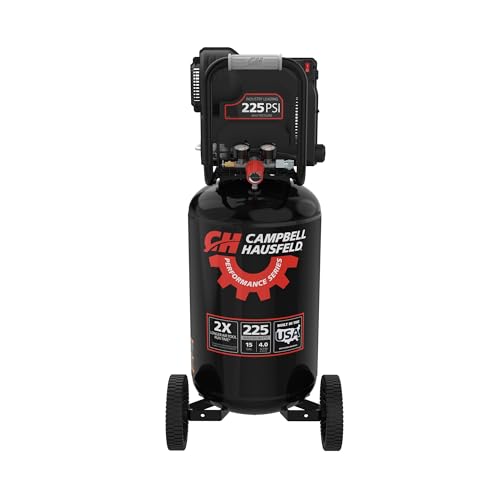
With a 225 PSI maximum, this unit prioritizes high-pressure readiness for inflation and robust tool operation. An oil-free pump helps with cold-weather starts and reduces ongoing maintenance, making it suitable for a workshop that needs dependable startup performance in cooler climates.
Best for: shops that frequently rely on high-pressure bursts and long air runs between cycles. It’s a practical choice where air tool usage is diversified, and the vertical design saves space in smaller garages.
Caution: the 225 PSI rating implies strong cycling; ensure regulators, hoses, and tools match the system’s capacity to avoid over-stressing equipment.
Buying Guide: Key Purchase Considerations
How to match CFM and PSI to your tools
Air tools specify required CFM at certain PSI. For a 9.5 CFM target at 90 PSI, prioritize models explicitly delivering around 5 CFM at 90 PSI or higher combined with a sufficient tank size. Larger tanks reduce the need for frequent re-pressurizing between tool cycles.
Tank size versus mobility
A bigger tank (10–15 gallons) provides steadier air and longer runs, but can weigh more and take up more space. If you move between jobs, consider a unit with wheels and a compact footprint.
Noise considerations
Low-noise compressors are advantageous in shared spaces. Look for decibel ranges around 70–78 dB for indoor compatibility.
Oil-free versus oil-lubricated
Oil-free pumps reduce maintenance and oil contamination risk, but may have shorter life or more heat in some cases. Oil-lubricated pumps can be more durable in heavy use but require more upkeep.
Power requirements and electrical compatibility
Check voltage and phase suitability for your shop. Some units specify 110V or 220V, which affects where you can install them.
Portability and setup
Wheels, handles, and compact design matter for small workshops. Consider where you will place the unit and whether you need mobile flexibility.
Maintenance and ease of use
Look for easy-to-clean filters, visible oil levels (for oil-lubricated types), and straightforward draining for moisture management.
FAQ
- What does CFM at 90 PSI mean? CFM at 90 PSI indicates the volume of air the compressor can deliver while maintaining 90 pounds per square inch of pressure. It helps determine whether the unit can run specific tools efficiently.
- Is a larger tank better for spray painting? Yes. A larger tank stores more air, reducing cycling and providing smoother spray operation, especially for HVLP guns.
- Are oil-free pumps better for beginners? Oil-free pumps require less maintenance and avoid oil contamination in finished work, making them beginner-friendly for general use.
- Can I use a 90 PSI compressor for high-demand tools? If your tools require higher instantaneous demand, a compressor with a higher CFM at 90 PSI or better airflow around your expected duty cycle is recommended.
- How do I reduce noise from my air compressor? Choose models rated around 70–78 dB, place it on a stable surface, and consider vibration dampening and enclosure options if permissible in your workspace.
- What maintenance steps are essential? Regularly drain moisture, inspect hoses for wear, replace filters as needed, and follow the manufacturer’s oil-change schedules for oil-lubricated models.