Best Quiet, Oil-Lubricated Air Compressors for Home and Shop
Answering buyers who want a reliable, oil-lubricated air compressor that runs quietly: these picks balance lubrication advantages with practical noise levels and performance. They’re suited for workshop use, finishing jobs, painting projects, and DIY tasks where oil lubrication helps extend pump life and smooth operation. This guide highlights five models that blend smoother operation with job-site practicality. Each option targets different needs—from large-capacity, low-noise setups to compact, mobile units.
Summary table of chosen products:
- Klutch 60-Gallon Single-Stage: High capacity, durable oil-lubed pump, best for frequent, extended-use on big projects.
- Triax Kompressor ISO 100 Oil: Industrial-grade oil lubricant for consistent performance in varied climates.
- Milton 1002 High Performance: Compact, oil-lubed design with straightforward maintenance.
- Campbell Hausfeld Oil Compressor 16oz MP12: Small oil-lubed unit, ideal for light-duty tasks and portability.
- Mag 1 69885 Oil: Focused on long-life lubrication and reduced carbon buildup for small-to-midsize jobs.
Klutch 60-Gallon Oil-Lubed Compressor
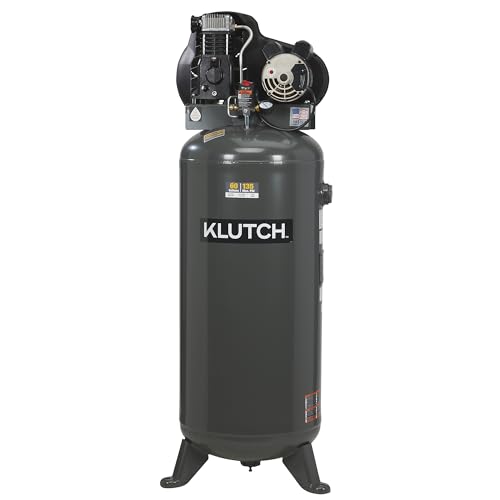
The Klutch 60-Gallon Single-Stage Vertical Air Compressor features a 3.7 HP dual-induction motor and an oil-lubricated cast iron twin-cylinder pump. It delivers 9.3 CFM at 90 PSI with a maximum of 135 PSI, supporting continuous, heavy-duty tasks. Best for: professional shops and DIYers who need substantial air supply for nailers, spray systems, and aftermarket tools. Limitation: larger footprint requires adequate space and a stable setup.
TRIAX Kompressor ISO 100 SAE 30 Oil

TRIAX Kompressor ISO 100 SAE 30 synthetic oil is designed for rotary, vane, screw, and reciprocal compressors. It provides a true multi-viscosity performance across climates and offers long service life with reduced bearing wear. Best for: users who operate a range of compressor types and seek dependable lubrication under varying conditions. Caution: verify compatibility with your specific pump design before use.
Milton 1002 High-Performance Conventional Oil

Milton’s 1-gallon oil provides conventional lubrication for classic air compressors, focusing on reliable pump longevity with straightforward maintenance. Best for: users replacing or topping off small oil reservoirs on standard shop compressors. Limitation: small oil can may require frequent handling for larger workloads.
Campbell Hausfeld Oil Compressor Oil 16oz MP12

Campbell Hausfeld’s 16-ounce MP12 oil is a non-detergent, ISO-100 oil designed to prolong pump life and reduce valve carbon buildup. Best for: owners of Campbell Hausfeld or similar oil-lubed pumps who want to maintain performance with a conventional oil format. Limitation: smaller quantity may require more frequent purchases for heavy-use environments.
Mag 1 69885 Air Compressor Oil

MAG 1 Air Compressor Oil blends highly refined base stocks with anti-foam agents to extend life and prevent carbon deposits. Best for: users seeking a long-lasting oil that helps keep smaller pumps running smoothly. Caution: check viscosity and compatibility with specific pump seals to avoid leaks or lubrication issues.
Buying Guide: Key Considerations For Quiet, Oil-Lubricated Compressors
- Oil-lubrication benefits: Longer pump life, smoother operation, and better sealing reduce wear under heavy use. Consider oils formulated for high-temperature or multi-viscosity performance if you work in extreme conditions.
- Noise and vibration: Quiet models often pair lower RPM with robust casings and isolation mounts. If you need all-day operation in a workshop, prioritize decibel levels and vibration control.
- Capacity vs. footprint: Large tanks (e.g., 60 gallons) sustain longer runs but require more space. Smaller portable units are easier to move but may need more frequent cycles.
- Maintenance practicality: Oil changes and filter checks should be straightforward. Oil-type products vary in container size and replacement intervals.
- Compatibility: Ensure the pump style (cast iron vs. aluminum, single vs. multi-stage) matches your tools. Some oils are optimized for specific pump materials and temperatures.
- Climate considerations: Synthetic oils can offer stable viscosity across temperature ranges; conventional oils may be simpler but require more maintenance in extreme heat or cold.
Frequently Asked Questions
- What is the advantage of oil-lubricated air compressors?
– Oil lubrication reduces wear, improves sealing, and extends pump life, especially under heavy or continuous use. - Are oil-lubricated compressors louder than oil-free models?
– Not necessarily. Noise levels depend on motor speed, pump design, and enclosure. Some oil-lubed units are designed for quieter operation. - Can I use synthetic oil in any compressor?
– Most compressors have oil type recommendations. Check manufacturer guidance to ensure compatibility with seals and gaskets. - What size tank should I choose for my projects?
– For intermittent DIY tasks, 6–20 gallons is common. For spray finishing or continuous use, 60 gallons or more reduces cycling. - How often should I change the oil in an oil-lubed compressor?
– Follow the manufacturer’s intervals, typically based on run hours and duty cycle; some units allow on-demand oil changes. - Is a bigger, heavier unit worth it for a small workshop?
– If you run multiple tools or require longer continuous air flow, a larger tank provides steadier pressure and fewer depressurizations.