Best Solar and Wind Hybrid Power Systems for Off-Grid Living
Answering the demand for reliable off-grid energy, hybrid solar and wind power systems combine sunlight and wind to keep essentials running. This guide highlights five practical options for homes, cabins, boats, RVs, or farms seeking continuous power where the grid is unstable or unavailable. Each pick targets a different usage scenario—larger households, remote facilities, or portable setups. Below is a quick summary of the selected products to help you compare at a glance.
| Product | System Type | Key Advantage |
|---|---|---|
| VEVOR 24V 1000W Kit | 6x100W solar + 400W wind + 25.6V 100Ah LiFePO4 | High daily output for larger off-grid needs |
| OLONETO 800W Kit | 800W solar + 400W wind + 24/220V ready | All-in-one with 220V output for home use |
| Giosolar 1120W Kit | 2x100Ah LiFePO4 + 400W wind + 6x120W solar | Balanced capacity for longer off-grid autonomy |
| VEVOR 12V 600W Kit | 2x100W solar + 400W wind + 12.8V 100Ah LiFePO4 | Compact 12V system for RVs and boats |
| AUECOOR 880W Kit | 4x120W solar + 400W wind + 2x100Ah LiFePO4 | Durable set with ready mounting |
VEVOR 24V 1000W Solar Wind Power Kit
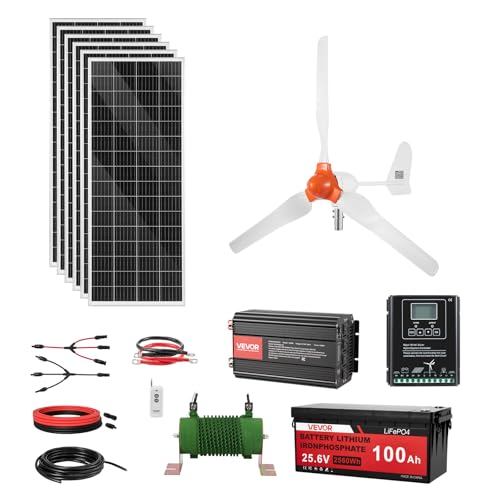
The kit combines six 100W solar panels with a 400W wind turbine and a 25.6V 100Ah LiFePO4 battery, plus a 3000W inverter and a MPPT wind/solar hybrid controller. Best for larger off-grid setups such as homes, cabins, farms, and boats that require steady daytime and nighttime power. The system emphasizes efficient power generation with monocrystalline cells, robust weather resistance, and a rotor design geared for moderate wind speeds.
Best for: property owners needing substantial daily energy, especially where both sun and wind resources are present. Choose this if you need a robust, all-in-one hybrid with a strong storage bank. Caution: Installation requires careful site assessment for optimal wind and sun exposure.
OLONETO 800W Solar Generator + 400W Wind Turbine Hybrid Power System
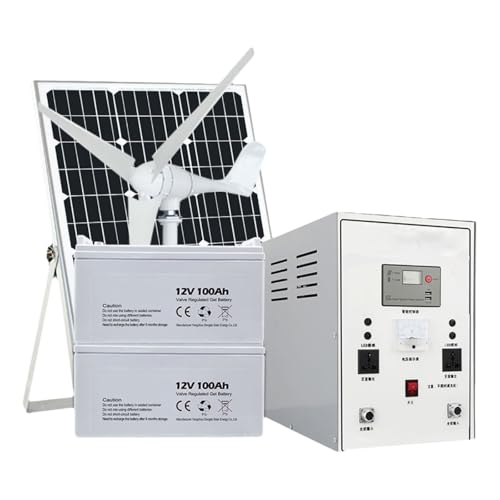
This all-in-one off-grid kit blends an 800W solar generator with a 400W wind turbine, delivering 24/7 power with automatic charging control. It supports a 220V output and is designed for homes, farms, remote locations, or cabins lacking stable grid access. The built-in intelligent switching ensures seamless transitions between solar and wind energy to maintain steady electricity.
Best for: rural homes or remote operations needing a simple, integrated solution. Better for: scenarios where you want both solar and wind support without configuring separate components. Caution: Indoor/outdoor exposure and weather conditions influence performance more than the kit’s stated capacities.
20000W Vertical Wind Turbine Generator Kit

This kit emphasizes a high-widelity wind solution with a vertical turbine design using nylon fiber blades to withstand challenging wind conditions. Suitable for marine, RVs, homes, and hybrid solar systems, it adapts to wind from multiple directions without a yaw mechanism. It starts reliably in light breezes and is designed for durability in diverse environments.
Best for: locations with consistent wind and limited space for a traditional horizontal turbine. Better for: roof or elevated installations where wind direction varies. Caution: It may require additional solar components to create a full hybrid system.
VEVOR 12V 600W Solar Wind Power Kit

This 12V system includes two 100W solar panels and a 400W wind turbine paired with a 12.8V 100Ah LiFePO4 battery and a 1000W inverter, making it compact for RVs, boats, or small cabins. The MPPT hybrid controller optimizes charging under varying conditions.
Best for: mobile off-grid users who need a compact yet capable setup. Better for: temporary or seasonal off-grid needs. Caution: Lower total storage may limit long nighttime usage without wind inventory.
AUECOOR 880W Solar Panel Wind Turbine Hybrid System Kit

This kit pairs four 120W rigid solar panels with a 400W wind generator and two 100Ah LiFePO4 batteries, all designed for off-grid readiness. It emphasizes durability with a robust aluminum frame and pre-drilled mounting options for quick setup.
Best for: installations requiring sturdy, weatherproof panels and straightforward mounting. Better for: rooftops or remote sheds with consistent sun exposure. Caution: The included components may require compatible mounting hardware for some rooftops.
Buying Guide: Hybrid System Essentials
Hybrid solar-wind systems are most effective when they fit the site’s wind and sun profile. Consider system size, storage, and power needs to select the right kit.
How to size a hybrid system
Assess daily energy consumption in watt-hours, then estimate average solar hours and wind availability. Match battery capacity to nightly needs plus a buffer for cloudy days or wind lulls. For larger homes, look for higher inverter capacity and multiple panels or larger wind turbines.
Battery technology matters
LiFePO4 chemistry provides safer, longer-lived storage with stable performance. Ensure battery capacity aligns with peak loads and consider future expansion if your energy use grows.
Controller and inverter choices
MPPT controllers optimize solar charging efficiency, while hybrid controllers manage transitions between sources. Inverters should handle continuous loads and surge requirements for appliances and equipment.
Installation considerations
Site selection affects performance: maximize sun exposure and wind access, minimize shading, and ensure secure, code-compliant mounting. Weather resistance and product durability matter in exposed locations.
Operational expectations
Hybrid systems reduce grid dependency but are not guaranteed to power all loads at all times. Plan for essential circuits and large loads during peak sun or wind periods.
FAQ
- Do hybrid systems require grid connection? No, they can operate off-grid with batteries, but some setups may include grid-ted for backup.
- Can I expand a kit later? Yes, many kits are designed to add more panels, wind units, or additional batteries as needs grow.
- Which is more important, wind or solar? It depends on location. In windy, cloudy regions, wind may compensate for solar gaps; in sunny areas, solar may be dominant.
- How long do LiFePO4 batteries last? Typically several thousand charge-discharge cycles, depending on use and care.
- What maintenance is required? Regular inspections of connections, battery health, and mounting integrity; keep components clean and dry.
- Is professional installation recommended? For larger or grid-tied systems, yes; for small off-grid kits, careful DIY installation can be feasible with proper safety practices.