Best 10kW 3-Phase Inverter Options for Home and Small Off-Grid Setups
Looking for a reliable 10kW 3-phase inverter? This guide compares five solid choices, focusing on pure sine output, parallel and split-phase capabilities, and suitability for off-grid or grid-tied systems. The selections target buyers building residential or RV/off-grid power setups who need robust, scalable performance without complicating installations. Each option is evaluated for who it’s best for, plus practical pros and a clear limitation to consider.
Buyer’s quick-reference table
| Product | Best For | Key Benefit | Limit |
|---|---|---|---|
| Y&H 10KW Solar Inverter (UL1741) | Hybrid homeowners and RV/ESS users | Battery-free option with hybrid UPS, parallel/split-phase | Indoor IP20 enclosure |
| THKFMSRC Three-Phase Off-Grid Inverter (10kW) | Off-grid cabins, remote homes | Solar+Wind energy storage compatibility | Inverter specs vary by model |
| THKFMSRC 60KW Three-Phase String Inverter | Higher-power grid-tied projects | High capacity for larger systems | Not a 10kW unit |
| 1Pcs 15KW-30KW VFD (Three-Phase Inverter) | Industrial-style motor drives | Broad VFD range for AC motors | Over 10kW range; used for 10-15kW motors |
| ATO 10hp VFD Single to 3 Phase | Residential and light commercial motor drives | Flexible single-to-three-phase VFD | 10hp is roughly 7.5kW |
Y&H 10KW 48V Solar Inverter UL1741

Overview: This Y&H inverter is designed as a 10 kW parallel and split-phase solar hybrid unit. It features a built-in 200A MPPT solar charging circuit with a maximum PV input of 11 kW and a wide DC input range. It can operate with or without a battery and supports CAN, USB, and RS485 communications for monitoring and control. It is best for buyers who want a compact, highly flexible system that can function as a pure AC source with or without batteries, plus grid-tied or off-grid configurations.
Who it’s best for and why: Ideal for homeowners and RV owners seeking a battery-free or battery-assisted solution with flexible phase output (split or single phase). The parallel capability makes it suitable for scaling up to higher loads, while the dual MPPT design helps optimize energy capture from varied PV arrays. The device supports several battery chemistries, though it may require battery integration for backup power reliability in outages.
Limitations: The enclosure is IP20 and designed for indoor use, which means outdoor installation would require a weatherproof housing. Grounding and electrical safety must be carefully managed to prevent installation issues in harsh environments.
Buying notes: Consider how you plan to parallel multiple units or transition from battery-free to battery-backed operation. Ensure your PV array and wiring meet the 125-425Vdc input range and 500V VOC limit to avoid triggering safety restraints during startup.
THKFMSRC Three-Phase 10-110kW String Inverter (60KW)

Overview: This model covers a broad power range, focusing on three-phase grid-tied operation for larger setups. While it lists a 60 kW capacity, its modular design and string architecture make it relevant for larger 3-phase systems that require reliable three-phase generation and grid integration. It’s a solid option for builders planning a scalable system beyond 10 kW while remaining grid-connected.
Who it’s best for and why: Best for developers or homeowners who anticipate expanding beyond 10 kW and want a robust, modular string inverter that can handle substantial energy loads with stable three-phase output. The ability to string multiple units helps tailor capacity to daily energy demands.
Limitations: This unit is not a dedicated 10 kW system. If your goal is a compact 10 kW install, this may be over-specification unless you plan future expansion or a multi-unit configuration. Ensure compliance with local grid-interconnection rules for higher-power systems.
Buying notes: Check the efficiency curve at your expected operating range and confirm driver firmware supports your PV array voltage and configuration. Consider the need for grid-tie protections and anti-islanding features for your location.
1Pcs 220V/380V 15KW-30KW VFD Three-Phase Inverter

Overview: This high-performance AC to AC VFD covers 15 kW to 30 kW output, designed for three-phase motors. It uses VFD control for smooth motor acceleration and precise speed control, making it suitable for heavy machinery, pumps, and industrial HVAC tasks where a robust three-phase drive is required.
Who it’s best for and why: Better for industrial or commercial settings requiring precise motor control and high power range. Choose this if you need a motor drive capable of handling 3-phase loads in the 15–30 kW range and you can manage the higher voltage and power demands.
Limitations: It overshoots the 10 kW target; however, buyers evaluating broader three-phase VFD options will appreciate its performance and expandability for higher-power needs.
Buying notes: Verify the drive’s compatibility with your motor’s nameplate voltage, overload tolerance, and cooling requirements. Ensure you have appropriate protection, braking, and cooling solutions for continuous operation.
QNK 7.5KW 10HP VFD For Single to Three Phase

Overview: This VFD converts single-phase input to three-phase output, offering 7.5 kW (10 HP) capacity and 0–33 A output with common 220 VAC input. It includes RS485 for Modbus communications and features a PWM control for low-noise operation and EMI reduction.
Who it’s best for and why: Great for users needing a compact, affordable VFD to drive 3-phase motors from a single-phase supply. It’s a practical option when you want to convert existing single-phase power to three-phase for equipment like CNC spindles, pumps, or fans without significant re-wiring.
Limitation: It sits below 10 kW in rated power, so this is best when your motor load is near or under 7.5 kW. If your load will push toward 10 kW, consider models at or above that threshold for headroom.
THKFMSRC Three-Phase Off-Grid Inverter With PV Storage (10kW)
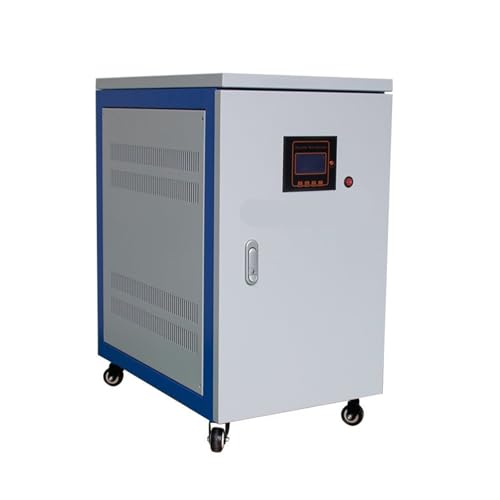
Overview: This model targets off-grid and energy-storage-centric applications, offering 10 kW of three-phase power with photovoltaic energy storage support. It is designed to work with solar PV arrays and energy storage solutions, delivering reliable three-phase AC output for critical loads in off-grid environments.
Who it’s best for and why: Best for buyers building off-grid homes, tiny-house communities, or cabins needing a reliable 3-phase inverter with storage capabilities. The PV storage compatibility helps maximize solar utilization and resilience during outages.
Limitations: Off-grid inverters can require more components (batteries, battery management, and proper system sizing). Ensure you have adequate storage capacity and appropriate charging control for full system reliability.
Buying notes: Confirm PV input ranges, battery compatibility, and parallel operation options if you plan to scale the system. Evaluate weather protection and installation space for a robust outdoor-ready configuration, if needed.
Buying Guide: Key Considerations For 10kW 3-Phase Inverters
- System type: Decide between grid-tied, off-grid, or hybrid. Grid-tied units require grid interconnection compliance; off-grid units emphasize energy storage and reliability during outages.
- Power and scalability: For 10 kW targets, confirm continuous vs peak output, and whether parallel units can be added to reach higher capacities in the future.
- Phase configuration: Split-phase versus true three-phase influences how you wire your home or workshop. Ensure compatibility with your electrical panel and loads.
- PV input and voltage range: Check maximum PV input power, VOC, and DC voltage range to match your solar array and cable sizing.
- Battery compatibility: If battery backup is desired, verify supported chemistries (lead-acid, Li-ion, LiFePO4) and BMS integration.
- Protection and safety: Look for IP rating, overcurrent protection, anti-islanding, and proper enclosure options for your installation environment.
- Communication and monitoring: CAN, RS485, USB, and Wi-Fi options help with remote monitoring and control. Ensure platform compatibility with your preferred energy management system.
- Installation footprint: Consider enclosure size, ventilation needs, and indoor vs outdoor placement. Indoor units may require weatherproof housing for outdoor use.
Frequently Asked Questions
- What is the difference between split-phase and three-phase inverters? – Split-phase delivers two electrical legs with a common neutral, suitable for homes; true three-phase provides three hot lines with balanced loads, ideal for heavy equipment and larger sites.
- Can I use a 10kW inverter for a smaller home? – Yes, you can scale down the system by limiting loads, but ensure the inverter’s input/output and wiring are sized for the actual load.
- Is battery storage necessary for a 10kW inverter? – Not always. Battery storage enables backup power and peak shaving, but some inverters can operate in battery-free mode with alternative grid or PV setups.
- What should I consider when paralleling multiple inverters? – Check parallel capacity, synchronization, communication protocols, and protective features to ensure stable multi-unit operation.
- Are off-grid inverters suitable for city homes? – They can be, but require careful design, sufficient space for batteries, and adherence to local codes for electrical safety and utility interconnection.
- Do all 10kW inverters support both PV input and grid charging? – No; some are designed as battery-less hybrids or pure off-grid storage, while others emphasize grid charging and hybrid operation. Verify specifications for your use case.