Best Electrical Insulating Mats for Safe High-Voltage Work Environments
Direct answer: these insulating mats are designed to block stray currents, reduce shock risk, and provide marked safety zones for professional electrical work. They cater to electricians, maintenance staff, and facility teams who need reliable, portable protection in substation rooms, control panels, and workshop benches. The following top picks balance coverage, durability, and ease of use, helping buyers choose the right mat for their setting.
Summary of selected products
Compact, home and shop use; portable and cut-to-fit
| Product | Brand | Size / Voltage | Best For |
|---|---|---|---|
| Viuseo 20″ x 20″ | Viuseo | 20″ x 20″, 6000V | |
| Yunlake 10 Ft Mat | Yunlake | 10 x 3.28 ft, 6000V | Large work areas and equipment bases |
| Maasechs 2 Pcs 20″ | Maasechs | 20″ x 20″, 1000V | Professional electrical workbenches |
| KNIPEX Rubber Mat | KNIPEX | 40″ x 40″, 1000V | Live-work protection with broad coverage |
| Maasechs 1 Pcs 20″ | Maasechs | 20″ x 20″, 1000V | Compact, single-mat setup for electricians |
The following sections detail each product, including who should consider them, why they were selected, and any practical caveats.
Viuseo 20″ x 20″ Electrical Safety Mat

Best for: small- to medium-sized electrical projects in home, workshop, or service environments. This mat is compact, making it ideal for technicians who need portable protection near switchboards and repair stations.
Why selected: natural rubber construction offers durability, water and oil resistance, plus good flexibility. It blocks high voltage effectively and supports long-term use in diverse workspaces.
Limitations: size may be insufficient for large equipment bases; cut-to-fit feature aids customization but may not replace oversized mats in huge installations.
Yunlake 10 FT Electrical Safety Rubber Mat

Best for: large-area coverage in substations, repair zones, and expansive workbenches. Its long length makes it suitable for lining larger floors or equipment footprints.
Why selected: natural rubber provides toughness, waterproofing, oil resistance, and contour stability, reducing deformation over time in demanding environments.
Limitations: requires substantial storage space when rolled; ensure transport and setup plans accommodate its extended length.
Maasechs 2 Pcs 20″ x 20″ Insulated Mats
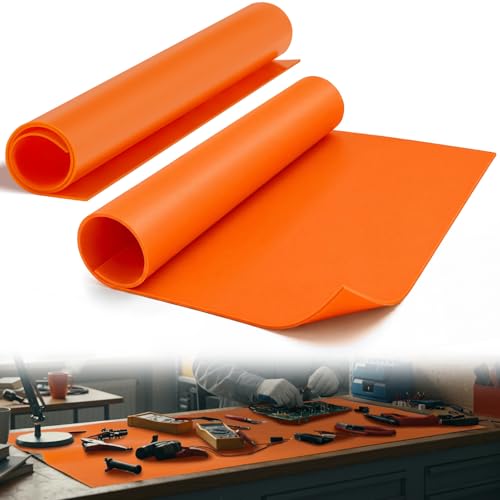
Best for: professional electrical workspaces that benefit from multiple mats for different work zones or for larger benches with several equipment bases.
Why selected: 1000V rating with a textured non-slip surface for stability, plus orange high visibility to mark safety zones clearly.
Limitations: buying in pairs increases upfront cost; consider space for storage if only a single mat is needed.
KNIPEX Tools – Rubber Insulating Mat

Best for: professionals needing broad coverage for live-work scenarios on larger projects or maintenance tasks.
Why selected: prominent for live-work protection with a wide footprint. Reduces exposure risk when working near energized components.
Limitations: specifics beyond basic protection are limited in the listed data; verify voltage rating and thickness for your exact application.
Maasechs 1 Pcs 20″ x 20″ Insulated Mat

Best for: electricians who need a single, compact insulation blanket for small control panels or tool carts.
Why selected: 1000V rating with a durable, non-slip surface and high-visibility orange, aiding safety and organization around equipment.
Limitations: single-mat purchase may require additional coverage for larger installations; plan accordingly if multiple zones must be insulated simultaneously.
Buying Guide
What voltage rating do I need?
Voltage ratings vary from 6000V to 1000V in the listed mats. Choose a rating that comfortably exceeds the highest potential voltage in your work area to ensure adequate protection.
What size should I choose?
Consider the base footprint of the equipment and workbench. For large equipment, longer mats or multiple mats may be necessary. For portable or bench-level tasks, 20″ x 20″ or slightly larger mats may suffice.
Material and durability: rubber vs. other options
Natural rubber mats offer waterproofing, oil resistance, and good flexibility. They resist wear, cracking, and deformation, supporting long-term use in industrial settings.
Non-slip and safety features
Textured surfaces reduce the risk of slips on oily or wet floors. High-visibility colors (like orange) help delineate safe zones around energized equipment.
Portability and installation
Some mats are cut-to-fit or easily rolled for transport. If you move between sites, prioritize mats that fold, roll, or cut to fit without compromising insulation performance.
Usage scenarios
Substations, distribution rooms, control panels, repair sites, and industrial workbenches are common settings. Match the mat’s size, thickness, and voltage rating to the specific task and risk level.
Maintenance tips
Keep mats clean and dry to maintain slip resistance. Inspect for wear, cracks, or deformation, and replace as needed to sustain reliable protection.
FAQ
- What does a 1000V insulating mat protect against?
It helps reduce the risk of electric shock when working near energized components or live circuits, particularly in professional electrical environments.
- Can I cut an insulating mat to fit my space?
Yes, several mats are designed to be cut to size for precise fit, improving coverage in irregular work areas.
- Is a higher voltage rating always better?
Higher ratings provide greater safety margins in high-voltage environments, but ensure compatibility with your specific work conditions and thickness requirements.
- Do these mats require special storage?
Store rolled or flat in a dry area to prevent moisture buildup or deformation, especially in variable climates.
- Are orange mats safer for visibility?
High-visibility colors help workers identify insulated zones quickly, reducing accidental contact with energized areas.
- What should I check before buying multiple mats?
Assess the layout of your workspace, the number of equipment bases, and whether a single large mat or several smaller mats provide better coverage and maneuverability.