Best Cordless Power Tool Battery Adapters for Expanding Your Tool-Battery Options
The best cordless power tool battery adapters let you reuse existing batteries across different brands and tool lines, saving money and improving versatility. This guide highlights five reliable adapters that expand compatibility for 18V/20V systems, helping DIYers and pros maximize their current battery inventories. Each option is described for who it’s best for, plus practical tradeoffs to consider before buying.
Summary table of selected products
| Product | Best For | Notes |
|---|---|---|
| NovaQuantic Adapter Upgrade for Bauer 20V | Tool users with Bauer 20V tools seeking DeWalt 20V batteries | Solid structural design; adapter only, no charging |
| ZLWAWAOL MIL18DL Battery Adapter | Pro users converting Milwaukee 18V to DeWalt 20V tools | Not Milwaukee or DeWalt made |
| aikeec Battery Adapter (De-Walt to Milwaukee 18V) | Milwaukee 18V tool users needing DeWalt 20V power | Battery not for charging; check tool compatibility |
| Biswaye Adapter (De-Walt 20V to Ryobi 18V) | Ryobi tools using DeWalt 20V cells | Extensive compatibility; note non-Milwaukee fit |
| QINIZX Bosch 18V Battery Adapter | Bosch 18V tools using DeWalt or Milwaukee batteries | Bare adapter; no battery/charger included |
NovaQuantic Adapter Upgrade for Bauer 20V Tools

Best for Bauer 20V system users who want to power Bauer tools with DeWalt 20V MAX batteries. This adapter is designed with a compact upgrade form and reinforced internal structure. It uses five screws for a secure connection, and it is specifically built to fit Bauer 20V tools while maintaining compatibility with DeWalt 20V Li‑Ion batteries. This option is best for tradespeople who already own Bauer 20V tools and DeWalt 20V batteries and want a reliable one-way power path.
Who it’s best for: Builders and hobbyists who operate Bauer 20V tools and have DeWalt 20V batteries on hand. Why selected: Notable durability and straightforward installation make it a practical upgrade for extending battery life between tool families.
Caution: This adapter is for power delivery only and does not include charging capability. Do not expect charging or battery-to-battery recharging functionality with this unit.
ZLWAWAOL MIL18DL Battery Adapter Converter

Best for converting Milwaukee 18V batteries to power DeWalt 20V cordless tools. The MIL18DL adapter transfers power from 18V Milwaukee packs to DCB200 20V devices, broadening the battery pool for craftsmen who use Milwaukee tools but own DeWalt 20V batteries. It is designed with a solid ABS build and includes a built‑in battery lock and protection electronics for safety.
Who it’s best for: Pros who own Milwaukee 18V batteries but want to run DeWalt 20V tools. Why selected: Clear cross-brand compatibility makes it a strong choice for mixed-tool environments.
Caution: It is not produced by Milwaukee or DeWalt, and the converter top port must match the target tool’s interface for reliable operation.
aikeec Battery Adapter (De-Walt to Milwaukee 18V)

Best for Milwaukee 18V users who want to run Milwaukee 18V tools on DeWalt 20V batteries. This adapter enables an 18V battery to operate Milwaukee 18V tools, turning DeWalt power into Milwaukee‑compatible output. It is not a charging adapter and is intended purely for power delivery.
Who it’s best for: Tradespeople with mixed Milwaukee tools and DeWalt batteries seeking cost-effective reuse of existing packs. Why selected: Flexible cross-brand operation helps reduce the need for multiple battery purchases.
Caution: Not suitable for high-output tools; always separate the battery after use to prevent unnecessary drain from internal circuit resistance.
Biswaye Adapter (De-Walt 20V to Ryobi 18V)
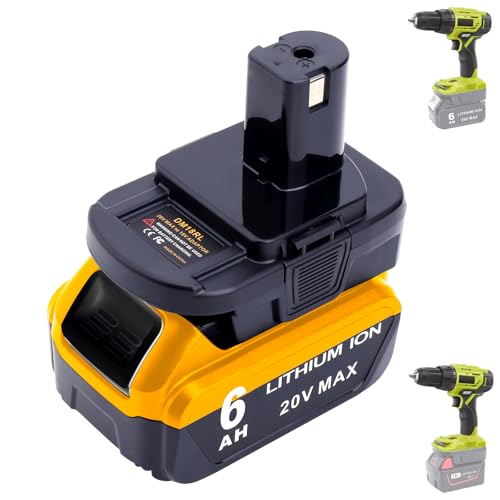
Best for Ryobi 18V One+ users who want to power Ryobi tools with DeWalt 20V batteries. The DM18RL adapter supports cross‑brand operation by allowing DeWalt 20V cells to power Ryobi 18V tools and also enabling use of Milwaukee batteries in some configurations. It is designed to maximize battery reuse across Ryobi, DeWalt, and Milwaukee ecosystems.
Who it’s best for: Hobbyists and contractors with multiple brands in a single shop. Why selected: Broad compatibility makes it a versatile choice for mixed-tool setups.
Caution: Compatibility notes indicate not all brands or models will be supported; verify tool interface before purchase.
QINIZX Bosch 18V Battery Adapter

Best for Bosch 18V tools that can benefit from using non‑Bosch lithium packs, including DeWalt and Milwaukee 18V/20V cells. This bare adapter enables the Bosch platform to operate with a variety of third-party batteries, expanding the pool of available power sources for Bosch users.
Who it’s best for: Bosch tool owners who want to leverage additional battery options without purchasing new packs. Why selected: The adapter broadens power source flexibility for Bosch equipment.
Caution: It is not a charging device and may not support every Bosch model; confirm tool compatibility before use.
Buying Guide
What to consider before buying a cordless power tool battery adapter
- Compatibility: Verify that the adapter supports your tool brand and the specific battery models you own. Some adapters limit output to certain interfaces and voltages.
- One-way power vs. charging: Most adapters provide one-way power delivery only. Do not expect charging or battery reconditioning functions unless stated by the manufacturer.
- Durability and build quality: Look for reinforced connections, secure mounting, and solid housings to withstand field use. ABS or reinforced rib designs are common in higher-quality units.
- Safety features: Built‑in protection like low voltage cut-off and battery locks help prevent accidental discharge or damage to batteries and tools.
- Ease of installation: Adapters with a simple plug-and-play interface save time and reduce mis-wiring risks. Check for clear labeling of ports and polarity.
- Limitations and risks: Some adapters are not compatible with certain high-output tools or may not fit specific tool models. Always verify with the tool’s interface and battery type.
How to choose the right adapter for your setup
- For mixed-brand tool kits, favor adapters that explicitly state cross-brand compatibility for both the tool and battery families you own.
- If you primarily upgrade range without charging, prioritize models with secure mechanical design and protective electronics to minimize power loss.
- Keep a simple inventory: select a single adapter family that covers most of your needs instead of several highly specialized units.
Frequently Asked Questions
- Can these adapters charge batteries? No. They are power delivery accessories and do not charge batteries.
- Are adapters compatible with all tool models from a brand? Not always. Always check the specific tool and battery interface to confirm compatibility.
- Do adapters affect tool warranty? Some manufacturers require that third-party adapters not be used; review tool and adapter terms before use.
- Is it safe to mix batteries of different brands in adapters? Use only adapters designed for your specific brand and battery type; mixing can cause damage or safety risks.
- Do adapters work with high-output tools? Some adapters are not suitable for high‑output or heavy-duty tools; verify power requirements before use.
- Can I use these adapters to power multiple tools at once? Most adapters are designed for single-tool operation; do not attempt to run multiple tools from one adapter without manufacturer guidance.