Best Dual Voltage EV Chargers for Home and Travel
Dual voltage EV chargers offer flexible charging for vehicles that support both 110/120V and 220/240V supplies. This guide highlights five portable, dual-voltage options suitable for everyday use, road trips, and backup charging at home. Each product is explained with who it’s best for, its strengths, and a practical caution. The selections target buyers seeking convenient, adaptable charging without sacrificing safety or ease of use.
Summary table of chosen products:
| Product | Best For | Key Benefit |
|---|---|---|
| eTimxon 16A Level 1&2 EV Charger | Busy homeowners and commuters | Fast Level 2 charging with NEMA 6-20P; portable |
| EVDANCE Level 1&2 EV Charger | Travelers and multi-outlet setups | 25 ft cable; dual plug adapters for 120V/240V |
| Energbison Level 1&2 Charger | Home users wanting adjustable current | 6A–16A options; safe, smart charging |
| VEVOR Level 1&2 Portable Charger | Versatile travelers and remote charging | App control and delayed charging; ETL safety |
| BETUMODA Level 1&2 EV Charger | All SAE J1772 vehicles | Four current settings; 6-20 and 5-15 plugs |
Best All-Around Dual Voltage Charger for Everyday Use
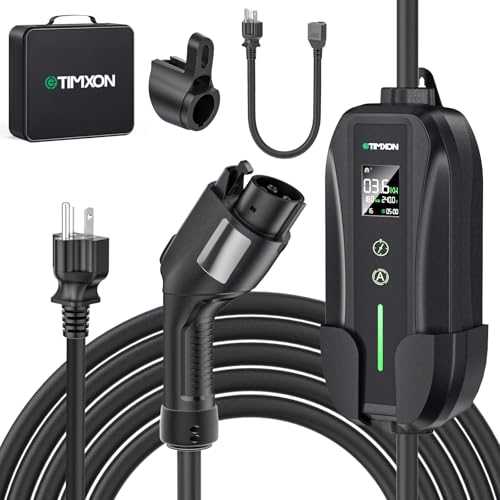
The eTimxon dual-voltage charger offers Level 2 charging from a 240V supply with a 16A output (3.84 kW). It uses a NEMA 6-20P plug and includes a 25 ft cord for reachability. The unit switches to Level 1 charging when connected to 120V via the included adapter. This makes it suitable for daily use at home and for emergencies when only a 120V outlet is available. It is best for homeowners who want faster on-site charging without a fixed installation.
- Best for: Home users who want faster Level 2 charging and portability.
- Why selected: Combines practical dual-voltage capability with a long cable and wall-mount option for quick setup.
Caution: When using 120V, some vehicles may default to lower current to protect the home circuit; ensure the ambient circuit can handle occasional peak loads.
Best Value Dual Voltage Charger With Carrying Bag

The EVDANCE charger provides Level 1 and Level 2 charging options, utilizing a 25 ft cable and both NEMA 6-20 (240V) and 5-15 adapters. It is compatible with J1772 EVs and plug-in hybrids, and includes a carrying bag for easy transportation. This model is ideal for travelers or households with varied outlet availability, offering flexibility for both in-garage and on-the-go charging.
- Best for: On-the-go charging and households with mixed outlet types.
- Why selected: Clear dual-volt operation plus useful portability features.
Caution: Tesla owners will need a J1772-to-Tesla adapter to charge directly from this unit (not included).
Best for Adjustable Home Charging Capacity

The Energbison charger supports 110V and 240V sources with adjustable current (6A–16A). At 240V, it delivers up to 3.68 kW (Level 2) and 12 miles per hour, while 120V charging provides basic Level 1 speeds. The device automatically limits current when plugged into 5-15 outlets to prevent overload, helping protect the vehicle and home electrical system.
- Best for: Home users who want precise current control and safety features.
- Why selected: Flexible current settings and overload protection support a wide range of EVs.
Limitation: The charger’s 5-15 outlet compatibility means Level 1 performance is modest on some circuits; plan for Level 2 use where possible.
Best App-Enabled Dual Voltage Charger

The VEVOR charger combines Level 1 and Level 2 charging with a 28-foot cable and built-in NEMA 6-20P plug plus a NEMA 5-15 adapter. It is ETL listed and supports an intelligent charging chip that protects against overcurrent, overvoltage, overheating, leakage, and lightning. A Smart Life app enables remote monitoring, scheduling, and real-time status checks, making it suitable for tech-forward households or travelers who want control from a phone.
- Best for: Users who value remote monitoring and scheduling capabilities.
- Why selected: The smart app features add convenience and energy management for off-peak charging.
Caution: App availability and compatibility may vary by region or device; confirm app support before relying on remote features.
Best Dual-Voltage Charger With High Safety Standards

The Dual Voltage Portable EV Charger from Generic emphasizes UL-approved safety with both Level 1 and Level 2 operation. It supports NEMA 6-20 and 5-15 connectors and includes a 25 ft cable. It is a solid option for users seeking a robust safety framework and straightforward dual-mode charging for regular use. It is best for buyers prioritizing proven UL safety features and broad compatibility.
- Best for: Safety-conscious buyers who want broad EV compatibility.
- Why selected: Emphasizes thermal detection, auto-restart, and fault-ground detection for reliable charging.
Caution: The model highlights automaker approvals but may require adapters for certain vehicles; verify adapter needs for Tesla or other brands.
SEGUMA Tesla-Oriented Dual Voltage Charger

The SEGUMA unit targets Tesla vehicles with a NACS connector, including 240V Level 2 charging via a NEMA 6-20 plug and a 120V Level 1 via NEMA 5-15 adapter. It includes a 25 ft cable and a dual-voltage capability for convenience at home or on the road. The charger is portable and designed for on-demand Tesla charging, combining practical level options with a Tesla-friendly interface.
- Best for: Tesla owners seeking a portable, dual-voltage solution.
- Why selected: Specifically tailored for Tesla charging needs while maintaining dual-voltage flexibility.
Caution: The NACS connector requires a Tesla adapter (not included) for compatible non-Tesla EVs.
Buying Guide: Key Purchase Considerations
- Outlet compatibility: Confirm whether the charger supports 120V (Level 1) and 240V (Level 2) outlets, and note any required adapters or cords.
- Current and power: Look for adjustable current (e.g., 6A–16A) and peak power (up to around 3.68–3.84 kW) to match vehicle needs and home electrical capacity.
- Cable length: A 25 ft cable provides ample reach for garages or parking away from power outlets; longer cables improve flexibility but add bulk.
- Safety features: ETL or UL listings, overcurrent protection, overvoltage protection, overheating safeguards, and leakage detection are important for daily use.
- Smart features: Consider app control, energy scheduling, and real-time monitoring if you value automated charging and off-peak timing.
- Vehicle compatibility: Most units support SAE J1772; Teslas may require an adapter or a dedicated connector depending on the model.
- Portability and installation: Portable chargers are ideal for apartments or frequent travelers. Check mounting options and weight to ensure easy handling.
Frequently Asked Questions
- What does dual voltage mean for EV charging? It means the charger can operate with both 120V (Level 1) and 240V (Level 2) outlets, giving flexibility for home and travel charging.
- Is Level 2 charging always faster than Level 1? Generally, yes, but the actual speed depends on the vehicle’s acceptance rate and the electrical service available.
- Do I need adapters for Teslas? Some dual-voltage chargers use SAE J1772 connectors; Teslas may require a J1772-to-Tesla adapter unless the charger includes a Tesla-specific interface.
- Are portable dual-voltage chargers safe for overnight use? Yes, provided they have proper safety certifications and the electrical system can handle the load; always follow manufacturer guidelines.
- Can I monitor charging remotely with these chargers? Some models include Smart Life or similar apps for monitoring and scheduling; check product specifications for app support.
- What should I consider when choosing a charger for home use? Consider outlet availability, maximum charging rate, cable length, safety certifications, and whether you want app-based management.