Best DC Motor Drive Controllers for DIY Projects and Robotics
When choosing a DC motor drive controller, the best option depends on your voltage, current, and control needs. This guide highlights five reliable options suited for hobbyists, students, and makers building compact robotics, automated devices, or motorized projects. Each pick is explained with who it’s best for, why it’s a good fit, and any important limitations to consider. A quick summary table of the chosen products follows the introduction for easy comparison.
| Product | Voltage Range | Current (A) | Best For |
|---|---|---|---|
| KOOBOOK 5Pcs DRV8833 Motor Drive Module | 3-10V | 1.5 | Compact dual H-bridge tasks, small DC gear motors |
| EC Buying ZK-BMG DC Motor Speed Controller | 9-60V | 12 (20A peak) | Higher-power projects needing PWM with precise speed control |
| BANRIA PWM DC Motor Speed Controller | 12-30V | up to 10 | Multi-mode motion profiles and memory features |
| RioRand 7-70V PWM DC Motor Controller | 7-70V | 30 (max) | Higher-current brushed motors with heat management |
| DROK DC Motor Driver (L298) | 6.5-27V | 7 (per channel) | Simple dual-motor control with clear forward/reverse |
Note: The products above are listed with their core features to help you compare options quickly. Always verify compatibility with your motor ratings and the control signals you plan to use in your project.
KOOBOOK DRV8833 Dual H-Bridge Module
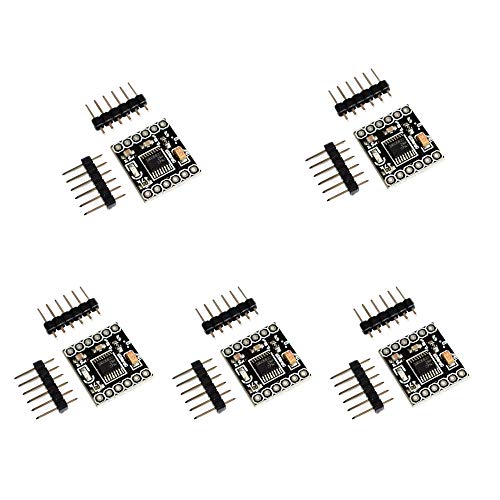
The KOOBOOK module uses the DRV8833 dual H-bridge design, with a 3-10V input range and a 1.5A per bridge rating. It can drive two DC geared motors, making it a compact choice for small robotic wheels, hobby vehicles, or pump applications. Best for: lightweight, low-current dual-motor tasks in tight spaces. Limitation: lower current capacity means you should avoid high-current or heavy-load motors. The 18.5x16mm footprint suits compact boards and microcontroller projects.
EC Buying ZK-BMG DC Motor Speed Controller

This controller supports a broad 9-60V supply with a PWM-based speed control knob and an encoder-friendly interface. Rated at 12A continuous and up to 20A peak, it handles moderate to higher-power DC motors. Best for: projects requiring adjustable, precise speed control and a robust current ceiling, such as small conveyors or robotic actuators. Limitation: higher current options depend on heat dissipation and wiring quality; ensure adequate cooling for extended use.
BANRIA PWM DC Motor Speed Controller
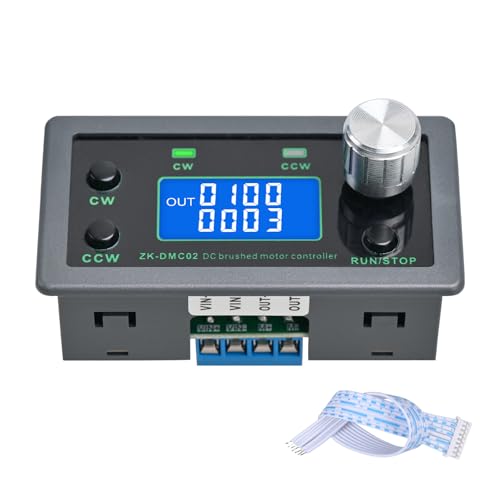
The BANRIA unit is a dedicated forward/reverse DC motor controller with 12–30V operation and up to 10A continuous current. It includes 23 preset motion modes and memory for settings like speed, delay, and cycle counts. Best for: users needing quick, varied motion profiles without extra software. Limitation: the on-board memory is reset if power is fully cycled, though memory may be retained in typical use depending on wiring and supply stability.
RioRand 7-70V PWM DC Motor Controller

RioRand offers a wide voltage range (7-70V) with a strong 30A current capability and a 12 kHz PWM frequency. It uses an aluminum housing for durability and includes an extra fuse for protection. Best for: DIY robotics or projects that demand higher current and longer runtimes with better heat management. Limitation: maximum power delivery varies with voltage; ensure your motor load aligns with the board’s rated output to avoid overheating.
DROK L298 Dual H-Bridge Motor Driver

The DROK L298 module uses dual H-bridges to drive two DC motors, with a voltage range of 6.5-27V and a per-port current of 7A. It supports forward and reverse operation via IN1/IN2 and IN3/IN4 controls. Best for: straightforward dual-motor setups where simplicity and clear control signals are preferred. Limitation: the L298 is older technology and less efficient at higher speeds or heavier loads compared to newer drivers with integrated MOSFETs.
Buying Guide: Key Considerations for DC Motor Drive Controllers
- Voltage range and motor compatibility: Match the controller’s supply voltage and current rating to your motor’s stall current and nominal running current. Underspec’ing can cause thermal shutoff or performance loss.
- Control method: PWM speed control, direction signals, and encoder feedback vary in complexity. Decide if you need simple on/off and direction, or finer speed control with feedback for precision motion.
- Current handling and cooling: Higher-current controllers generate more heat. Consider heat sinking, fans, or aluminum housings for long runs or demanding loads.
- Protection features: Look for reverse-polarity protection, fusing, and current limiting. These features reduce risk during wiring errors or motor stalls.
- Size, wiring, and integration: Ensure the board fits your chassis and that connectors and wire gauges meet your current needs. Small boards often require careful layout to minimize noise and voltage drop.
- Memory and modes: Some controllers offer preset motion modes or memory of settings. These can simplify automated tasks but verify how settings persist after power cycles.
- Future-proofing: If your project may scale to higher currents or voltages, choose a controller with a comfortable safety margin and upgrade path.
Frequently Asked Questions
What is a DC motor drive controller?
A device that governs the speed and direction of a DC motor using signals such as PWM and control lines to regulate voltage and current.
What should I consider when selecting a controller for a gear motor?
Check voltage range, current rating, stall current, and whether the controller supports necessary features like speed control, braking, or sequencing.
Is PWM necessary for motor control?
PWM provides smooth and adjustable speed control by varying the effective voltage seen by the motor. It is common for most DC motor controllers.
Can these controllers drive multiple motors?
Some models support dual H-bridge configurations for two motors. Verify the current per channel and total load limits to avoid overheating.
Do I need a separate encoder with speed control?
If precise velocity or position feedback is required, choose a controller with encoder input and compatible motor encoders.