Best Electric Heat Pump Thermostats for 2h/1c Systems in 2026
The best electric heat pump thermostat choices balance compatibility, ease of installation, and clear display for quick temperature management. This guide highlights five reliable options for homes with 2 heating/1 cooling setups, including non-programmable and smart variations. Each pick targets different buyer needs—from DIY-friendly installs to energy-saving smart features. Ideal buyers include: homeowners upgrading an older unit, users seeking simple manual control, and those who want clearer humidity readings or backlit displays. Below is a quick summary table of the selected products to help you compare at a glance.
The Aowel AW721 is a non-programmable thermostat designed for home heat pump systems with up to two heating stages and one cooling stage. It also supports a humidity monitor, which helps maintain comfortable indoor air quality. Best for buyers who want a straightforward manual control without scheduling complexity and need humidity readings to guide comfort levels.
Features alignment:
Two Heat / One Cool support for multi-stage operations
Compatible with heat pump systems with or without aux/emergency heat
Room temperature and humidity monitoring
Non-programmable interface for quick adjustments
Who this is for: homeowners upgrading from a basic thermostat who prefer simple controls and need humidity visibility. Caution: verify wall space and compatibility with legacy HVAC wiring before purchase.
The Riseem thermostat offers a non-programmable interface suitable for 2H/1C heat pump systems, with a focus on easy DIY installation. It features large terminal blocks and a backlit LCD for clarity, making it ideal for users who want quick setup and simple operation. Best for budget-conscious buyers who still need reliable heat pump control without complicated schedules.
Key points:
Two heat / one cool capacity; supports common heat pump wiring
Easy installation within about 30 minutes
Backlit LCD display with clear controls
Dual power supply options (24VAC or two AAA batteries)
Best for: those who want a straightforward replacement with minimal wiring fuss. Limitation: some higher-end features found in smart thermostats are not available here.
The Suuwer S721 thermostat targets basic heat pump control with up to 2H/1C operation. It emphasizes careful installation, noting potential incompatibilities if not matched to the existing wiring or system type. This makes it suitable for buyers who want a cost-effective upgrade and are comfortable confirming compatibility beforehand.
Highlights and fit:
Up to 2 heating / 1 cooling stages
Compatibility with heat pump systems and some conventional single-stage systems
Non-programmable control with simple interface
Important caution: review detailed installation wiring to avoid mis-match
Choose this if you need a basic, reliable non-programmable option and can verify system compatibility during purchase.
The Mroinge non-programmable model supports up to 2H/1C configurations and features a large LCD display for easy reading of temperature and humidity. It is designed for straightforward installation, with clear labeling to help prevent incorrect wiring. Best for users who value visibility and quick setup over scheduling capabilities.
What to know:
Large LCD display for easy reading
Compatibility caveats: not for 110-240V HVAC systems or line voltage electric baseboards
Non-programmable control; simple temperature adjustments
Use this if your system matches listed compatibility and you want a large, readable display.
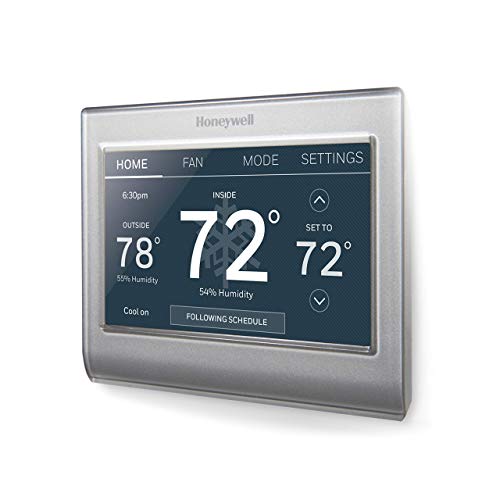
The Honeywell RTH9585WF1004 is a Wi-Fi smart color thermostat with 7-day programming and a touch screen. It supports remote access and energy management features that can align with utility rebates. This model is best for buyers who want flexible scheduling, remote control, and compatibility with smart home ecosystems like Alexa.
Strengths and notes:
Wi-Fi enabled with color touchscreen
7-day programmable scheduling with multiple periods per day
Energy-saving potential through flexible programming and rebates
Best for homes seeking smart home integration and remote control
Choose this if you want a full-featured smart thermostat and are comfortable with Wi-Fi connectivity. Limitation: dependent on stable internet and power supply to maintain schedules.
The Honeywell RTH7600D offers 7-day programming with a large touchscreen for easy setup and adjustments. It supports setting different temperatures for home and away, with hold options for temporary changes. This model is well-suited for users who want reliable scheduling without smart-home features.
Core points:
Large touchscreen for straightforward programming
7-day menu-driven programming with four periods per day
Home and away temperature controls to save energy
Good for non-smart setups where scheduling drives energy efficiency
Choose this if you want robust scheduling without Wi-Fi or smart features. Caution: lacks remote access and smart integration.
The Heagstat H721 provides non-programmable control for heat pumps with up to 2H/1C. It is intended for use with heat pump systems or conventional single-stage systems. Best for buyers who need a straightforward, wall-mounted thermostat but must confirm compatibility with their specific HVAC setup.
Considerations:
Up to 2 heating / 1 cooling stages
Requires compatibility verification with your system
Simple, non-programmable operation
Choose this when you need a simple upgrade and can verify wall size and wiring compatibility before purchase.
Buying Guide: How to Choose the Right Heat Pump Thermostat
What should I look for in a non-programmable heat pump thermostat?
Focus on compatibility with 2H/1C systems, ease of installation, and a clear display. Ensure the thermostat can operate with your current wiring (C-wire presence, transformer type) and that it can control both heat and cooling stages as needed.
Is smart functionality worth it for a heat pump?
Smart thermostats offer remote control, energy reporting, and potential rebates. They are best for users who want scheduling flexibility, multi-room setups, and integration with smart home devices. Ensure your home has reliable Wi-Fi and that the device supports your HVAC system.
What installation considerations matter?
Check wall size and mounting compatibility with your old thermostat. Confirm wiring compatibility (C-wire presence, 24VAC system). Read installation images and wiring diagrams from the product page to avoid miswiring.
How important are humidity readings?
Humidity monitoring helps maintain comfort and can influence dehumidification strategies in humid climates. If you value humidity visibility, prioritize models that display room humidity clearly.
Which thermostat should I choose for easy upgrades?
For quick, non-programmable upgrades, models like Aowel AW721 or Riseem provide straightforward operation with simple wiring. If you want advanced scheduling and smart features, consider Honeywell Wi‑Fi or other programmable models.
FAQ
Do these thermostats work with all heat pump systems?
Most listed models support standard 2H/1C heat pump configurations, but confirm compatibility with aux/emergency heat and your specific wiring before buying.
Is a C-wire required?
Many non-programmable models work without a C-wire, but some require it. Check the product details and your current thermostat wiring to be sure.
Can I install these myself?
DIY installation is common for non-programmable units with clear wiring diagrams. If unsure about electrical wiring, consult a technician.
Do these thermostats save energy?
Programmable or smart thermostats often offer energy-saving features such as scheduling and remote adjustment. Non-programmable models save energy primarily through stable, efficient temperature practices.
Will these work with my home’s Wi-Fi?
Only the smart Honeywell model includes built-in Wi-Fi. Other listed options are non-smart and do not require internet access.
How do I choose between non-programmable and programmable?
Choose non-programmable for simple, immediate control. Choose programmable or smart for energy savings through schedules and remote monitoring.
When you’re on the road with a trailer, visibility and signaling are essential. Oval LED trailer lights offer compact footprint, weatherproof design, and bright, uniform illumination for turn, brake, and taillight functions. This guide highlights five top options that balance durability, ease of installation, and dependable performance for trucks, RVs, boats, and trailers. The following…
Finding reliable waterproof junction box connectors is essential for protecting wiring in outdoor, damp, or dusty environments. This guide highlights five top-rated options, covering a range of sizes and configurations. Each product features IP68 protection, durable nylon construction, and practical strain relief to extend cable life. Read on to compare key specs and make an…
Finding the right 10 gauge to 12 gauge adapter ensures solid power transfer and secure connections in automotive, marine, and DIY electrical projects. This article highlights five practical adapters and related components, focusing on compatibility, durability, and ease of use. Each product is evaluated on how well it bridges different wire sizes, supports lasting crimps…
Find the right breaker panel energy monitor to track real-time electricity use, optimize solar and net metering, and catch anomalies. This guide compares five UL‑listed or ETL‑certified models suited for different homes, whether you’re renting, upgrading a single family, or managing a solar setup. Each option highlights who it’s best for, why it’s chosen, and…
For indoor gardeners seeking robust flowering performance, 1000W high pressure sodium (HPS) grow lights remain a trusted choice. These lamps deliver intense red and orange spectra that support flowering, fruiting, and larger buds. This articlespotlights top-rated 1000W HPS options, comparing lumen output, PAR focus, and bulb longevity to help you select the right fit for…
Choosing a range hood with a power cord means faster, simpler installation and fewer wiring headaches. This guide highlights five strong options, showing who each product is best for and why. Ideal buyers include DIY homeowners replacing hardwired hoods, those upgrading to plug‑in setups, and users seeking flexible, tool‑free installations in small kitchens or apartment…