Best 3000 Watt Portable Solar Generator Solutions for Home, RV and Off‑Grid Power
When you need reliable power during outages or off-grid adventures, a 3000-watt portable solar generator topples many common power limits. This guide highlights five top picks that are closest to or exceed 3000W continuous output, with clear notes on who each model is best for. Start here if you want strong home backup, RV usability, or camping power without heavy fuel generators.
Buyer profile summary:
- Best for true home backup: Jackery HomePower 3000 and Jackery HomePower 3600 Plus.
- Best for rapid recharging and multiple devices: Anker SOLIX and ComJoy with high surge and multiple ports.
- Best for portable, all‑around utility: ComJoy and ZeroKor for versatile outdoor use (panel not included).
Jackery HomePower 3000 Portable Power Station

Best for: Home backup during outages, small office setups, and emergency planning for fridge and router protection. This unit delivers 3600W peak (7200W surge) with a 3072Wh LFP battery, offering up to about 15 hours of essential power for household basics and 1–2 days for a refrigerator, depending on load. It also includes a UL-certified UPS with ≤20ms transfer for uninterrupted critical loads.
Why selected: High sustained output plus rapid UPS switching makes it a strong choice for home reliability. Built-in ports include AC, USB-C, USB-A, and DC, with 100W PD ports and an RV TT-30 connection for camp or on‑the‑road use.
Caution: Data notes limit on continuous load per device; verify your combined appliance wattage to stay under the continuous 3600W rating. Solar panel pairing should be matched to input specs for optimal charging.
ComJoy Portable Power Station 3000W

Best for: RV, camping, and home emergency backup where 2560Wh LiFePO4 capacity and 3000W surge cover heavy appliances. The unit provides 2560Wh battery with a 5000W peak, 14‑port array (4 AC, USB-C PD, USB-A, DC, car charger, etc.), and fast 1.6‑hour charging options.
Why selected: The large port variety enables powering 90% of daily devices in a single unit, and the LiFePO4 chemistry supports long cycle life. The 1.6‑hour fast charge helps reduce downtime between uses.
Caution: Panel not included; charging via solar or wall adapter is required to reach full capacity, and the 3000W continuous output should be planned against connected loads to avoid tripping the system.
Jackery HomePower 3600 Plus Portable Power Station

Best for: Homes that need higher parallel or multi‑unit expansion for extended outages, or RV setups requiring stronger 120V/240V parallel outputs. It delivers 3600W continuous (7200W in parallel) and 3584Wh, expandable up to large capacities when paired with additional units.
Why selected: The model balances high output with flexible parallel capability, allowing multi‑room or multi‑appliance operation, and supports long runtimes when expanded. It is designed for cold or extreme environments with safety‑focused battery cells.
Caution: Higher upfront footprint means more space is required. Expansion planning should consider wiring and load balancing when running multiple units in parallel.
Anker SOLIX C2000 Gen 2 Portable Power Station
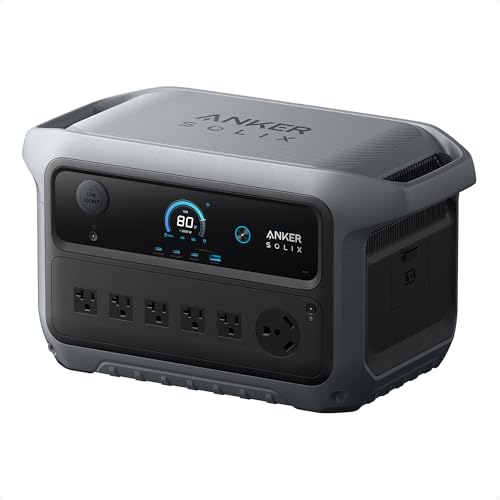
Best for: Users needing robust power with high‑efficiency standby and potential expansion to near‑4kWh capacity. It offers 2400W continuous output with up to 4000W peak when expanded, and 2048Wh LiFePO4 internal capacity.
Why selected: Efficient standby consumption and rapid recharging make it suitable for remote work setups, emergency use, or camping where frequent recharges are required. It also supports fast charging in under an hour under optimal conditions.
Caution: While strong, its 2400W baseline is below the strict 3000W mark; consider load distribution or unit pairing for higher-demand appliances. Solar panel options should be selected to meet input needs for faster recharge.
ZeroKor Portable Solar Generator 300W (Panel Included)

Best for: Light outdoor power needs and small device charging during camping or van life with a compact footprint. The unit includes a foldable solar panel and offers 300W continuous output with several USB and AC outlets.
Why selected: Its integrated panel and compact design make it a handy backup for basic devices, phone charging, and small electronics without carrying a large unit. It is ideal for short trips or as a travel backup power source.
Caution: The 300W continuous rating is significantly lower than the 3000W target. It is best used for low‑power devices or supplemental charging rather than powering heavy appliances.
Buying Guide
Key considerations when selecting a 3000W class portable solar generator:
- Power output vs. surge: Look for a unit with continuous output near 3000W and a surge rating high enough to handle appliances with motors (like fridges or AC units).
- Battery chemistry and capacity: LiFePO4 cells offer long life and stability; aim for 2500–3600Wh or more for meaningful runtimes.
- Recharging speed: Fast charging (AC and solar) reduces downtime. Check max input wattage and whether fast charging is supported via an app or direct input.
- Number and type of ports: Ensure a mix of AC outlets, USB‑C PD, USB‑A, and DC inputs to support multiple devices simultaneously.
- Portability and weight: Higher output units tend to be heavier. Consider handle design and wheeled chassis for easy movement.
- Expandability: Some models allow parallel expansion or multi‑unit setups for larger homes or RVs.
- Safety features: Look for battery management systems, thermal protection, and UL or equivalent certifications.
Frequently Asked Questions
- What does 3000W imply for home use?
Answer: It indicates the unit can continuously power many essential home appliances and tools, with a higher surge rating to handle motor startup loads. - Is LiFePO4 better than Li‑ion for solar generators?
Answer: Yes, LiFePO4 offers longer cycle life, better thermal stability, and safer chemistry for extended use. - Can I run a refrigerator with a 3000W generator?
Answer: Yes, if the refrigerator’s running wattage is within the device’s continuous output capacity and the surge is supported. - Do I need solar panels to use these generators?
Answer: No, but solar panels extend runtime and resilience. Most models support solar input in addition to wall charging. - What is the best choice for RVs?
Answer: Units with RV TT-30 or 12V DC outputs and parallel expansion options are ideal for RV use and long trips. - Are these units safe for cold weather?
Answer: Many models are designed to operate in cold conditions, but always verify operating temperature ranges and storage specs for your location.
For immediate power needs on the move, these high‑capacity portable solar generators provide strong options with different strengths. Whether you prioritize home backup, RV use, or camping versatility, the right model can keep essential devices running when the grid goes down or when you’re off the beaten path.