Best 125 Amp Hour Battery Options for Power Reliability and Longevity
Finding a reliable 125Ah battery involves weighing chemistry, size, and intended use. This guide highlights five top 125Ah options designed for backup power, RV, solar, and deep-cycle needs. Each pick is explained with who it’s best for, along with practical considerations to help you choose confidently. The list emphasizes a mix of SLA, AGM, and LiFePO4 chemistries to cover different budgets and performance goals.
Buyer overview: This table compares five 125Ah models for quick reference. The table covers chemistry, best use case, and notable strengths.
| Product | Chemistry | Best For | Why Pick |
|---|---|---|---|
| Mighty Max 12V 125Ah SLA (Sump Pump Backup) | Sealed Lead Acid (SLA) | Sump pump backups and stationary backup power | High discharge rate, maintenance-free, UL Certified |
| Power Queen 12V 125Ah LiFePO4 | LiFePO4 | Long-life energy storage for RVs and solar | Bluetooth monitoring, long cycle life, low-temp protection |
| Mighty Max 12V 125Ah SLA for ZOELLER | Sealed Lead Acid (SLA) | Backup power and heavy-duty use | Similar specs to SMB backup models, UL listed |
| ML125-12 INT 12V 125Ah | Sealed Lead Acid (SLA) | Industrial and replacement applications | Internal thread terminal option for secure mounting |
| VMAX SLR125 AGM 12V 125Ah | AGM Deep Cycle | Heavy-duty standby and off-grid systems | Military-grade plates, long float life |
Mighty Max 12V 125Ah SLA for Sump Pump Backup

The Mighty Max ML125-12 SLA is a 12V 125Ah Sealed Lead Acid (SLA) battery designed for backup power, including sump pumps. It is maintenance-free and UL certified, with dimensions 13.11″ x 6.81″ x 8.74″. The listing covers the battery and mounting screws, not wiring or mounting hardware. Best for stationary backup power and environments where a ready-to-install SLA unit is preferred. A potential limitation is older SLA chemistry that is heavier and has a shorter cycle life than LiFePO4 options.
Power Queen 12V 125Ah LiFePO4 Battery

This Power Queen LiFePO4 battery delivers 1600Wh energy and up to 15,000 cycles, making it ideal for long-term energy storage in RVs, solar systems, and trolling motors. It features Bluetooth 5.0 monitoring for SOC, voltage, current, and temperature, plus remote shutoff for storage and safety. Low-temperature protection stops charging below 32°F (0°C) and discharging below -4°F (-20°C). Choose this if you prioritize longevity, lightweight design, and smart monitoring. A consideration is higher upfront cost compared to SLA options.
Mighty Max 12V 125Ah SLA for ZOELLER
This Mighty Max ML125-12 SLA variant serves as a dependable 12V 125Ah replacement for ZOELLER sump pumps. It shares the SLA characteristics of high discharge capability, wide operating temperatures, long service life, and deep-discharge recovery. Best for customers needing a direct, ready-to-use SLA replacement in specialized sump pump setups. Caution: it is a lead-acid battery requiring proper disposal and venting awareness in enclosed spaces.
ML125-12 Internal Thread 12V 125Ah
The ML125-12 is a 12V 125Ah SLA with an internal thread (INT) terminal design, suited for industrial setups that require a secure, threaded connection. Best for equipment with INT terminal requirements and where mounting stability is important. It shares standard SLA features such as maintenance-free operation and deep-discharge recovery. Limitation: terminal type may not fit all older hardware without adapters.
VMAX SLR125 AGM Deep Cycle Battery
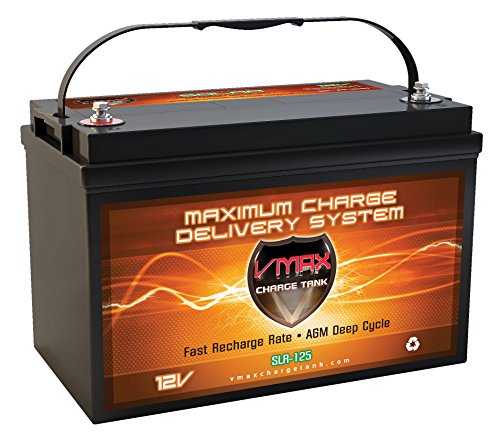
The VMAX SLR125 is a 12V 125Ah AGM deep-cycle battery designed for heavy-duty standby and off-grid systems. It uses military-grade plates and offers a float life spanning 8 to 10 years. Best for users needing a robust AGM option with solid long-term durability. A potential limitation is heavier weight compared to LiFePO4 or some lithium chemistries, impacting installation and transport ease.
Buying Guide: Key Considerations And Comparisons
What should I consider when choosing a 125Ah battery?
- Chemistry: SLA vs AGM vs LiFePO4. SLA/AGM offer affordability and compatibility with existing equipment; LiFePO4 provides longer life, lighter weight, and better cycle durability, often with monitoring features.
- Usage: Backup power, solar storage, RV power, or marine use. Choose based on expected cycle life, operating temperatures, and required discharge depth.
- Size and terminals: Ensure the battery fits your enclosure and matches terminal types (top posts, internal threading, etc.).
- Monitoring and safety: Bluetooth or app-based monitoring adds convenience; low-temperature protection helps winter performance for lithium options.
- Maintenance and disposal: SLA/AGM require less maintenance but heavier; LiFePO4 needs appropriate charging practices and long-term disposal considerations.
Practical Purchasing Questions
- Which 125Ah battery is best for long-term solar storage? LiFePO4 options like Power Queen typically offer longer lifespans and higher cycle counts, with monitoring features.
- Do I need Bluetooth monitoring? If you manage systems remotely or store energy for critical loads, Bluetooth or app control adds value.
- Is weight a concern? Yes. LiFePO4 is lighter than SLA/AGM, easing installation in vehicles or small enclosures.
- What about cold weather? LiFePO4 often has better low-temperature performance, but some SLA options can perform adequately with proper charging.
- Are there safety considerations? All sealed options reduce leakage risk, but ensure proper ventilation for lead-acid chemistries in enclosed spaces.
Frequently Asked Questions
- What is 125Ah shorthand for? Answer: It indicates the battery’s capacity is about 125 amp-hours, or how much discharge it can provide over time at a given rate.
- What’s the difference between SLA and AGM? Answer: Both are sealed lead-acid; AGM is a subtype with glass mat separators offering flat plate design and sometimes better deep-discharge performance.
- Which battery lasts longest? Answer: Generally, LiFePO4 chemistries deliver more cycles and longevity than SLA/AGM under similar use.
- Can I mix chemistries in the same system? Answer: It’s not recommended due to differences in charging characteristics and cycle life, which can reduce overall performance.
- Do these batteries require special chargers? Answer: Yes. Use chargers compatible with the battery chemistry (SLA/AGM/LIFePO4) and follow manufacturer guidelines for charging voltages and temperatures.