Best Mains Wired Smoke Alarms for Home Safety and Interconnection
When choosing mains-wired smoke alarms, interconnection and reliable power backup are essential for timely alerts across a home. This guide highlights top options that suit different homes and needs, from single-pack units for small apartments to multi-pack sets for larger residences. Each pick uses common sense interconnectivity, strong battery backup, and easy installation. Best for homeowners who want dependable safety with scalable coverage and minimal nuisance alarms from cooking or pets.
Summary table of chosen products (best suited buyers and use cases):
| Product | Pack Size | Best For | Key Benefit |
|---|---|---|---|
| First Alert SMI100-AC, 1-Pack | 1 | Small homes or single rooms needing reliable interconnectivity | Precision Detection with battery backup |
| SITERWELL GS562A, 4 Packs | 4 | Mid-size homes seeking flexible placement and coverage | Hardwired interconnection with 9V backup |
| First Alert SMI100-AC, 6-Pack | 6 | Larger homes or multi-room installations | Interconnect across multiple alarms |
| BRK SMI100-AC, 12-Pack | 12 | Whole-home safety, multi-story residences | Extensive wired network with battery backup |
| FIRST ALERT BRK SC9120FF | 1 | Smoke and CO monitoring in one unit | Electrochemical CO sensing and alarm integration |
First Alert SMI100-AC, 1-Pack

Best for compact spaces or individual room coverage. This hardwired interconnect smoke alarm uses Precision Detection to reduce nuisance alarms and offers battery backup for power outages. It supports early warning interconnect so when one alarm sounds, all compatible units do too. The unit is suitable for homes needing a single, dependable alarm with simple interconnection.
Who this is for: small apartments, studios, or rooms where a single, reliable alarm is desired without oversizing the network. Caution: check compatibility if expanding to a mixed-brand system to ensure interconnect functionality remains consistent across units.
SITERWELL GS562A, 4 Packs

Best for flexible coverage across a multi-room home. These hardwired interconnected detectors can link up to 12 alarms, ensuring a coordinated evacuation if smoke is detected. They include 9V backup batteries and a 10-year product life expectation, with fast alerts that help distinguish smoke from cooking. They are ideal when installing multiple units for broad protection.
Who this is for: larger homes or renovations where multiple alarms are needed for consistent coverage. Limitation: long wiring runs may require professional help for optimal interconnection and placement.
First Alert SMI100-AC, 6-Pack

Best for mid-to-large homes requiring broad interconnectivity with strong night-time or multi-room coverage. This 6-pack maintains the same precision detection and interconnection capabilities as the 1-pack, enabling a scalable alarm network. Battery backup protects during outages and supports consistent alerts across all linked units.
Who this is for: homeowners upgrading from a single detector to a networked system. Caution: ensure the home’s electrical wiring can support multiple interconnected alarms without overloading circuits.
BRK SMI100-AC, 12-Pack

Best for complete home safety in larger residences or new builds with multiple bedrooms and levels. This 12-pack provides extensive wired interconnectivity with battery backup, suitable for whole-home protection. It offers a uniform alarm experience and simplifies installation in new construction or large retrofits.
Who this is for: homeowners aiming for comprehensive coverage with standardized devices. Limitation: higher upfront cost and more wiring work compared to smaller sets.
First Alert BRK SMI100-AC Hardwired Smoke Detector, 6-Pack

Best for uniform network deployment across mid-to-large homes. This 6-pack includes battery backup and a 120-Volt AC power source, with tamper-resistant features. It provides synchronized alerts via interconnect and a single-button silence/test control.
Who this is for: new construction or major remodels where a consistent, hardwired alarm network is desired. Caution: verify local codes for interconnect requirements and ensure compatibility with existing detectors.
FIRST ALERT BRK SC9120FF Hardwired Smoke and CO Detector
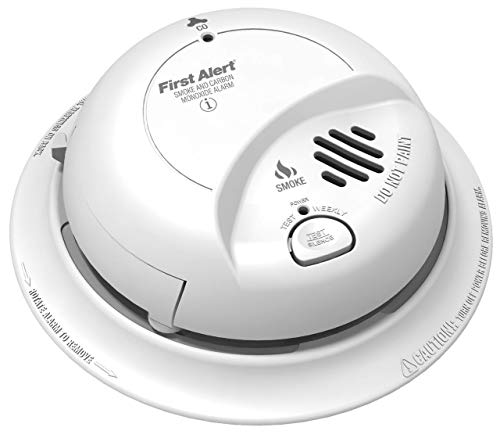
Best for combined smoke and carbon monoxide protection in one unit. This hardwired detector includes an electrochemical CO sensor along with an ionization smoke sensor, and a loud 85-decibel siren. It offers battery backup to maintain monitoring during outages and provides clear indicator lights for smoke or CO presence.
Who this is for: homes needing dual-threat protection in a single device. Limitation: CO monitoring should be tested regularly to ensure continued accuracy, as with all CO detectors.
Buying Guide
What should I consider when buying mains wired smoke alarms?
Key considerations include interconnection capability, backup power, sensor type, and ease of installation. Interconnected alarms create a coordinated alert system, which is crucial for faster evacuation. Battery or DC backup ensures continued protection during outages. Sensor types matter for detecting both smoldering and flaming fires and reducing nuisance alarms.
Interconnection and compatibility
Choose alarms that support universal interconnection within your home. If mixing brands, verify interconnect compatibility and compatibility across models to ensure synchronized alarms. For multi-story homes, plan placement to maximize coverage and reduce blind spots.
Power backup and life expectancy
Most mains-wired alarms include a 9V battery backup or long-life batteries and can still operate during a power outage. A 10-year expected device life is common; replace units as recommended to maintain performance.
Sensor type and nuisance alarms
Photoelectric sensors are generally better at detecting smoldering fires, while ionization sensors respond faster to flaming fires. Some detectors combine both for broader coverage. Reducing false alarms from cooking can improve user experience but ensure reliable sensitivity.
Installation and maintenance
Professional installation may be recommended for complex interconnect networks. Regular testing, battery replacement, and cleaning maintain performance. Consider tamper resistance and ease of silencing alarms for safe daily use.
Best configurations by home size
- Small apartment or single room: 1-pack with battery backup.
- Mid-size home: 4-pack or 6-pack with centralized interconnection.
- Large home or multi-story: 12-pack or a mix including a CO+smoke detector if needed.
FAQ
- What does “hardwired interconnect” mean?
It means alarms are connected through household wiring so when one triggers, others sound as well. - Do these alarms require a special panel or hub?
Most do not; they operate through standard household wiring and interconnect protocols. - How often should I test alarms?
Test monthly and replace batteries annually or as indicated by the unit. - Can I mix brands in an interconnected system?
Yes, but verify cross-brand interconnect compatibility to ensure synchronized alerts. - Is a CO detector necessary with smoke alarms?
Combining smoke and CO detection in one unit is convenient, but separate CO detectors may still be advisable in large homes.