Best 12V Battery With Inverter for Travel and Home Power
Many buyers search for a reliable 12V battery with inverter to power essential devices on the road, during outdoor adventures, or in off-grid setups. This guide highlights five top options, clarifies who each is best for, and explains why they stand out. Whether you need compact USB charging, multiple AC outlets, or high continuous power for laptops and small appliances, these inverters are chosen to align with common use cases: road trips, camping, RV life, or emergency backup. A quick table below compares the highlighted models to help you decide at a glance.
Product Spotlight Summary
| Product | Best For | Key Benefit | Approximate Power |
|---|---|---|---|
| Cantonape 3000W Power Inverter | Heavy-duty power needs (vehicles, boats, RVs) | High continuous power with LCD display and remote | 3000W continuous / 6000W surge |
| MOVFFGGRM 500W Peak 1000W Inverter | Casual electronics on the go | Compact with multiple USB ports | 500W continuous / 1000W peak |
| BELTTT 2000W Pure Sine Wave Inverter | Sensitive electronics and long runtimes | Pure sine wave for safe operation | 2000W / 4000W peak |
| OLTEANP 500W Inverter | Road trips and mobile offices | Built-in USB-C and USB-A, LCD | 500W continuous |
| POWERFUEL 1200W Inverter | Road trips and camping | Smart LCD, multiple outlets | 1200W peak |
Cantonape 3000W Power Inverter 12V to 110V/120V

The Cantonape unit provides robust 12V-to-AC conversion with 3000 watts of continuous power and 6000 watts surge. It includes four AC outlets and four USB ports for versatile charging. An intelligent LCD displays input/output voltage, battery capacity, load, and frequency, with a remote for convenient ON/OFF control. This model suits heavy-duty needs in RVs, boats, or work trucks. Best for users who require high sustained power and remote manageability, with a caveat: it is larger and heavier than compact inverters.
MOVFFGGRM 500W Peak 1000W Power Inverter
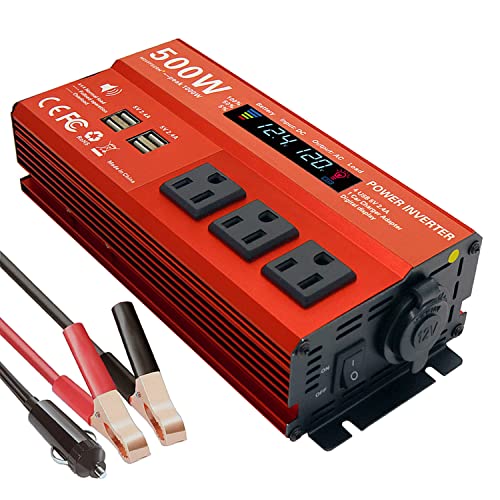
The MOVFFGGRM inverter is compact with a 500W continuous rating and 1000W peak, featuring 3 AC outlets and 4 USB ports. It includes a cigarette-lighter adapter and a heat-dissipating aluminum body with a silent fan. Its efficiency exceeds 90%, making it suitable for charging laptops, tablets, and small devices on the go. Choose this for light-to-moderate loads where portability and quick USB charging are priorities; avoid for high-wattage appliances.
BELTTT 2000W Pure Sine Wave Inverter

This unit provides 2000W continuous power and up to 4000W surge in a pure sine wave format, which is safer for sensitive electronics. It integrates an intelligent LCD that shows input/output voltages, battery status, and operating conditions. Dual features include a remote controller and a hardwire option for more permanent setups. Best for RVs or solar-powered stations requiring stable, safe waveform, with a note: ensure your battery can sustain the load for longer durations.
OLTEANP 500 Watt Power Inverter

The OLTEANP inverter delivers 500W continuous power with 2 AC outlets and 36W USB-C plus 5V/3A USB port. It features an LCD display and built-in safety protections, making it a practical option for road trips and mobile offices. Best for travelers who need straightforward power for laptops and small devices, with a caution: it’s not suitable for high-wattage appliances or extended off-grid use beyond its 500W rating.
POWERFUEL 1200W Peak Power Inverter
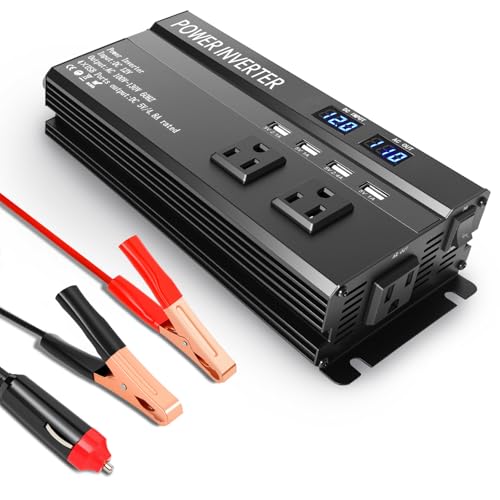
The POWERFUEL model offers 1200W peak power with multiple outlets and fast charging USB ports. It features an intelligent LCD that displays input/output voltages and battery status, making it suitable for camping and road trips where moderate power is sufficient. Opt for this if you need a balance of power and portability; avoid if you anticipate demanding, high-wattage devices on a regular basis.
Buying Guide: How To Choose The Right 12V Inverter
- Power needs: Match continuous wattage to your typical load. If you regularly run laptops, TVs, or small appliances, aim for 500–2000W continuous with a comfortable surge margin.
- Waveform type: For sensitive electronics, prefer pure sine wave or well-regulated modified sine wave inverters. Pure sine wave protects equipment and reduces noise.
- Outlets and ports: Consider the number of AC outlets and USB ports. If you travel with multiple devices, multi-USB charging is advantageous.
- Display and monitoring: LCD/LED readouts help track voltage, battery status, and load, aiding timely shutdown before faults.
- Protection features: Look for under/over voltage, overload, short-circuit, and overheating protections. Remote control can add convenience for hard-to-reach installations.
- Portability vs. capacity: Larger inverters deliver more power but are heavier. Choose a size that matches your vehicle space and how long you’ll operate without shore power.
- Installation considerations: If you plan to hardwire, ensure the unit supports a suitable fuse and wiring setup. For car use, a lighter plug option may suffice for lighter loads.
Frequently Asked Questions
- What is the difference between pure sine wave and modified sine wave inverters? Pure sine wave inverters provide a cleaner AC waveform, safer for sensitive electronics. Modified sine wave inverters are adequate for simple devices but may cause noise or inefficiency with certain appliances.
- How do I determine the right inverter size? Add up the wattage of all devices you plan to run simultaneously and choose an inverter with a continuous wattage at least 20–30% higher than that total.
- Can I run an inverter directly from a car battery? Yes, but consider safe wiring, proper fusing, and the inverter’s input requirements. Do not run high-power inverters for extended periods without a stable power source.
- Is a remote control necessary? A remote control adds convenience for on/off operation from a distance, especially in RV or boat installations.
- What maintenance is required? Regularly inspect cables and fuses, keep the unit away from moisture, and ensure vents are unobstructed for cooling.
- Are inverters safe for long camping trips? Yes, when sized appropriately for the load and properly ventilated. Consider models with advanced protections and thermal management.