Best 5000 Watt Inverter Solar Solutions for Off-Grid Power
Answering the need for a reliable 5000W solar inverter with MPPT charging, this guide highlights five top options and explains who each is best for. These all-in-one or modular inverters suit off-grid homes, RV camping, small farms, and emergency backup setups. The picks focus on 48V systems with MPPT control, pure sine wave output, and parallel capabilities where relevant. Use the quick reference table below to compare essentials at a glance.
| Product | Best For | Parallel | Key Benefit |
|---|---|---|---|
| Ampinvt Solar Inverter 5000 | Lead-acid or lithium on a medium home backup | Up to 6 in parallel | High MPPT efficiency; multiple work modes |
| SUNGOLDPOWER UL1741 5000W | All-in-one off-grid systems | No parallel | 80A MPPT; versatile charging modes |
| SunGoldPower 5000W UL1741 (SGPWOSAY) | High-output off-grid with parallel | Up to 6 units | Pure sine output; flexible charging/modes |
| PowMr 5000W Solar Inverter | Lead-acid or lithium with 3-way charging | No built-in parallel claim | 80A MPPT; strong LCD monitoring |
| LiTime 5000W Hybrid Inverter | Residential backup with UPS-style behavior | Up to 6 in parallel | 100A MPPT; clear LCD display |
Ampinvt 5000W 48V Inverter With MPPT Charger
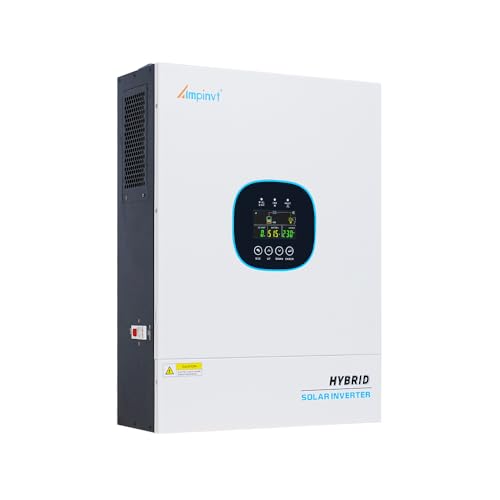
The Ampinvt model combines a pure sine wave inverter, an 100A MPPT solar charger, and an AC auto-transfer switch. It supports 120/208/240V outputs with single, split, or three-phase configurations and claims a transfer efficiency above 92%. It accepts PV input up to 500V and 5500W, making it suitable for systems with strong solar exposure. This unit is best for buyers who want a compact all-in-one solution that can scale by paralleling up to six units for higher power and resilience. Best for: homes or cabins requiring robust, expandable solar charging and reliable backup power. Limitation: parallel operation increases system complexity and requires careful load balancing.
SUNGOLDPOWER Ul1741 5000W All-In-One Inverter

This all-in-one unit blends a 5000W inverter with an 80A MPPT solar charger and a 40A AC battery charger. It is UL1741-listed and designed for off-grid use without parallel capability. It excels in scenarios where a straightforward, reliable off-grid power source is needed and a parallel configuration is not required. Best for: small off-grid homes or remote cabins where simplicity and safety are priorities. Caution: not designed for parallel expansion; plan capacity accordingly.
SunGoldPower 5000W Pure Sine Wave Inverter Charger

This 5000W inverter includes a 100A MPPT charger and a 40A AC battery charger with parallel capabilities for up to six units. It supports 120/240V single- or split-phase in parallel setups and 208V three-phase. Best for: larger off-grid projects or backup systems where modular expansion and higher surge capacity are beneficial. Limitation: parallel kits may require additional hardware and wiring expertise.
PowMr 5000W Solar Inverter With 80A MPPT

The PowMr model offers a 5000W pure sine wave inverter at 48V, with an 80A MPPT charger and a PV input up to 5500W. It supports 120/110V output, and its data suggests compatibility with both lead-acid and lithium batteries. It is best for buyers who want a reliable all-purpose solar inverter with strong charging efficiency. Limitation: detailed parallel capabilities are not clearly stated; verify system compatibility for larger builds.
LiTime 5000W Hybrid Inverter Charger

The LiTime unit combines a 5000W inverter with a 100A MPPT solar charger and UPS-style behavior. It supports parallel operation (up to six units) for higher power and can work with split-phase 120V/240V configurations. Best for: homes that require a resilient, expandable backup system with clear monitoring via a built-in LCD. Caution: ensure proper load management when paralleling to prevent overloading any single unit.
Buying Guide: How To Choose The Right 5000W Solar Inverter
What should you look for when selecting a 5000W solar inverter with MPPT charging? Consider these practical questions and answers to guide your decision.
- Do you need parallel capability? If yes, choose models that explicitly support paralleling (e.g., up to 6 units) to reach higher total power or smarter load distribution.
- What type of battery chemistry will you use? Most inverters support lead-acid and LiFePO4; confirm compatibility with your batteries and whether the unit supports multiple charging modes (solar priority, utility priority, or hybrid).
- What output configuration is required? If you need single-phase 120V or 240V split-phase, verify that the model matches your home or RV electrical setup.
- Is pure sine wave essential for your loads? Pure sine wave output is safer for sensitive electronics and appliances; all five options here advertise pure sine output.
- Do you need an all-in-one solution or separate components? All-in-one units simplify wiring and installation but may offer less customization than separate inverter and MPPT controller systems.
- What monitoring features are important? A built-in LCD or remote monitoring helps track voltage, current, and load, which is useful for ongoing maintenance and UPS-like operation.
Key Considerations By Use Case
- Residential backup: prioritize UPS behavior, stable AC output, and reliable MPPT charging.
- Off-grid cabin or remote outpost: consider parallel capability for scalability and the ability to run high-load appliances.
- RV or mobile applications: look for remote control and lightweight form factors; ensure compatibility with vehicle or camper batteries.
Frequently Asked Questions
- What is the advantage of MPPT over a basic PWM charger? MPPT controllers maximize solar power harvest, especially in variable sunlight, by adjusting the input to maintain optimal PV voltage and current.
- Can these inverters work with lithium and lead-acid batteries at the same time? Many support both chemistries, but always verify the exact battery compatibility and charging profiles for mixed setups.
- Is parallel operation safe? When designed for parallel use and installed correctly, paralleling can increase total system capacity but requires proper wiring, fusing, and load management.
- Do these inverters require active cooling? Most 5000W units benefit from adequate ventilation; in enclosed spaces, consider additional cooling strategies to prevent thermal shutdowns.
- Can I run heavy loads like HVAC or water heaters on a 5000W inverter? Yes, provided the surge and continuous power ratings are sufficient and the system is properly sized with adequate parallel capacity if needed.
- How do I size the rest of my solar system? Start with calculating daily energy usage, then select panels to meet peak sun hours with extra capacity for charging, considering MPPT efficiency and battery depth of discharge.