Best Tankless Water Heaters for Instant Hot Water in Japan-Style Setups
Direct answer: If you want reliable on‑demand hot water with minimal waste, a tankless water heater is the right choice. This guide highlights five models that best suit compact spaces, under-sink installs, or small apartments, including options that mimic popular Japanese-style efficiency and reliability. The top picks balance instant heat, safety features, and space-saving design for US homes and travelers alike. Readers will learn who each model is best for and why it stands out, plus practical buying tips and a concise FAQ.
| Product | Best For | Key Benefit |
|---|---|---|
| Rinnai Tankless Gas Water Heater Enclosure | Homes needing gas on-demand with a Japanese reliability lineage | Durable steel, built for V53De series, Made in Japan |
| Tankless Water Heater Electric by AIYEZIDT | Under-sink or small spaces needing instant electric heat | 3–5 second heat, LCD display, IPX4 safety |
| CAMPLUX 6kW Tankless Electric Heater | Small apartments or offices needing compact, energy-efficient heat | Self-modulating, space-saving design, temperature display |
| Orbek 14kW Electric Tankless | 2–3 fixture hot water needs with robust 240V supply | 3.38 GPM, self-modulating, energy-efficient |
| Rheem 11kW / 18kW Electric Tankless | Home upgrades with precise digital control | Self-modulating, USB-like display accuracy, up to several GPM |
AIYEZIDT 110V Tankless Electric Water Heater
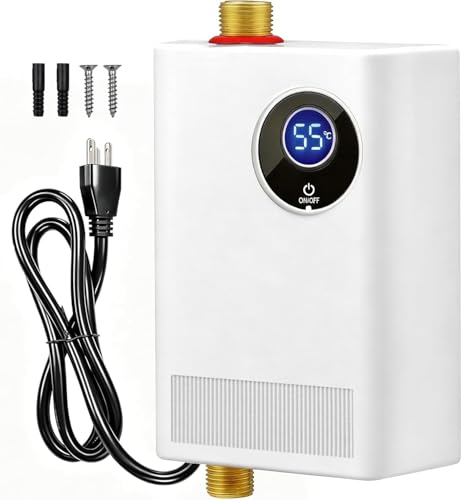
Best for: Small kitchens, bathrooms, RVs, or under-sink setups where quick hot water is needed without preheating. This model delivers heat in 3–5 seconds with a max of 131°F (55°C) and includes an LCD display for status reads. The compact, wall-mounted design saves precious space and suits point-of-use needs.
Why selected: It combines rapid heat, compact footprint, and intelligent safety features, including IPX4 waterproofing and leakage protection. It’s well-suited for those who want an affordable, portable option that still provides consistent hot water. A caution: energy output is limited by 110V circuitry, so performance depends on electrical supply and water flow.
CAMPLUX 6kW Tankless Water Heater

Best for: Apartments, small offices, or tiny homes where space is at a premium but reliable hot water is still needed. It uses self-modulating technology to adjust energy use based on flow, which helps reduce waste. Temperature settings supporting a reasonable range make it flexible for daily use.
Why selected: The unit’s space-saving, wall-mounted design is ideal for tight layouts. A potential limitation: performance can be reduced at very high flow rates or low water pressure, so it’s best for low-to-moderate demand scenarios.
Orbek 14kW Electric Tankless

Best for: Homes or setups that require multiple outlets with on-demand hot water, supported by a 240V supply. This model delivers up to 3.38 GPM, making it suitable for 2–3 points of use.
Why selected: It emphasizes energy efficiency through advanced water-electricity separation technology and fast delivery of hot water in seconds. Limitation: It requires a robust electrical panel (recommended at least 150 amps total capacity) and proper wiring to support 14kW operation.
Rheem 18kW Tankless Electric Water Heater
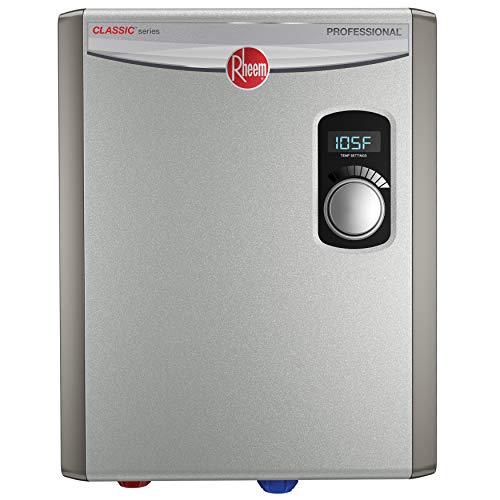
Best for: Homes needing higher flow rates or future expansion to multiple fixtures with precise digital control. External thermostatic control with LED display helps monitor temperatures accurately.
Why selected: High heat capacity and self-modulation ensure steady hot water when demand rises. Limitation: The higher wattage requires a strong electrical system and proper installation, which may limit placement without an upgrade.
Rheem 11kW Tankless Electric Water Heater
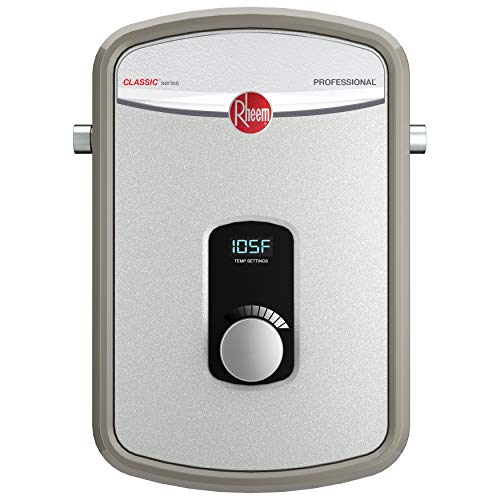
Best for: Budget-conscious homes needing reliable hot water with moderate demand. The 11kW model offers solid performance with an adjustable digital temperature display.
Why selected: Self-modulating power control helps tailor energy use to actual demand, reducing waste. Limitation: Lower maximum flow compared to higher-wattage units, so best for single or two-point usage scenarios.
Buying Guide: Tankless Water Heaters
- What type fits your space: Electric under-sink units save space; gas models may require venting and dedicated gas lines. For apartments, consider compact electric models with wall-mount capability.
- Power requirements: Electric units vary from 3kW to 18kW. Verify electrical panel capacity and wiring (often larger panels or dedicated circuits are needed for higher wattage).
- Flow rate compatibility: GPM ratings indicate how many fixtures can operate simultaneously. Choose a unit with enough capacity for your typical needs (e.g., two sinks, a shower, and a faucet concurrently).
- Protection and safety: Look for IP ratings (waterproofing), leakage protection, dry-burning protection, and auto shutoff features to reduce risk.
- Temperature control: Digital displays and precise setpoints help maintain comfortable water temperatures. Self-modulating technology can cut energy use by matching heat output to demand.
- Install considerations: Space, mounting options, and proximity to usage points matter. Under-sink or point-of-use models minimize heat loss and water wait time.
- Durability and maintenance: Copper heating elements, corrosion resistance, and serviceability affect long-term performance. Check for components that are easy to replace if needed.
Frequently Asked Questions
- What is a tankless water heater?
It heats water on demand rather than storing hot water in a tank, improving efficiency and reducing standby heat loss.
- What electrical requirements should I expect for electric units?
Most need dedicated circuits; common sizes range from 3kW to 18kW. Check your home’s electrical panel capacity and wire gauge.
- Can tankless heaters supply hot water to multiple fixtures at once?
Yes, but flow rates matter. Higher wattage or gas models provide greater GPM; verify your expected concurrent usage.
- Is venting required for gas tankless units?
Yes, most gas models require venting to safely exhaust combustion gases. Consult installation guidelines and local codes.
- Which model is best for a small apartment?
Electric, compact, under-sink models with low to moderate flow are ideal, offering easy installation and space savings.
- What maintenance is typically needed?
Periodic descaling or mineral buildup checks are common, especially in hard-water areas. Follow manufacturer guidelines for flushing and inspections.