Best Electric Radiant Panel Heaters for Quick, Targeted Warmth
Answering the question, which electric radiant panel heater is best for my space? This guide compares five top options to help American buyers pick a compact, efficient heater that fits bedrooms, home offices, and living areas. Each product is evaluated for energy efficiency, safety features, ease of installation, and suitability for specific room sizes.
Who this is for:
– Small room users who want fast warmth with low energy usage.
– Families seeking quiet operation and safety features for kids and pets.
– Homeowners needing easy wall-mounted or plug-in options with simple controls.
| Product | Best For | Key Benefit | Room Size |
|---|---|---|---|
| EconoHome Wall Heater Panel | Small to medium rooms up to 120 sq ft | Energy efficient convection with a safety heat reflector | Up to 120 sq ft |
| Envi Plug-in Electric Panel Wall Heater | Bedrooms and living spaces needing ultra-quiet operation | Patented fan-less design with Stack Convection | Targeted zones, up to moderate spaces |
| EconoHome Convection Wall Heater | Home offices and bathrooms | Triple-insulated, splash-resistant design | Up to 120 sq ft |
| DREO Oil Filled Radiator | Medium to large rooms; versatile placement | Oil-filled for steady, silent warmth | Large rooms |
| Ballu Mica Infrared Space Heater | Large spaces needing broad, even warmth | Infrared mica panels plus smart controls | Large rooms |
EconoHome Wall Heater Panel with Thermostat

This 400-watt convector heater is designed for rooms up to 120 square feet. It uses convection to circulate warm air and includes a heat reflector to improve efficiency. The unit is cETL listed and RoHS compliant, with safety features including overheat protection. Best for small living rooms, bedrooms, or home offices where a wall-mounted solution saves space and reduces clutter. Note that some installations may require hard-wiring; check local electrical wiring requirements before installation.
Best for: Small to medium rooms up to 120 sq ft, wall-mounted installations, and users seeking energy efficiency and steady warmth.
Why chosen: It offers a balanced combination of energy savings, compact size, and a practical thermostat for maintaining a comfortable baseline temperature.
Limitations: Some setups require hard-wiring, which may require a professional installer depending on your home wiring.
Envi Plug-in Electric Panel Wall Heaters
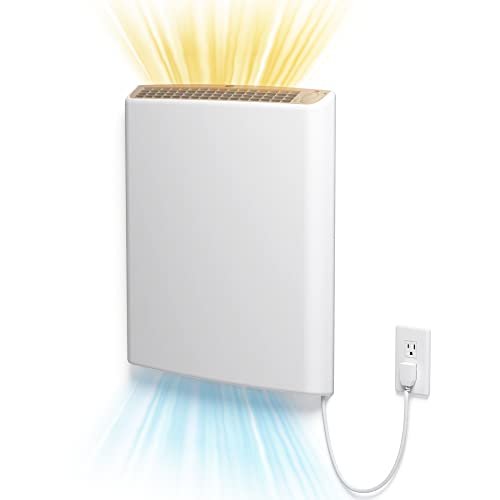
This plug-in panel heater prioritizes quiet operation with a fan-less design and Stack Convection. It runs at a cool surface temperature (around 90°F) and includes a wall-sense safety sensor that cuts power when removed from the wall. Ideal for bedrooms or nurseries where noise and dust control are important. The unit supports continuous operation with safety features for households with children or pets.
Best for: Quiet, unobtrusive heating in bedrooms, nurseries, and living spaces where allergy concerns exist and a plug-in model is preferred.
Why chosen: The fan-less design minimizes noise and dust, making it a strong option for sleep environments and allergy-conscious homes.
Limitations: Targeted heating may be less effective in larger open-plan rooms without supplemental heaters.
EconoHome Convection Wall Heater with Thermostat
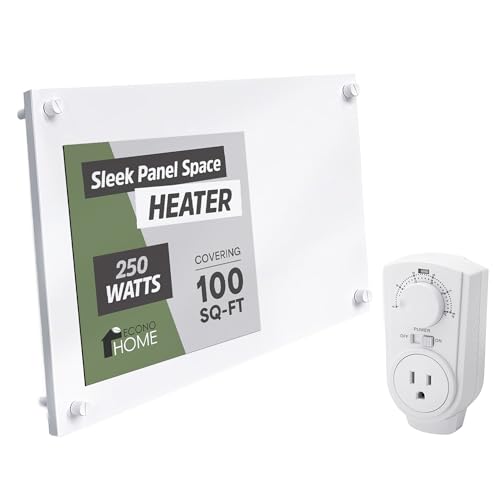
This 250-watt heater is designed for spaces up to 100 square feet and features IP44 splash protection, making it suitable for bathrooms or damp areas. It uses convection to distribute warmth and can be hard-wired, with a safety distance recommendation of at least 12 inches away from water sources. The triple-reinforced construction and calcium silicate insulation contribute to electrical safety and durability.
Best for: Small bathrooms or damp spaces where splash resistance and steady convection warmth matter.
Why chosen: The splash-proof design and compact dimensions provide a practical option for moisture-prone areas without sacrificing room-safe operation.
Limitations: DIY installation or hard-wiring may be required; not ideal if you need a purely plug-in solution.
DREO Oil Filled Radiator

The DREO oil-filled radiator provides 1500W of warmth, with a focus on silent, steady convection to heat larger rooms. It includes multiple safety features like overheat protection and tilt protection, and it offers a digital thermostat with eco mode for energy savings. This model is suited for bedrooms, living rooms, or offices that require consistent warmth over longer periods.
Best for: Medium to large rooms where quiet operation and steady, long-duration warmth are priorities.
Why chosen: Oil-filled radiators typically deliver uniform heat with less temperature fluctuation, which is beneficial for extended comfort in living spaces.
Limitations: Higher upfront power draw (1500W) means higher energy use if left on at full power for long periods; best used with thermostat control and scheduling.
Ballu Mica Infrared Space Heater

The Ballu unit uses mica infrared panels to provide broad, direct warmth with rapid heat-up and 180° viewing, delivering heat quickly to occupants in a large space. It features smart controls including app scheduling and voice integration, plus a washable, durable metal design. This option is best for open-plan living rooms or home studios where quick, directional warmth is advantageous.
Best for: Large rooms or open spaces needing fast, directional warmth and modern control options.
Why chosen: Infrared heating provides immediate warmth to people and objects, which can feel more comfortable in larger, draftier rooms.
Limitations: Infrared heat is more directional; coverage depends on placement and room layout.
Buying Guide: Electric Radiant Panel Heaters
How to choose the right panel heater
- Room size and placement: Match wattage to room area. Smaller rooms benefit from 200–400W panels; larger spaces may require multiple units or higher wattage devices.
- Installation type: Decide between wall-mounted convectors and plug-in panels. Wall-mounted units save space but may require electrical work; plug-in models offer easier setup.
- Safety features: Look for overheat protection, tip-over safety, and cool-to-touch surfaces for homes with kids or pets.
- Energy efficiency: Energy-efficient convection units and insulated casings reduce running costs. Consider models with thermostats and eco modes for steady, controlled warmth.
- Durability and maintenance: Metal casings and splash resistance add longevity in bathrooms or kitchens. Oil-filled radiators provide quiet, long-lasting warmth but may take longer to heat.
- Smart features and controls: App control, scheduling, and voice compatibility can improve daily usability and energy management.
Comparison at a glance
- Best overall for small rooms: EconoHome Wall Heater Panel (balanced warmth, efficiency, wall mounting).
- Best for bedrooms and quiet homes: Envi Plug-in Electric Panel Heater (fan-less, silent operation).
- Best splash-resistant option for damp areas: EconoHome Convection Wall Heater (IP44, safe near moisture).
- Best for large rooms and extended use: DREO Oil Filled Radiator (steady warmth and low noise).
- Best for rapid warmth in large spaces: Ballu Infrared Heater (broad, quick heat and smart controls).
FAQ
- What makes an electric radiant panel heater energy efficient?
Answer: Efficiency comes from precise thermostats, insulation, and convection or infrared designs that target heat where it’s needed without excessive energy draw. - Are these heaters safe around children and pets?
Answer: Most options include overheat protection and cool-to-touch surfaces; some models offer sensor-based shutoffs for additional safety. - Can I install a wall-mounted panel heater myself?
Answer: Some units are designed for easy wall mounting, but hard-wired installations may require a licensed electrician depending on local codes. - Do infrared heaters heat a room as well as convection models?
Answer: Infrared heats objects and occupants directly, which can feel warmer in open layouts, while convection warms the air for overall ambient warmth. - Which model is best for bathrooms?
Answer: Look for splash-resistance (IP44 or higher) and moisture-safe construction; 250–400W units are common for small baths.