Best Monocrystalline Solar Panel Kits for Off-Grid Power
Answering the search for reliable, high-efficiency off-grid power, these monocrystalline solar panel kits are optimized for RVs, cabins, boats, and other remote setups. Each kit combines a mono solar panel with a PWM or MPPT controller and hardware, designed for straightforward setup. This guide highlights five kits suited to different needs, from compact RV setups to larger off-grid systems. Choose based on daily power needs, climate, and installation surface to maximize daytime electricity generation and battery health.
Summary of selected products:
| Product | Type | Controller | Approx. Daily Output* | Best For |
|---|---|---|---|---|
| Renogy Starter Kit (100W) | 100W Panel | 30A PWM | ~500Wh | Small RVs, cabins, off-grid basics |
| ECO-WORTHY 200W Kit | 200W Panels | 30A PWM | ~800Wh | Mid-size RVs and longer autonomy |
| GCUSSZ 1000W Kit | 2×500W panels | 40A PWM | High, flexible power | Versatile, high-load setups |
| Renogy 200W Starter Kit | 2×100W Panels | 30A PWM | ~1000Wh | RVs, boats, moderate energy |
| Weznbtev 100W Kit | 100W Panel | 30A PWM | ~800Wh | Easy plug-and-play for beginners |
Renogy 100W Starter Kit with PWM Controller

Best for budget-conscious buyers seeking a complete starter solution. Features include a 100W mono panel with 22.5% efficiency and a 30A LCD PWM charger controller. The kit’s 10-year panel warranty and 25-year power output warranty provide long-term reliability. It is suitable for small RVs, cabins, and off-grid setups with moderate daily usage. A potential limitation is that PWM control is less efficient than MPPT in very hot or low-sun environments, which can modestly impact energy harvest on cloudy days.
ECO-WORTHY 200W Solar Panel Kit
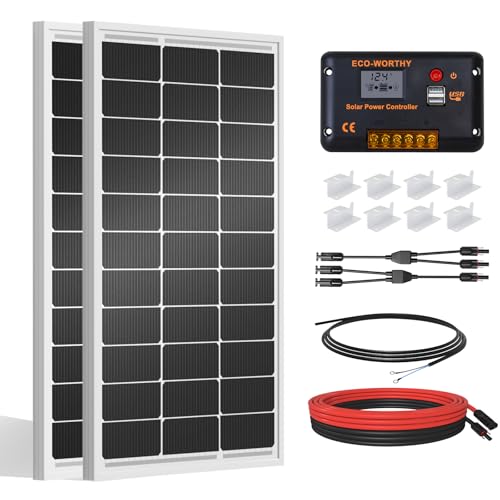
This is a mid-size kit designed for higher daily output. It combines a high-efficiency mono panel array with a 30A PWM controller. It suits RVs, campers, and small boats needing more daily energy, with a robust aluminum frame and IP65-rated junction box for weather resistance. It’s best for users who expect longer sunny days or a larger battery bank. A caveat is that PWM controllers are generally less efficient than MPPT in extreme temperatures or partial shade; plan for adequate battery storage to maximize days with less sun.
GCUSSZ 1000 Watt Solar Panel Kit

Choose this high-capacity kit when you need substantial off-grid power. It features two 500W flexible monocrystalline panels and a 40A PWM controller, enabling power delivery to larger battery banks and higher-load appliances. Best for campers with higher energy demands or remote cabins needing reliable daytime charging. Limitation: the kit uses PWM, which may be less efficient than MPPT in partial shade or highly variable sunlight; ensure proper panel placement and ventilation to minimize heat loss.
Renogy 200W Starter Kit with 2×100W Panels

Best for users seeking balanced capacity and proven reliability. The kit includes two 100W mono panels and a 30A PWM controller, offering solid daily output around 1000Wh under ideal sun. It benefits RVs, boats, and off-grid trailers. The stronger panel area increases mounting space requirements, which could be a constraint on compact vehicles. Consider space and mounting options when choosing this two-panel configuration.
Weznbtev 100W Monocrystalline Kit

Designed for beginners and easy installations, this 100W kit pairs a mono panel with a 30A PWM controller. It’s best for first-time installers, small RVs, or a lightweight cabin system. A limitation is the modest power capacity, which may require larger battery storage for multiple high-draw appliances or extended off-grid use in cloudy climates.
Buying Guide
What should you consider when choosing a monocrystalline solar panel kit?
- Power needs: Estimate daily watt-hours and select kit output accordingly. Higher daily needs favor 200W–1000W kits with larger battery storage.
- Controller type: PWM controllers are affordable and straightforward; MPPT controllers are more efficient in variable sun and higher voltage systems.
- Panel configuration: One 100W panel is compact, while multiple panels increase space needs but boost output.
- Climate and installation: Consider wind, snow loads, and mounting surface. Look for weather-rated components and sturdy frames.
- Warranties and service plans: Long-term coverage on panels and electrical components supports durability in off-grid use.
Practical considerations for buyers
- Space: Ensure mounting area fits the panel dimensions and allows airflow to prevent overheating.
- Battery compatibility: Match the controller to your battery type (sealed, gel, flooded, or lithium) for proper charging profiles.
- Expandability: If plans include growing power needs, choose kits that can be upgraded with extra panels or a larger controller.
- Weather readiness: Look for IP-rated components and robust cabling to handle sun, rain, and snow exposure.
FAQ
- Q: What is the main difference between PWM and MPPT controllers? A: PWM controllers are simple and affordable, while MPPT controllers optimize energy by adjusting voltage to maximize charging efficiency, especially in varying sunlight.
- Q: Can I install these kits on a boat or RV? A: Yes. Most kits are designed for RVs, campers, boats, and off-grid cabins, with weather-resistant components.
- Q: How many watts should I start with for a small setup? A: For light daily use, 100–200W kits are common starters; for higher usage, consider 300–1000W configurations.
- Q: Do these kits work in cloudy conditions? A: They still produce electricity but at reduced efficiency. Better performance comes from larger arrays and suitable battery storage.
- Q: Is the warranty important? A: Yes. A long-term warranty on panels and a solid controller warranty protect against manufacturing defects and early failures.
- Q: Can I add more panels later? A: Many kits support expansion, but verify compatibility with your controller voltage and wiring plan.