Best Wireless Occupancy Sensor Switches for Modern Homes
Clear, concise answers: this guide highlights top wireless occupancy sensor switches ideal for hands-free lighting in homes. Each product is chosen for reliable motion sensing, easy installation, and compatibility with common lighting setups. Best for: small bathrooms or closets (single-pole switches), garages and workrooms (larger coverage), and smart-home enthusiasts who want seamless automation without rewiring. Below, compare five standout options, with quick notes on who they suit and any notable limitations.
| Product | Brand | Type | Best For | Notes |
|---|---|---|---|---|
| Lutron Maestro MS-OPS2 | Lutron | Single-Pole Wireless Occupancy Sensor | Bathrooms, garages, laundry rooms | Reliable XCT sensing; great for reading or typing without false offs |
| Lutron Maestro MS-OPS2H-2-WH | Lutron | 2-Pack Occupancy Sensor, Single-Pole | Homes needing two sensors at once | Same DNA as MS-OPS2; convenient in pairs |
| Lutron Caseta PD-OSENS-WH | Lutron | No-Wire Motion Sensor (Caseta) | Caseta-based smart homes with hubs | Works with Caseta ecosystem; no wires required |
| TOPGREENER TDOS5-HL-W-2PCS | TOPGREENER | No-Neutral, 2-Pack | New installations without neutral wire | Flexible wiring; wall plate included |
| ELEGRP TDOS-10 Pack | ELEGRP | No-Neutral, Single-Pole | Budget-friendly, CFL/LED/Incandescent mix | Slim profile; universal compatibility |
Lutron Maestro Motion Sensor Light Switch (MS-OPS2)

Features include automatic on/off based on motion and XCT technology to prevent premature shutoffs. Best for small spaces where you want lights to respond to entry and exit without fuss. The MS-OPS2 is sized for single-pole circuits and suits bathrooms, closets, or laundry rooms. Caution: designed for single-pole use; not a multi-location solution without additional hardware.
Lutron Maestro 2-Pack (MS-OPS2H-2-WH)

This bundle mirrors the single-pole MS-OPS2 with two sensors in one package. Best for homes needing synchronized occupancy control in two rooms or zones. It helps prevent lights staying on when both rooms are in use. Caution: still single-pole per switch; ensure your wiring supports two independent sensor installations.
Lutron Caseta Smart Motion Sensor (PD-OSENS-WH)
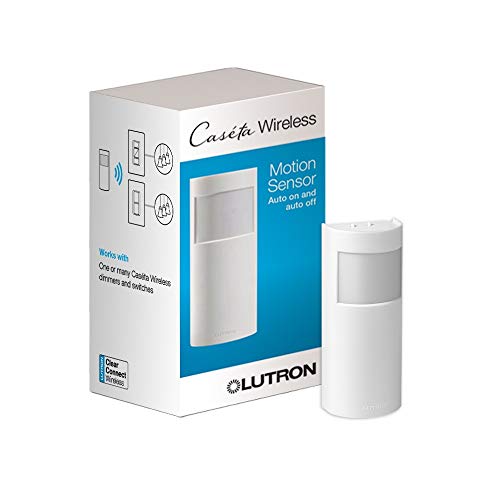
Best for Caseta-based smart homes. This no-wire sensor integrates with Caseta dimmers, switches, and fans via the Caseta hub, enabling coordinated lighting scenes. Choose this if you already rely on Lutron Caseta products and want automated control across devices. Limitation: requires Caseta hub and compatible devices to unlock full functionality.
TOPGREENER TDOS5-HL-W-2PCS

Two-pack no-neutral motion sensor switches designed for straightforward installations. Best for projects where the neutral wire is unavailable. It supports occupancy mode (auto on/off) and vacancy mode for manual override. Caution: not suitable for multi-way configurations; check wiring in fixed rooms before installation.
ELEGRP Occupancy Sensor Switch (No Neutral, 10 Pack)

Best for wide-scale replacements in homes with CFL/LED and incandescent bulbs. No neutral wire required, though grounding may be needed for full function. UL Listed and designed for single-pole use. It’s a budget-friendly option with a slim profile that fits common wall boxes. Caution: some older circuits may experience flicker if bulbs are incompatible with sensor thresholds.
Buying Guide
- Wiring needs: No-neutral options simplify retrofits in older houses, but some models require neutral for full functionality. Check your wiring before choosing.
- Compatibility: If you use Caseta, the PD-OSENS-WH integrates most with Caseta devices. For other ecosystems, consider Lutron MS-OPS2 or TOPGREENER models that emphasize compatibility with standard loads.
- Installation location: Bathrooms and garages benefit from higher sensitivity and wider coverage. For small rooms, a compact sensor with 180° FOV is often enough.
- Modes: Occupancy mode auto-on/auto-off is common, but some switches offer vacancy modes or manual override. Decide which mode matches your lighting habits.
- Energy savings: Sensors that auto-off after a delay save more energy, but ensure the delay time aligns with your typical room dwell times.
- Durability and safety: Look for UL-listed models and those with durable housings for high-traffic areas like hallways or laundry rooms.
FAQ
- Q: Do wireless occupancy switches require a hub? A: Some do (like Caseta PD-OSENS-WH) while others operate independently with built-in sensing.
- Q: Can these switches work with existing smart-home setups? A: Yes, many integrate into larger ecosystems; check compatibility with your hub or smart home app.
- Q: Are these suitable for LED bulbs? A: Yes, most models support LED, CFL, and incandescent loads, but verify wattage limits per device.
- Q: Will the sensor turn lights off if I’m sitting still reading? A: Advanced sensing (like XCT) helps avoid false offs during minor motions such as typing or reading.
- Q: Can I install these switches in multiple rooms? A: Yes, you can install multiple switches; some bundles simplify purchasing for two rooms.
- Q: Do no-neutral switches require grounding? A: Some models require grounding for proper operation; follow manufacturer instructions.