Best Quiet Small Gas Generators for Home Use and Camping
When shopping for a small gas generator that stays quiet, look for inverter technology, low THD power, and compact design. This guide highlights five reliable options ideal for cabin backups, camping, or job sites where quiet operation matters. Each pick targets a specific buyer: weekend campers, homeowners needing a light-duty backup, or mobile workers who require clean power for electronics. The table below summarizes key specs to quickly compare the top picks.
POXURIO 2450-Watt Inverter Generator

Powerful 2450 starting watts and a compact 1.6-gallon tank deliver reliable basics for essential tools, sump pumps, and RV air conditioners. Inverter technology provides a clean sine wave, supporting sensitive electronics. Best for homeowners needing dependable, portable backup power or campers who need a compact generator with steady output. Caution: fuel capacity supports moderate runtimes, but larger jobs may require refueling.
AIVOLT 1600W Super Quiet Inverter Generator

Best for light electronics and camping, the AIVOLT unit delivers 1600 starting watts and 1260 running watts with THD under 3%. It runs up to 8 hours at 25% load, aided by ECO mode for fuel savings. Ultra-quiet at 57 dBA and weighs about 28 pounds for easy carrying. Choose this if you want minimal noise and great portability for radios, laptops, phones, and small tools. Limitation: not ideal for heavy power tools or big appliances.
Oxseryn 2800-Watts Portable Inverter Generator

This model provides 2800 peak watts and 2000 running watts, with a 1.1-gallon tank and fuel indicator. It supports multiple ports (2×120V, 1×12V DC, 1×USB, 1×Type-C) and ECO mode for longer runtimes. Best for campers and small backup needs where multiple devices must be charged, including power tools or laptops. Caution: may be heavier to transport than smaller units.
All Power America 2000W Portable Inverter Generator

Powered by a 79.7cc gas engine, this unit delivers 2000 starting watts and 1800 running watts with THD under 3%. It’s ultralight at under 40 pounds and supports sensitive electronics like TVs and laptops. Best for campers and small backup scenarios where weight and portability are priorities. Limitation: fuel capacity yields moderate runtimes at higher loads.
WEN 2350-Watt Inverter Generator
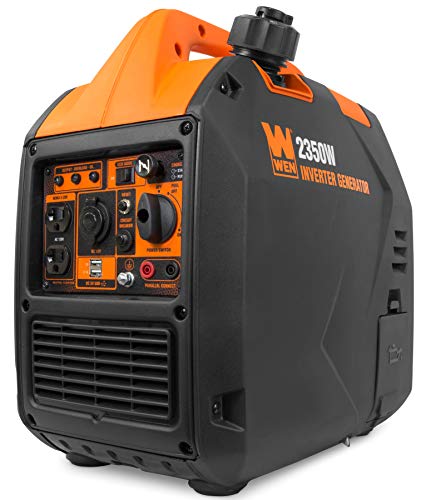
With 2350 surge watts and 1900 running watts, the WEN unit offers solid power for sensitive electronics. It’s ultralight at about 39 pounds, designed for easy transport and storage. Best for small job sites or camping where quiet operation and reliable power are necessary. Caution: real-world runtime may vary with load, and noise is higher than ultra-quiet microgenerators at full power.
Buying Guide
- Power needs: Determine starting vs. running watts. Select a model with at least 20-25% more starting watts than your heaviest load to avoid overloads.
- Noise level: Inverter generators typically span 50–60 dBA at a given distance. For campgrounds and neighborhoods, aim for 50–57 dBA for comfortable operation.
- Fuel efficiency: ECO or economy modes reduce fuel use at light loads. Consider runtimes at 25% and 50% load to estimate daily fuel needs.
- Portability: Weight, carry handles, and compact dimensions influence transport to campsites or job sites. Ultralight models are ideal for hikers, while heavier units may suit a fixed backup station.
- Outlets and connectivity: Check the port mix (120V, USB-C, USB, RV, 12V). More ports improve versatility for charging multiple devices.
- Fuel type and safety: Gas-powered units are convenient but require proper storage and ventilation. Ensure EPA compliance and check for automatic shutoff features for safety.
Frequently Asked Questions
- What is the quietest small inverter generator? Inverter generators typically top out in the 50–57 dBA range at a given distance; models like the AIVOLT and ERAYAK lines are designed for minimal noise in portable setups.
- What size generator should I choose for camping? Choose based on your essential loads. For lights, phones, and a small fridge, 1500–2000 running watts often suffices; for larger appliances or tools, 2500–4000 running watts may be needed.
- Is THD important for electronics? Yes. A THD of under 3% is generally safe for laptops, TVs, and CPAP machines, reducing risks from power surges or unstable power.
- Can these generators run overnight? Yes, with proper fuel, but runtime depends on load. ECO modes help extend runtimes by reducing engine speed at partial loads.
- Are these generators EPA compliant? Most models listed are EPA-compliant, designed to meet emission standards for residential use.
- Do I need a parallel capability? Some models offer parallel-ready options to merge output with another unit for higher power needs. Check product specs for compatibility.