Best Plug-in Carbon Monoxide Detectors for Home Safety
Answering your search for reliable plug-in carbon monoxide detectors with battery backup, this guide highlights five strong options. These devices are best for homeowners and renters who want dependable CO monitoring with easy power options, portable use, and clear alerts. Each product section explains who it’s best for and why it’s a solid pick, along with a practical caveat.
Summary Table of Selected Products
| Product | Brand | Best For | Notes |
|---|---|---|---|
| Kidde Carbon Monoxide Detector, 3rd Edition | Kidde | Homes needing simple plug-in with AA backup | Rotating plug; LED indicators |
| First Alert CO606 Plug-In Alarm | First Alert | Multi-room monitoring with backup | Advanced electrochemical sensor |
| Kidde CO Detector, 9V Backup, Digital Display | Kidde | Users wanting visual CO readout | Digital display, travel-ready design |
| SITERWELL Plug-In CO Detector, 10-Year Battery | SITERWELL | Long-term reliability and travel-friendly | 10-year battery, high accuracy |
| Kidde CO Detector, AA Battery Backup, 5th Edition | Kidde | Clear CO levels, flexible placement | Backlit display, rotating plug |
Kidde Carbon Monoxide Detector, 3rd Edition
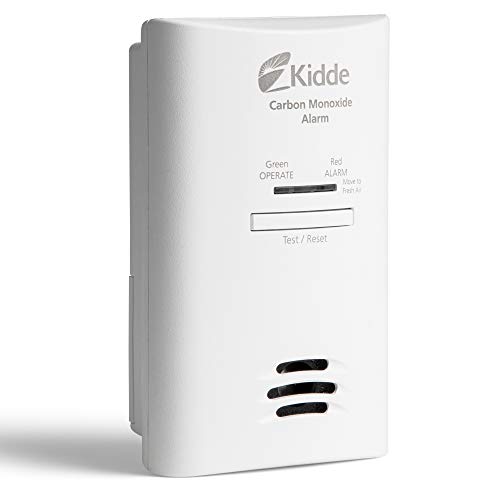
Best for quick setup in a standard outlet with straightforward operation. This model plugs into a 120V outlet and includes AA battery backup to maintain protection during power outages. The device emits an 85 dB alarm and features LED status indicators for at-a-glance safety. Ideal for single-room monitoring or as a first CO detector in a home renovation.
Who it’s best for: renters and small households needing a reliable plug-in solution without complex wiring. Why selected: simplicity, clear alerts, and backup power ensure continuous monitoring.
Caution: Battery backup reduces reliance on main power, but battery life should be checked regularly to ensure ongoing protection.
First Alert CO606 Plug-In Alarm with Battery Backup

Best for multi-room safety with a single, simple interface. This plug-in CO detector works with any standard outlet and includes a battery backup for continuous monitoring during outages. Its electrochemical sensor provides reliable detection, and the audible alarm alerts households to dangerous CO levels. Great for home environments needing straightforward deployment across rooms.
Who it’s best for: families seeking multi-room coverage; households prioritizing continuous operation during power interruptions. Why selected: dependable sensor technology and a clear alarm signal.
Caution: Placement matters—avoid placing directly above or beside fuel-burning appliances to minimize false readings caused by immediate CO sources nearby.
Kidde Carbon Monoxide Detector, 9V Backup, Digital Display
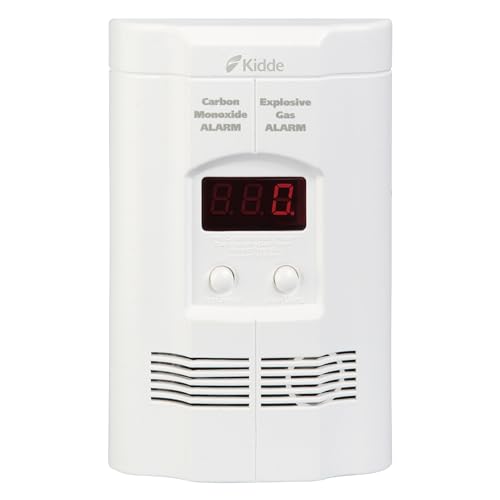
Best for users who want a visible CO reading. This model plugs into a standard outlet with a 9-volt backup battery and features a digital LED display showing the current CO level. It combines a familiar alarm with a readout that makes it easier to gauge risk, useful for households monitoring CO trends over time.
Who it’s best for: homeowners who value real-time CO level visibility. Why selected: the digital readout makes interpretation quick and clear.
Caution: 9V battery backups require periodic battery checks; if the battery is weak, the unit may silence or fail to alarm in a power outage.
SITERWELL 10-Year Battery CO Detector

Best for travel-ready and long-term installation. This plug-in CO detector uses an electrochemical sensor with a built-in 10-year battery, ensuring ongoing protection even during power failures. The device maintains 85 dB alarm levels and has a simple plug-in design suitable for homes, hotels, or small offices.
Who it’s best for: frequent travelers, RV users, or households wanting a long-lasting solution with minimal maintenance. Why selected: the extended battery life reduces replacement frequency.
Caution: While designed for travel, ensure it’s used in a location with adequate airflow and away from strong drafts that could affect readings.
Kidde Carbon Monoxide Detector, AA Battery Backup, 5th Edition

Best for reliable, everyday CO monitoring with a backlit display. This plug-in detector operates on 120V AC and includes two AA batteries to protect against power outages. Its rotating plug fits both vertical and horizontal outlets, and the LED status light indicates hazard levels clearly. Ideal for bedrooms and living areas where nighttime visibility matters.
Who it’s best for: households prioritizing a clear display and flexible outlet orientation. Why selected: battery backup plus a backlit display enhances safety during sleep.
Caution: The rotating plug may extend into adjacent outlets; plan outlet placement to avoid crowding nearby devices.
Buying Guide
Key considerations when choosing a plug-in carbon monoxide detector with battery backup:
- Power backup: Choose models with AA or 9V backups to maintain protection during outages. Assess how often you expect power failures in your area.
- Sensor type: Electrochemical sensors are standard and reliable for CO detection. Look for models highlighting electrochemical sensing in product features.
- Display and alerts: Digital backlit displays help you monitor CO levels at a glance. Audible alarms should be loud enough to wake occupants in sleeping areas.
- Outlets and placement: Rotating plugs improve placement flexibility. Avoid direct placement above heat sources or fuel-burning appliances to minimize false positives.
- Multiple units: For larger homes, consider 2–3 detectors to cover bedrooms, living spaces, and kitchens. Some products offer 3-pack options for convenience.
- Maintenance: Regularly test units using the Test button and replace batteries as recommended. Note that some models include long-life batteries, reducing maintenance intervals.
- Portability: If you travel or stay in rentals, a light, travel-ready CO detector can provide protection beyond the home environment.
FAQ
- Do plug-in CO detectors require battery backups? Yes. Battery backups ensure continuous protection during power outages, which are common in storms or power grid issues.
- Is a digital CO readout important? A digital display helps you gauge CO levels quickly and can assist in assessing whether action is needed, especially for households with vulnerable occupants.
- Where should CO detectors be placed? Place them on every level of the home, preferably near sleeping areas and common living spaces, away from direct heat or cooking vents.
- Can I rely on a single detector for whole-house safety? For larger homes, multiple detectors provide better coverage and reduce monitoring blind spots. Consider one detector per floor or per bedroom cluster.
- What maintenance is required? Regular testing, battery replacement as needed, and periodic sensor replacement if the device indicates end-of-life or reduced performance.
- Are these detectors compatible with existing hardwired alarms? The products listed are plug-in with battery backups. They are generally standalone units and do not integrate with hardwired alarm systems unless specified by manufacturer.