Best Commercial Electrician Tool Bag Options for Pro-Grade on-the-Job Organization
Direct answer: for professional electricians, a 37-pocket tool bag set from Occidental Leather and sturdy, multi-pocket carriers from CLC, Gatorback, and AUROPEAK provide the best balance of durability, organization, and comfort. This guide highlights five top picks designed for daily commercial use, with who each bag suits best, plus a practical buying guide to compare features, size, and load support. Ideal buyers include journeymen needing hand-specific tool placement, contractors seeking heavy-duty durability, and technicians prioritizing stable, organized storage on crowded job sites.
Summary table of selected products:
| Product | Best For | Key Feature | Approx. Pockets |
|---|---|---|---|
| Occidental Leather Commercial Electrician’s Tool Bag Set – Large | Journeymen needing maximum organization | HD Ranger Work Belt, no-spill tool holder | 37 pockets |
| Occidental Leather Commercial Electrician’s Tool Bag Set – X-Large | Busy crews with lots of gear | Expanded pocketing, durable build | 37 pockets |
| Occidental Leather Commercial Electrician’s Tool Bag Set – Medium | Site techs with moderate tool kits | Hand-specific holders | 37 pockets |
| Gatorback B240 Electrician’s Combo | Pro comfort and fit during long days | Pro-Comfort back support belt | Multiple pouches, box design |
| CLC Custom LeatherCraft 1528 Large | Organized small parts and tools | 22 pockets, plastic tray included | 22 pockets |
Occidental Leather Commercial Electrician’s Tool Bag Set – Large

Best for pro electricians who need maximum organization and durability on demanding jobs. The 37 pockets and tool holders support efficient workflow, with a no-spill tool holder system and hand-specific placement for rapid access. Built with the HD 3″ Ranger Work Belt and a comprehensive set of components, this bag favors pros who require a complete belt setup. Caution: heavier belt systems may require assistance to wear comfortably after travel or long shifts.
Occidental Leather Commercial Electrician’s Tool Bag Set – X-Large
Better for crews with extensive tool kits or larger gadgets. This X-Large version keeps the same hand-specific design and no-spill system while offering heightened capacity. Best for contractors or master electricians who juggle more tools daily. Limitation: the larger belt may be less convenient for tight spaces or shorter technicians.
Occidental Leather Commercial Electrician’s Tool Bag Set – Large
Choose this if you need a balanced setup with robust interior organization and a standardized component set. The included belt, bag, and tool case optimize workflow, while hand-specific holders ensure predictable access. Caution: weight distribution matters when fully loaded to prevent back strain on long days.
AUROPEAK 17-Inch Electrician Tool Bag

Best for electricians and mechanics who need a foldable, portable bag with many pockets. The 46-pocket layout includes exterior and interior compartments, plus a foldable design for easier transport. Choose this if you want a flexible option for on-site tasks and travel. Limitation: not a traditional hard-side bag, so some tools may require careful placement to prevent sag under heavy loads.
CLC Custom LeatherCraft 1528 Large Electrical and Maintenance Tool Carrier
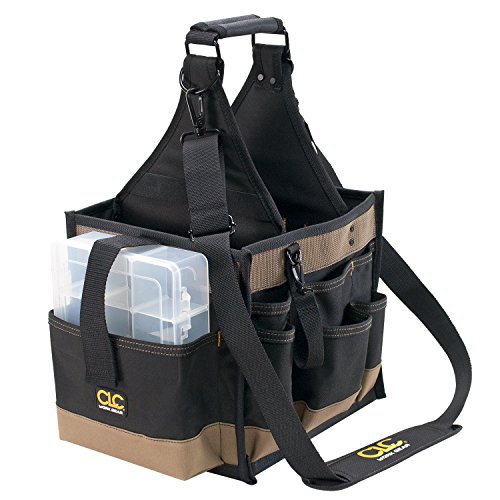
Best for professionals who need organized storage with a built-in plastic tray. The 22 pockets are complemented by an 8.75″ x 6.5″ tray to keep small parts organized. The box-shaped design reduces tipping and helps keep tools accessible. Limitation: heavier tools may sag if the bag is fully loaded without proper balance.
Buying Guide
What size and capacity should I choose?
Evaluate pocket count, the presence of a plastic tray, and overall bag dimensions. Larger bags support more tools but can be heavier and harder to maneuver in tight spaces. Consider your typical tool load and the job site environment.
Which design features matter most for electricians?
Hand-specific tool holders, no-spill systems, belt integration, and a reinforced bottom help prevent tool loss and increase efficiency. A box-shaped interior prevents sagging and preserves quick access.
What materials and durability are important?
Look for reinforced stitching, riveted stress points, durable canvases or leather, and waterproof or waxed finishes. A hard bottom or molded base improves stability on uneven surfaces common on job sites.
How important is comfort and wearability?
Consider weight distribution, belt design, and whether a back-support feature is included. A well-padded belt with ergonomic straps reduces fatigue during long shifts.
Is portability a factor?
Foldable or collapsible bags save space for transport. Removable pouches and modular components help tailor the kit to different tasks and crew sizes.
How do I compare these options quickly?
- Best for extreme organization: Occidental Leather Large, X-Large, or Medium with hand-specific holders.
- Best for comfort on long days: Gatorback B240 with Pro-Comfort belt.
- Best for small parts organization: CLC 1528 with the plastic tray.
Frequently asked questions
- What makes a tool bag suitable for commercial electricians?
Durability, high pocket count, belt integration, and tool retention features for fast access on busy job sites.
- Should I choose a larger bag for more tools or a compact one for mobility?
Choose based on daily tasks: larger bags for comprehensive tool kits; compact ones for limited tool sets and tighter spaces.
- Are hard-bottom bags better for electricians?
- Is a belt-based system necessary?
Not always, but it improves workflow by keeping essential tools within arm’s reach during work.
- What maintenance helps extend bag life?
Regular cleaning, prompt edge repair, and drying waxed canvases to maintain water resistance.
Yes, hard bottoms improve stability and protect tools when placed on rough surfaces.