Best Desktop PC Battery Backup Options for Power Resilience
Answering the need for reliable, short-term power during outages and everyday surges, this guide compares five top desktop PC battery backup units. Ideal for home offices, small businesses, and dedicated workstations, these models protect computers, Wi-Fi routers, and peripherals. The best fit depends on load, outlets, and features like LCD displays or sine-wave output. Below, you’ll find quick-start summaries and detailed product sections to help you choose.
| Product | Best For | Key Advantage |
|---|---|---|
| APC BE600M1 | Light to medium workloads | Compact with essential battery backup and surge protection |
| CyberPower CP1500PFCLCD | Active systems with power management needs | Pure sine wave, LCD panel, USB-C/Type-A charging |
| APC BX1500M | Mid-range home offices | High backup capacity with AVR and multiple outlets |
| CyberPower CP1500AVRLCD3 | Networked environments | Intelligent LCD, AVR, many outlets |
| CyberPower EC850LCD | Compact setups with eco features | Ecologic mode, compact form |
APC BE600M1 UPS Battery Backup
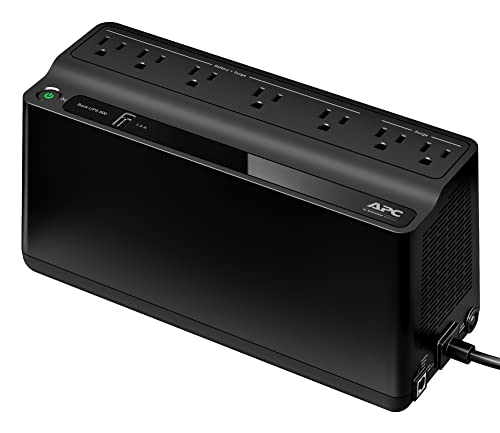
Best for: A compact setup with essential backup needs for a single computer, router, and a few peripherals. The BE600M1 provides short-term power during outages to keep your internet connection active and allow a safe shutdown. It includes five battery-backed outlets plus two surge-only outlets, suitable for a small desk setup with limited space.
Why selected: It delivers around 23 minutes of runtime at a 100W load, which is adequate for orderly shutdowns and graceful reboots. Surge protection guards devices from power events that happen during normal operation.
Caution: Designed for lighter loads; avoid using high-wattage devices on all battery-backed outlets simultaneously to maximize runtime.
CyberPower ST425 Standby UPS

Best for: Small home offices or entertainment centers needing reliable surge protection with modest backup power for essential devices like a modem or router during brief outages.
Why selected: This compact unit provides eight outlets—four with battery backup and surge protection, and four surge-only—making it a straightforward upgrade from a basic surge protector.
Caution: Runtime is limited for high-demand devices; prioritize essential gear on battery-backed outlets to maximize usefulness.
CyberPower CP1500PFCLCD PFC Sinewave UPS
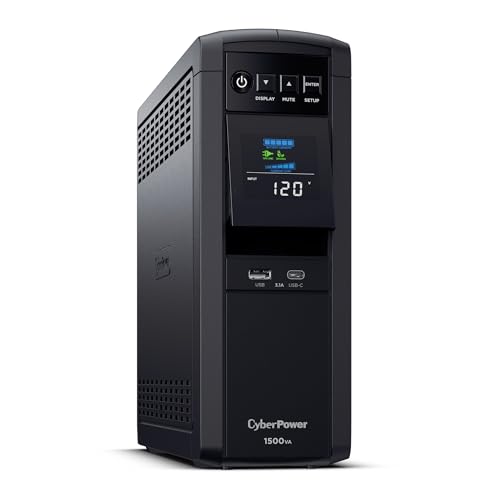
Best for: Active workstations and home offices with power-sensing devices, where a stable, clean sine-wave output matters for sensitive equipment and power-efficient hardware.
Why selected: 1500VA/1000W capacity with six battery-backed outlets and six surge-protected outlets, plus a multifunction color LCD panel that shows real-time battery and power status. It supports USB charging and offers detailed power condition insights.
Caution: Heavier than smaller units; ensure desk or rack space accommodates its footprint and cord length.
GOLDENMATE 1000VA/800W LiFePO4 UPS

Best for: Users wanting a long-lasting lithium-based backup with more outlets and a longer lifecycle than traditional lead-acid designs.
Why selected: Uses LiFePO4 batteries with a claimed lifespan over 10 years and more than 5000 charge cycles. It features eight outlets with surge protection and battery backup, plus a built-in Battery Management System and cooling.
Caution: High-power cooling may activate under heavy battery use, and pricing may reflect the advanced battery chemistry.
APC BX1500M Back-UPS Pro

Best for: Mid-range home offices requiring reliable backup power with strong surge protection and console readouts.
Why selected: Offers high backup capacity with AVR (automatic voltage regulation) and a variety of outlets for essential devices. It’s well-suited for ensuring uninterrupted operation of computers, modems, and NAS devices during outages.
Caution: Ensure the device’s total wattage does not exceed its backup capacity when plugging in multiple peripherals.
Buying Guide: How to Choose the Right Desktop UPS
- Estimate the wattage of your critical devices (computer, monitor, router, NAS). Choose a UPS with at least a 20–50% higher wattage rating than your total load to ensure adequate runtime.
- Count battery-backed outlets and surge-only outlets. If you rely on network gear, ensure those devices can share outlets with surge protection and battery backup.
- If you have sensitive electronics or active PFC power supplies, prefer a sine-wave or AVR-capable UPS. This minimizes voltage dips and ensures stable performance.
- LCD panels and software integration help monitor battery health, load, and runtime estimates, aiding proactive maintenance.
- Consider space on your desk or under it. Tower models typically offer more outlets and easier cable management than compact desktops.
- Lithium-based UPS batteries offer longer lifespans (and potentially lighter weight) but may come at a higher upfront cost. Lead-acid batteries are common and reliable but require periodic maintenance and replacement.
- UL-certified units provide a basic level of assurance for electrical safety and performance.
Frequently Asked Questions
- What is a UPS and why do I need one for a desktop PC? A UPS provides immediate power during outages and protects against surges, allowing safe shutdowns and preventing data loss or hardware damage.
- How do I determine the right UPS size for my setup? Add up the wattage of essential devices and choose a unit with a wattage rating comfortably above that total. Consider desired runtime for outages.
- Is a sine-wave UPS better for computers? Yes. Sine-wave UPS units provide cleaner power, which is especially important for sensitive electronics and active PFC power supplies.
- Do I need a UPS with USB charging ports? USB ports are convenient for charging phones or tablets during outages and staying connected when power is briefly out.
- Can I use a UPS with multiple surge-protected devices? Yes, but assign the most critical devices to battery-backed outlets to maximize runtime when needed.
- How long does a UPS battery typically last? Runtime depends on load and battery size. Battery lifespan varies by chemistry; lithium-based options generally offer longer lifecycles compared to lead-acid.