Best Lighting for Basement Stairs to Improve Safety and Convenience
The basement stairs can be among the trickiest areas in a home, especially when lighting is poor. This guide highlights top motion-activated, rechargeable, and stick-on options that brighten stairways, hallways, and landings without clutter. Each pick prioritizes energy efficiency, easy installation, and reliable sensor performance to reduce nighttime missteps and make stairs safer for all ages.
| Product | Brand | Type | Key Benefit |
|---|---|---|---|
| Dual Motion Sensor Light Indoor | GOOMEEYA | Plug-in LED strip | Dual sensors & high brightness |
| Guankai 8 Pack Rechargeable Motion Sensor Stair Light | Guankai | Rechargeable RGBW lights | Color options & long battery life |
| WILLED Stair Lights Indoor (8-Pack) | WILLED | Rechargeable night lights | Rechargeable, long runtime |
| innofox 6-Pack Stick-on Motion Sensor Lights | innofox | Battery-operated sticks | Stick-on versatility |
| Guankai 8 Pack RGBW Motion Sensor Lights | Guankai | Rechargeable with RGBW | Color-adjustable ambiance |
Dual Motion Sensor Light Indoor — GOOMEEYA

This plug-in LED strip uses dual PIR sensors on both ends, ideal for two-entry spaces like stairs or hallways. It activates automatically with motion and dims to reduce glare. At up to 2000 lumens across 150 warm white LEDs, it provides bright, even illumination along the stair run while remaining energy-efficient. The built-in dimmer lets you adjust brightness to suit different times of night, making it a versatile option for basement stair lighting.
8 Pack Motion Sensor Stair Light — Guankai

These battery-operated lights turn on in darkness when motion is detected and stay on for about 20 seconds. Their frosted shade provides soft, eye-friendly lighting that helps prevent sudden glare. With an estimated four months of battery life per unit, they are a practical option for temporary or rental spaces where hard wiring isn’t feasible.
WILLED Stair Lights Indoor (8-Pack)

This 8-pack includes rechargeable night lights with dual-mode operation (motion sensor and always-on). A 3-in-1 charging cable supports multiple units, reducing battery waste and ongoing maintenance. In motion mode, the lights can last up to two months on a single charge, while always-on mode provides continuous lighting for up to 16 hours per cycle, offering flexible use across basement stairs and hallways.
WILLED Motion Sensor Night Light — 6 Pack

Rechargeable with a 500 mAh battery, these lights offer two modes: motion-activated and always-on. They are designed to illuminate dim stairways without harsh brightness. The 3-in-1 USB-C charging cable allows rapid, simultaneous charging of multiple units, making them ideal for longer basement stair runs that need consistent, low-profile lighting.
Innofox 6-Pack Stick-on Motion Sensor Lights
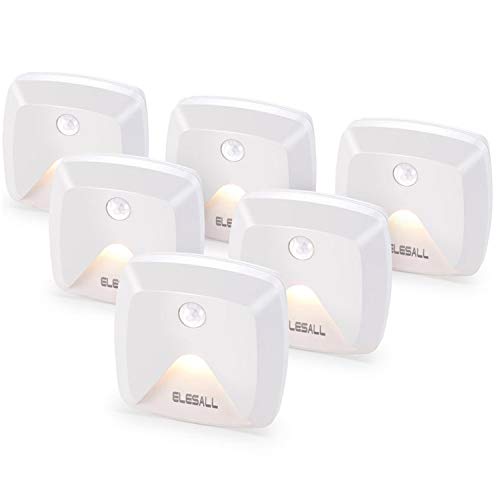
These stick-on lights are battery-operated and designed for quick, tool-free installation. The motion sensor activates lighting when darkness is detected and movement is present, with a 120-degree detection angle and a 10-foot range. They switch off after 20-25 seconds of inactivity, making them a reliable option for basement stairs, closets, and hallways where temporary or portable lighting is needed.
Guankai 8 Pack RGBW Motion Sensor Lights

This collection combines rechargeable operation with RGBW color options and infinitely dimmable brightness. The motion sensor triggers when ambient light is low and motion is detected, with a 12-foot sensing range and a 120-degree angle. A practical choice for stylish basement lighting that can adapt to different moods or tasks, such as reading or nighttime periods in the stairs area.
Buying Guide
Key purchase considerations for basement stair lighting include the power source, installation method, sensor performance, brightness, and battery life. Below are perspectives to help you choose:
- Power type: Plug-in options deliver steady brightness but require proximity to an outlet. Battery-operated sticks and rechargeable units offer flexibility and easier installation in retrofits or rental spaces.
- Sensor reliability: Look for dual sensors or wide-angle motion detection (120 degrees or more) to reduce missed activations and ensure lights come on when needed.
- Brightness and color temperature: For basement stairs, a warm to soft white (2700K-3000K) often balances visibility with comfort. Higher lumens (around 1500-2000 lm for strips) provide ample illumination along long stair runs.
- Run time and battery life: Rechargeable units minimize ongoing costs, while battery-powered options require battery tracking. Consider average daily use to estimate replacement or charging frequency.
- Form factor and installation: Stick-on lights work great for quick installs and irregular stair layouts. Long strips can provide continuous lighting along the entire stair path, but may require a power source.
- Ambience vs. safety: RGBW options add color flexibility for mood lighting, but ensure core safety brightness is maintained for nighttime navigation.
- Durability and mounting: For basements, choose moisture-resistant housings if humidity is a concern, and verify mounting hardware supports secure attachment on stairs and walls.
- Maintenance: Favor units with easy recharging or battery replacement schedules and simple cleaning to maintain performance over time.
When selecting lighting for basement stairs, the goal is to create a safe, unobtrusive path that activates reliably with motion yet minimizes glare and energy use. The products listed above offer a range of plug-in, rechargeable, and stick-on options to fit different basement layouts, power availability, and maintenance preferences. Use the Buying Guide as a quick reference to compare features and find the best balance between convenience, safety, and cost.