Best Ways to Find Wires Behind Drywall for Safer Installations
When running new cables or mounting devices, locating wires behind drywall is essential to prevent damage and hazards. This guide highlights practical options for DIYers and professionals who need reliable in-wall wire access. The top picks below are best for hiding or routing low-voltage cables, finding studs and live wires, and making clean, safe openings. Suitable buyers include homeowners planning TV wall-mount setups, interior remodelers installing network runs, and contractors seeking quick, safe pass-through solutions.
| Product | Best For |
|---|---|
| VCE Brush Wall Plate Cable Pass Through with Bracket | Low-voltage cable routing behind walls, TV cable management |
| ECHOGEAR TV Cord Hider for Wall Mounted TV | Quick DIY pass-throughs with included hole saw |
| ZhiYo In-Wall Cable Management Kit | Secure pass-throughs with locking wings for stable installs |
| Povlen Stud Finder Wall Scanner | Detects studs, live AC wires, pipes, and more |
| Larbeti Wire Perforated Strips | Marking and organizing wires for clean, secure routes |
VCE Brush Wall Plate Cable Pass Through

Best for: Everyday low-voltage cable runs behind walls, especially when concealing HDMI, coaxial, and network cables. The two-pack offers flexibility for multiple openings. The in-wall cable management plate and bracket are designed to be durable and flame-retardant, prioritizing safety in standard residential installations. Choose this if you want a simple, plug-and-play solution that keeps cabling tidy behind a TV or media center.
Caution: Ensure openings align with wall studs and avoid routing high-power or in-wall-rated power cables through these plates. Not intended for heavy power transmission.
ECHOGEAR TV Cord Hider Kit

Best for: Home theater installations where a quick, all-in-one solution is preferred. This kit includes two pass-throughs, locking brackets, and a hole saw drill attachment, enabling a clean, professional hiding of TV cables behind walls. It’s well suited for HDMI, auxiliary, and other low-voltage cables, with a simple 20-minute setup promise. Choose this if you want a complete DIY package that reduces guesswork.
Caution: In-wall power cables require compliance with local electrical codes. Do not use with non-designated high-power wiring beyond the kit’s intended use.
ZhiYo In-Wall Cable Management Kit
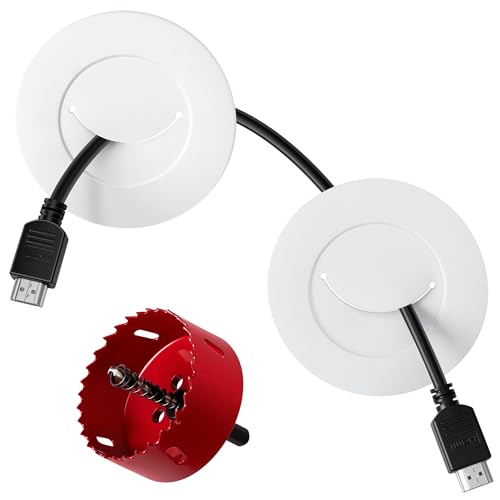
Best for:Users seeking adjustable, durable pass-throughs with secure locking wings for behind-the-wall cable hiding. The kit includes a 2-pack of pass-throughs and a heavy-duty hole saw attachment, enabling a robust install. It’s a solid choice for those who want stronger stabilization in drywall walls and to keep cables neatly concealed over time.
Caution: Ensure the wall thickness and hole size match the kit specifications to avoid fit issues during installation.
Povlen Stud Finder Wall Scanner Detector

Best for: Professionals and DIYers who need reliable detection of studs, metal, live wires, pipes, and joists before cutting. The device features multiple scanning modes, a bright LCD, and audible alerts for easy interpretation. Choose this when you want a versatile tool to prevent accidental cuts and to map behind-wall objects accurately.
Caution: The scanner’s effectiveness can be influenced by wall thickness, insulation, and the presence of metal studs; verify results with multiple passes in complex walls.
Larbeti 32.8Ft Electrical Wire Perforated Strips

Best for: Organizing and routing multiple cables with a neat, perforated design. The strips are flexible, insulated, and corrosion-resistant, making them suitable for long runs and easier tangling control behind walls. Choose this when you want a simple, tidy, and reusable method to guide cables through wall cavities and initial wiring routes.
Caution: These strips are best used for marking and light routing rather than heavy-duty or in-wall power applications. Confirm compatibility with your wall materials and cable types before use.
Buying Guide: Key Considerations For Finding Wires Behind Drywall
What type of cables are you hiding? For low-voltage cables such as HDMI, coax, Ethernet, and speaker wires, wall plates or pass-through kits are typically sufficient. For power runs, always adhere to local electrical codes and use in-wall rated components.
How to choose between plates, pass-throughs, and studs finders? Wall plates and pass-throughs create clean openings and reduce exposed wiring. Stud finders help you avoid damaging wires and locate safe cutting zones before installation. For complex walls, a combination of both tools is often best.
What installation difficulty should you expect? Kits with included hole saws or locking wings simplify secure mounting. If you’re uncertain about wall thickness or material, select products designed for drywall up to standard thickness and use appropriate screws and anchors.
Safety and code considerations: Use fire-rated materials where required and avoid running high-power or non-designated cables through low-voltage pass-throughs. Keep cables labeled and organized to support future maintenance.
Frequently Asked Questions
- Do I need to cut into the wall to run wires? Yes, for clean, hidden routing behind drywall. Use pass-through plates or a kit with a hole saw attachment for accuracy.
- Can I hide power cables behind the wall? Only with in-wall rated power cables and components that comply with local electrical codes. Consult a licensed electrician for high-power runs.
- What tools help locate wires before cutting? A stud finder or wall scanner can detect studs, live wires, and pipes, reducing the risk of cutting into existing electrical lines.
- What’s the difference between a wall plate and a cable pass-through kit? Wall plates provide a burial point for cables with a finished faceplate, while pass-through kits include components to route cables through the wall securely and neatly.
- How do I choose the right hole saw attachment? Pick one that matches your hole size requirements and is compatible with your drill for a clean, snug fit.
- Is spacing important when routing multiple cables? Yes. Leave enough space to avoid pinching or bending cables, which helps maintain signal integrity and reduces wear over time.