Best Solar Panels With Rechargeable Batteries for Outdoor Power
Discover the top solar panels with built-in rechargeable batteries that deliver reliable power for trail cameras, security cameras, and outdoor devices. This guide highlights five options, fits different setups, and explains who benefits most. Whether you’re hunting, camping, or securing a remote property, these picks help reduce battery waste and keep devices powered during extended outdoor use.
| Product | Best For | Key Benefit |
|---|---|---|
| WingHome Trail Camera Solar Panel | Trail cameras in remote areas | Integrated 2000 mAh battery, universal 6V/12V compatibility |
| Zonkasion 8W Solar Panel Kit | Security cameras, camping, emergency power | 12,000 mAh battery, IP65 weather rating |
| YCTechCam 5W Panel | 5V cameras, quick setup | USB-C/Micro USB outputs, easy installation |
| Stealth Cam Sol-Pak | All wireless/cellular trail cameras | 5,000 mAh battery, 12V panel |
| SOLPERK 20W Panel Kit | Boat, car, RV, heavy-duty needs | Monocrystalline cells, smart MPPT controller |
WingHome Trail Camera Solar Panel Kit
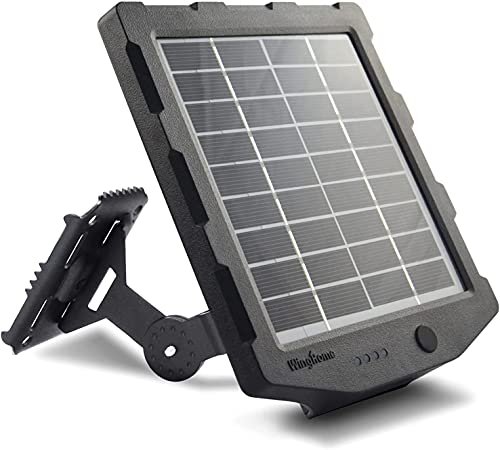
The WingHome solar panel kit is designed for trail cameras and other 6V or 12V systems. It includes a built-in 2000 mAh rechargeable lithium battery and supports common plug sizes 4.0×1.7 mm and 5.5×2.1 mm. This setup is best for hunters or wildlife watchers who want a compact, weather-resistant charging solution that reduces the need for frequent battery changes. Choose this if your device uses low to mid-range power and you want a simple, all-in-one charger.
Best for: remote trail cameras and outdoor cameras that run on 6V/12V power. The kit’s build quality helps in rugged environments. A potential limitation is its smaller internal battery, which may require more frequent top-ups on very power-hungry devices.
8W Solar Panel With 12V Battery Pack

This Zonkasion kit includes an 8W solar panel and a substantial 12,000 mAh rechargeable battery. It features multiple outputs (Micro USB, DC35135, USB-C) and is designed to power Ring, Wyze, Arlo, and other battery-powered cameras, plus emergency kits for camping and travel. It’s best for users who need wide compatibility across several camera brands and a robust battery reserve for extended outages. Note that larger camera systems may demand more power than this kit provides on busy days.
YCTechCam 5W Solar Panel For Security Cameras

The YCTechCam panel delivers a compact, 5W output with USB-C and Micro USB options. It’s compatible with many micro USB or USB-C powered cameras, but not with certain brands like Arlo, Blink, Ring, or Google Nest. Best for small, 5V battery cameras that require quick, straightforward charging with easy installation. The trade-off is limited compatibility with some popular camera ecosystems.
Stealth CAM Sol-Pak Solar Battery Pack

The Sol-Pak combines a 12V solar panel with a 5,000 mAh Li-ion battery and insulated cable, tailored for Stealth Cam wireless and cellular trail cameras. It emphasizes extended field life by leveraging renewable energy, making it a strong choice for uninterrupted field use. Best for Stealth Cam systems or similar external-jack setups. A caveat is that compatibility should be verified for non-Stealth Cam models with external 12V jacks.
Zonkasion Trail Camera Solar Panel (Mini 12V/6V)

This Zonkasion mini panel supports both 6V/1.5A and 12V/1A output, with USB-C as a common option. It offers 3W of continuous solar supply via a built-in 5000 mAh battery, designed to keep trail cameras powered day and night. It’s a solid pick for diverse camera brands that require a flexible output. Consider this if your setup uses multiple camera models that can share a single solar charging solution; otherwise, larger panels may provide more headroom on bright days.
Buying Guide: Solar Panels With Rechargeable Batteries For Outdoors
Key considerations help you pick the right kit for your needs. Start by identifying the camera type and power draw. Higher wattage panels with larger batteries suit remote sites and high-usage devices, while smaller kits fit compact cameras and casual use. Weather resistance and IP ratings matter in exposed environments; aim for IP65 or IP66 for rain, snow, and dust protection.
Output compatibility is critical. Ensure the panel outputs match your camera’s input: USB-C, Micro USB, DC jacks, or 5V/12V configurations. If you operate multiple devices, consider a higher-capacity battery and a panel with multiple charging options. A built-in MPPT controller helps optimize charging efficiency, especially in fluctuating conditions.
Montage and mounting options influence performance. Adjustable brackets, 360-degree mounts, and rugged frames improve sun exposure and durability. For mobile setups (boats, campers, vehicles), ensure the kit includes corrosion resistance and weatherproof cabling. Finally, verify that the system can operate in your climate—cold, heat, wind, and rain all affect efficiency and longevity.
FAQ
- What is the main advantage of a solar panel with a built-in battery? It provides a ready source of stored energy, reducing the need for frequent battery replacements and ensuring power during low-sun days.
- Which panel type is best for trail cameras? Panels with integrated batteries and multiple output options that support 6V/12V cameras tend to be most versatile for trail cameras.
- Do all solar panels work in cloudy weather? They generate power with reduced efficiency on cloudy days; larger batteries can help maintain device operation in less sunny conditions.
- Is IP66/IP65 necessary for outdoor use? For harsh weather environments, IP66 or IP65 provides reliable dust and water resistance, reducing damage risk from rain or snow.
- How many watts should I choose for a security camera system? Higher wattage panels (8W–20W) paired with larger batteries suit multiple cameras or longer uptime in remote locations.
- Can I use these panels for non-camera devices? Yes, most kits provide 5V/USB-C or 12V outputs suitable for lights, phones, or tablets as long as power needs align with the outputs.