Best Under-Sink Reverse Osmosis Systems for Quick, Drilled-Free Installation
Looking for reverse osmosis (RO) that doesn’t require drilling a hole through your sink? These under-sink RO systems are designed for easy installation, including top-mounted faucet options and compact, space-saving designs. They’re ideal for homeowners seeking high-purity water with minimal disruption. The top choices below cover a range of needs—from traditional five- and six-stage systems to tankless designs and space-saving models. Each product includes a link to its Amazon listing for quick comparison and purchase.
| Product | Why It Stands Out | Best For |
|---|---|---|
| iSpring RCC7 | NSF-certified, top-mounted faucet design for simple install; strong contaminant reduction | Budget-conscious households needing reliable, certified filtration |
| iSpring RCC7AK | Alkaline remineralization stage for enhanced taste; clear first-stage housing | Homes wanting mineral-rich, balanced water |
| iSpring RCC7AK-BLK | Alkaline 6-stage with stylish black faucet; same top-mount convenience | Modern kitchens seeking style plus mineral restoration |
| Waterdrop G5P500 | Seven-stage filtration with 0.0001 μm membrane; space-saving, tank-based | Smaller kitchens needing compact, effective filtration |
| Waterdrop G3P600 | 8-stage, tankless option with smart features; versatile installation | Tech-friendly homes prioritizing space and monitoring |
iSpring RCC7: NSF Certified, Top-Mounted RO System

The iSpring RCC7 is a high-capacity, five-stage RO system built for under-sink use with a top-mounted faucet design. It removes up to 99% of more than 1,000 contaminants, including PFAS, chlorine, fluoride, lead, arsenic, and more. It reduces TDS by 80–90% and helps prevent mineral buildup in your plumbing. The system is NSF/ANSI 58 certified, aligning with standard American quality expectations. It features a transparent first-stage housing for quick filter checks and a leak-prevention design with a check valve. Best for households seeking reliable filtration without electrical components.
Who it’s best for: Families needing solid contaminant reduction with straightforward installation and no electrical needs. Why selected: It balances strong performance, certification, and a simple top-mount faucet setup. Limitation: No remineralization stage, so taste may be less mineral-rich than multi-stage alkaline models.
iSpring RCC7AK: Alkaline 6-Stage With pH+ Remineralization

The RCC7AK adds an alkaline remineralization stage to the standard RO process, restoring minerals and boosting pH for better-tasting water. It uses a top-mounted faucet and offers efficient impurity reduction across a broad contaminant range. The AK filter helps maintain a more natural mineral balance compared to classic RO systems. Best for: Buyers who want mineral-rich, balanced water without compromising filtration strength. Limitation: Alkaline benefits come from the AK stage, which may slightly complicate filter replacement timing versus non-alkaline models.
iSpring RCC7AK-BLK: Sleek Black Faucet, 6-Stage RO
This variant mirrors the RCC7AK with an updated black faucet to fit modern kitchens. It maintains a top-mounted faucet installation and a six-stage filtration path that includes mineral restoration. Best for: Those wanting a stylish, high-performance RO with the same mineral-enhancing benefits as the RCC7AK. Limitation: Aesthetic choice may influence perceived value if your kitchen styling differs from the black faucet look.
Waterdrop G5P500: 7-Stage, Tank-Based RO
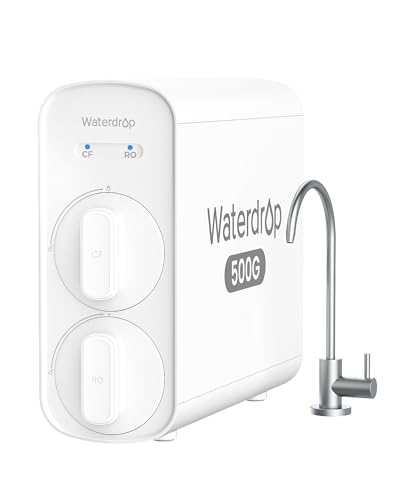
The Waterdrop G5P500 is a seven-stage RO system with a 0.0001 μm membrane and a 2:1 pure-to-drain ratio. It’s designed to fit compact under-sink spaces and emphasizes space-saving tank design, reducing clutter under the sink. It targets contaminants such as PFAS, lead, chlorine, and heavy metals while providing a clean taste. Best for: Households needing strong filtration in a space-efficient layout. Limitation: Tank-based systems require periodic tank sterilization and can be slower to respond during heavy-use periods.
Waterdrop G3P600: 8-Stage Tankless RO With Smart Faucet

The Waterdrop G3P600 uses an eight-stage filtration process with a 0.0001 μm RO membrane, offering robust contaminant reduction and improved taste. It’s tankless, saving kitchen space and reducing the chance of stale-water storage. A smart faucet provides TDS monitoring and filter-life tracking for maintenance planning. Best for: Tech-forward homes seeking maximum filtration efficiency with real-time monitoring. Limitation: Tankless systems may require more precise installation and component access, which can affect DIY setup for some users.
Buying Guide: How To Choose An RO System That Fits No-Drill Install Needs
- Think top-mounted faucet compatibility: Many models in this list support installation above the sink to avoid drilling. Look for a patented top-mounted faucet design for ease of installation.
- Filter stages and mineral balance: Decide if you prefer standard 5-stage filtration or include an alkaline remineralization stage for better taste and pH balance.
- Tank vs tankless: Tank systems store purified water for quick use but require more under-sink space; tankless units save space but can demand careful setup and ongoing maintenance checks.
- Certifications and contaminants: NSF/ANSI certifications (58, 58/372) indicate adherence to filtration standards. Ensure the system targets contaminants relevant to your water supply.
- Maintenance and filter life: Consider availability of replacement filters, ease of inspection (clear housings), and replacement intervals.
Buying Considerations At A Glance
- Installation: Preference for top-mounted faucets to avoid drilling; confirm under-sink space allowances.
- Water quality goals: Choose systems with remineralization if you want mineral-balanced water.
- Operational needs: Tanked vs tankless impacts space usage and water delivery speed.
- Certifications: NSF/ANSI approvals provide assurance of contaminant reduction claims.
- Maintenance: Look for clear filter housing, easy access, and readily available replacements.
Frequently Asked Questions
- Do all RO systems require drilling a hole for a faucet?
– No. Many under-sink RO systems use top-mounted faucets that sit above the sink, avoiding the need to drill new holes. - What is the benefit of an alkaline remineralization stage?
– It restores minerals and raises the pH to create water that tastes more balanced and similar to natural spring water. - Is a tankless RO system better than a tanked one?
– Tankless designs save space and reduce storage-related stagnation, but installation can be more complex and may require more precise water flow setup. - Are these systems certified for safety?
– Several models here are NSF/ANSI certified, indicating compliance with established filtration standards. - How often should I replace filters?
– Replacement frequency depends on water quality, usage, and filter type; refer to the manufacturer’s guidance for each model.