Best 500 MCM Crimp Lugs for Heavy-Duty Electrical Panels
Answering the question “which 500 MCM crimp lug should I choose?” this guide highlights reliable options for high-current electrical connections. Best for industrial panels, service entrances, or large distribution setups, these lugs ensure solid conductivity and durable performance. This overview targets buyers seeking corrosion resistance, ease of inspection, and compatibility with 500 MCM conductors. The top products are evaluated for best use cases, with clear guidance on who benefits most and what to watch for. A quick buying table helps compare key attributes at a glance.
| Product | Conductor Range | Material | Best For |
|---|---|---|---|
| Panduit LCA500-12-6 Copper Compression Lug | 500 kcmil | Copper | Best overall for color-coded dies and easy inspection |
| Penn-Union LA-500 4 AWG-500 MCM Aluminum Solderless Lug | 4 AWG–500 MCM | Aluminum | Budget-friendly aluminum option for large feeders |
| OCHIKI 1Pack Lug Two Conductors, Grounding Panelboard Lug | 500 MCM–4/0 STR | Aluminum | Dual-conductor distribution panel connections |
| Burndy YA342N 2 Holes 500 MCM Lug | 500 MCM | Copper | Long, chamfered design for easier insertion |
| Penn-Union LA-500 4 AWG-500 MCM Aluminum Solderless Lug | 4 AWG–500 MCM | Aluminum | Reliable aluminum lug with broad compatibility |
Panduit LCA500-12-6 Copper Compression Lug

The Panduit LCA500-12-6 is a copper compression lug rated for 500 kcmil conductors and 1/2-inch studs. It features color-coded barrels to match proper crimp die sets, an inspection window to verify full conductor insertion, and tin plating to resist corrosion. Best for installers who value die-index accuracy and visual verification during crimping. Choose this if you prioritize reliable die compatibility and corrosion resistance; avoid if you require an aluminum lug for lighter weight or different conductor material.
- Best for: precise die selection and corrosion resistance in high-current applications
- Pros: Color-coded barrels, clear inspection window, tin plating
- Limitations: Copper lug is heavier than aluminum alternatives
Penn-Union LA-500 4 AWG-500 MCM Aluminum Solderless Lug
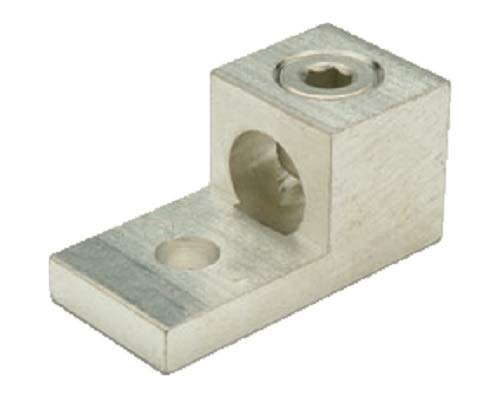
The Penn-Union LA-500 aluminum lug covers a wide range from 4 AWG to 500 MCM. It is a solderless aluminum option designed for large feeders where weight and cost matters. Best for budget-conscious installations requiring a robust aluminum lug with broad conductor compatibility. This option is suitable for general distribution panels but consider aluminum’s lower conductivity relative to copper in extreme conditions.
- Best for: cost-effective aluminum solution for large feeders
- Pros: Broad conductor range, solderless design
- Limitations: Aluminum conductivity may be lower than copper in some scenarios
OCHIKI 1Pack Lug Two Conductors, Grounding Panelboard Lug

This dual-conductor lug supports 500 MCM to 4/0 STR wire ranges. It emphasizes stable conductivity with a design that secures both conductors, potentially improving reliability in distribution panels. Best for panels needing two-conductor connections in a compact footprint; beware that dual-conductor lugs may require more space than single-conductor options.
- Best for: dual-conductor panel connections
- Pros: Stable current transmission, two-conductor compatibility
- Limitations: May require larger mounting area
Burndy YA342N 2 Holes 500 MCM Lug

The Burndy YA342N provides two holes for 500 MCM copper lugs with a chamfered, long design. This configuration is intended to ease conductor insertion and improve reliability in tight spaces. Best for installations requiring multi-point connections at 500 MCM size. Consider the longer lug length in panel layouts; it may limit available clearance in crowded enclosures.
- Best for: two-hole, easy insertion at 500 MCM
- Pros: Chamfered design, copper construction
- Limitations: Longer length may affect clearance in narrow panels
Penn-Union LA-500 4 AWG-500 MCM Aluminum Solderless Lug

This listing mirrors the LA-500 family with a focus on aluminum construction for 4 AWG to 500 MCM. It’s suitable for broad distribution needs where the weight advantage of aluminum matters. Best for general-purpose aluminum lugs in large-diameter applications; keep in mind aluminum’s conductivity and potential oxidation without proper cleaning and torque.
- Best for: general aluminum lug needs in distribution panels
- Pros: Wide conductor range, solderless
- Limitations: Aluminum conductivity vs copper; consider color coding for installation consistency
Crimp Supply 4 Ga.-500 MCM Aluminum Mechanical Screw Lugs

The Crimp Supply lug is an aluminum, non-insulated mechanical screw lug suitable for 4 AWG to 500 MCM. It uses a 3/8″ stud size and is designed for mechanical, screw-type connections. Best for durable mechanical screw applications where a simple, repeatable crimp is beneficial. Limitations include the lack of insulation, so consider enclosure protection and wiring code requirements.
- Best for: mechanical screw connections in aluminum lug assemblies
- Pros: Non-insulated, straightforward installation
- Limitations: No insulation; ensure enclosure separation and code compliance
Relaxweex 1 Pack Mechanical Panelboard Lug

The Relaxweex lug supports 500 AWG to 4/0 STR wire and is designed for dual-conductor connections. It emphasizes versatile wire compatibility and robust aluminum composition for durable, long-term use. Best for panels needing flexible conductor options and two-conductor efficiency; avoid if you require copper conductivity or compact single-conductor spaces.
- Best for: versatile, two-conductor mechanical lug in aluminum
- Pros: Wide conductor range, dual-conductor design
- Limitations: Aluminum conductivity considerations; space requirements for dual conductors
Buying Guide: How to Choose the Right 500 MCM Crimp Lug
Key considerations help ensure a reliable, code-compliant choice:
- Conductor material: Copper lugs offer excellent conductivity and corrosion resistance but are heavier; aluminum lugs are lighter and often more cost-effective, though conductivity is lower.
- Current rating and conductor range: Verify the lug supports 500 MCM or 500 kcmil and matches your wire size range, including any dual-conductor needs.
- Mounting and footprint: Check lug length and stud size to fit enclosure clearance and mounting hardware in your panel or cabinet.
- Crimp or screw method: Decide between compression (crimp) lugs and mechanical screw lugs based on installation practices and serviceability.
- Corrosion resistance: Tin or plated finishes improve longevity in humid or outdoor environments; consider environmental exposure.
- Inspection and verification: Features like inspection windows or color-coded dies help ensure proper installation and future maintenance.
FAQ
- What is 500 MCM in lug terminology?
500 MCM (or 500 kcmil) refers to a large conductor cross-section used in high-current applications. Lugs designed for this size accommodate large feeders and service entries.
- Is aluminum lug acceptable for main service panels?
Yes, aluminum lugs are common for large feeders due to weight and cost advantages, but ensure the environment and service requirements justify their use and that conductivity goals are met.
- Should I choose copper or aluminum lugs for outdoor installations?
Copper provides superior corrosion resistance and conductivity, while aluminum is lighter and often cheaper. For outdoor use, consider corrosion protection and enclosure sealing.
- Do lugs with inspection windows matter?
Inspection windows help verify full conductor insertion, reducing installation errors and enhancing reliability during maintenance checks.
- What is the difference between crimp and screw-type lugs?
Crimp (compression) lugs require a crimping tool for a tight bond with the conductor, while screw lugs use a threaded stud and screws. Choose based on existing tools and serviceability needs.
- Can I mix copper and aluminum conductors with the same lug?
No. For safety and reliability, use lugs rated for the specific conductor material and size, and follow manufacturer guidelines and electrical codes.