Best Intrinsically Safe Flashlights for Hazardous Environments
When shopping for intrinsically safe flashlights, choose models that are rated for hazardous locations and designed for reliable performance in challenging environments. This guide highlights five strong options and explains who each is best for, with practical notes on limitations to avoid surprises on the job.
Buyer quick-look: the following table summarizes the five selected models, focusing on light output, special features, safety ratings, and ideal use cases.
| Product | Light Output | Safety Rating | Best For |
|---|---|---|---|
| 235 lm spotlight / 130 lm flood | ETLus Intrinsically Safe | General hazardous sites needing dual-light versatility | |
| 105 lm | ATEX/Class I, Division 1 | Inspection work in confined spaces | |
| 210 lm | ETLus Intrinsically Safe | Hazardous locations with laser alignment needs | |
| 140 lm | cETLus/ATEX/IECEx/MSHA | Above/below ground work with safe light source | |
| 245 lm | Class I, Division 1 | Hands-free beam versatility with magnets |
Nightstick XPP-5422GMX X-Series Dual-Light Flashlight
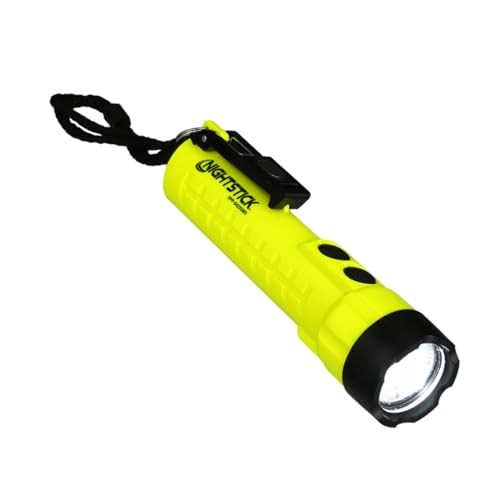
The Nightstick XPP-5422GMX features both a spotlight and a floodlight, totaling 235 and 130 lumens respectively. It is ETLus listed for intrinsically safe operation and includes dual magnets for hands-free use. Best for general hazardous environments where both focused and wide-area illumination improves visibility. Do not rely on dual-light modes if battery life is a primary concern in extended shifts.
Best for: Technicians and inspectors who need flexible lighting without swapping tools. Limitations: Dual-light modes may reduce runtime in high-output scenarios.
Streamlight 66300 Stylus Pro HAZ-LO Intrinsically Safe Pen Light

The Stylus Pro HAZ-LO is a compact pen light designed for hazardous environments. It offers a bright white LED with extended runtime and is ATEX and Class I, Division 1 rated. The rugged polymer body and unbreakable lens are suited for confined spaces and daily inspections. A potential trade-off is that its output is lower than bulkier flashlights, which may affect visibility in large areas.
Best for: Inspectors and technicians needing a small, safe, and reliable light for close work. Limitations: Lower overall brightness compared to larger flashlights.
Nightstick XPP-5422GXL Intrinsically Safe with Green Laser

The XPP-5422GXL combines a 210-lumen flashlight with a 3 AA-powered system and a visible green laser. It is ETLus listed for intrinsically safe use in hazardous locations. This model is ideal when laser alignment or marking is part of tasks in potentially explosive atmospheres. One limitation is the need for AA batteries, which may run out in long field sessions.
Best for: Fieldwork requiring precision alignment in hazardous settings. Limitations: Requires regular battery replacements for uninterrupted use.
Nightstick XPP-5420G 3 AA Intrinsically Safe Flashlight

The 5420G delivers 140 lumens from a 3 AA setup and is listed for ATEX, IECEx, and MSHA hazardous locations. Its 180-meter beam distance supports longer-range visibility in the field. It is a practical choice for workers who want a straightforward, reliable light with broad compatibility across certifications. A potential downside is moderate brightness relative to some competitors.
Best for: Workers needing a dependable, certification-backed flashlight with simple operation. Limitations: Mid-range brightness may be insufficient for very large or dark work sites.
Streamlight 68780 Dualie 3AA Intrinsically Safe Flashlight

The Dualie 3AA combines two adjustable beams with a rugged, magnet-equipped design for hands-free use. It is Class I, Division 1 rated and runs on three AA batteries with a runtime suitable for long shifts. This model is well-suited for tasks requiring flexible beam options and strong mounting capability. A caution: battery type and availability should be considered for extended deployments.
Best for: Industrial tasks needing both spot and flood beams with magnetic hands-free use. Limitations: Requires three AA batteries, which may affect weight and replacement logistics.
Buying Guide: Key Considerations for Intrinsically Safe Flashlights
- What safety rating do you need? Look for ETLus, ATEX, IECEx, or MSHA listings based on your work environment.
- What beam configuration matters? Decide between spot, flood, dual-light, or laser-equipped models depending on tasks.
- Battery type and runtime? Consider whether AA, AAA, or other cells fit your shift length and availability.
- Durability and construction? Prioritize rugged polymers and shatter-resistant lenses for harsh sites.
- Magnet and clip utility? If hands-free operation is essential, magnetic bases and robust belt clips help.
- Laser features? If precision alignment is necessary, ensure laser safety and certification align with job requirements.
- Size and weight? For inspections in tight spaces, a compact pen light may be preferable to a larger model.
FAQ
- What does intrinsically safe mean for flashlights? It indicates the flashlight is designed to prevent ignition of flammable substances by containing any electrical energy release within safe limits.
- Are green lasers common in intrinsically safe lights? Some models pair illumination with a green laser for alignment, but verify certification for your worksite.
- Can I use these lights in both above-ground and underground locations? Many are rated for both environments, but check specific certifications (ATEX/IECEx/MSHA) to ensure suitability.
- Do intrinsically safe lights require special batteries? Battery type varies by model; some use AA or AAA, others use standard lithium cells. Always carry spare batteries compatible with your model.
- Should I choose a dual-light flashlight over a single-beam model? Dual-light options provide versatility for different tasks, but may trade off single-beam brightness or runtime.
- Is magnetic mounting important for work? If you need hands-free operation, magnetic bases and clips are a practical enhancement.