Best Gas Powered Portable Generators for Reliable Power on the Move
Gas powered portable generators deliver on-demand electricity for outdoor adventures, home backup, and work sites. This guide highlights five top options that balance power, portability, and practicality for common American use cases—from RV trips and camping to emergency home power. The best picks vary by wattage, runtime, and noise level, so you can choose depending on whether you need quiet operation, higher surge power, or lightweight portability. The table below provides a quick snapshot of the featured models and their typical ideal buyers.
| Product | Peak Watts | Running Watts | Best For |
|---|---|---|---|
| Oxseryn 4400W Inverter | 4400 | 3400 | RV use and home backup |
| AIVOLT 1600W Inverter | 1600 | 1260 | Camping and small electronics |
| PowerSmart 1200W | 1200 | 900 | Lightweight travel and emergencies |
| AMERISUN 2500W Inverter | 2500 | 1900 | Camping and moderate power needs |
| Westinghouse 4650W | 4650 | 3600 | RVing and larger power loads |
Oxseryn Power Equipment 4400W Inverter Generator

The Oxseryn generator provides 4400 peak watts and 3400 running watts, making it well suited for RV camping and home backup. It features multiple outputs: two 120V AC ports, a 12V DC port, and an RV port. With ECO mode, it runs up to 14 hours at 25% load and includes a 2-gallon tank with a fuel gauge for quick fuel checks. This model is best for those needing portable power with reliable runtime during moderate loads.
Best for: RV owners and homeowners seeking portable, quiet operation with extended runtime. Caution: 2-gallon tank may require more frequent refueling under heavy loads.
Aceup Energy 1,200W Gas Powered Generator
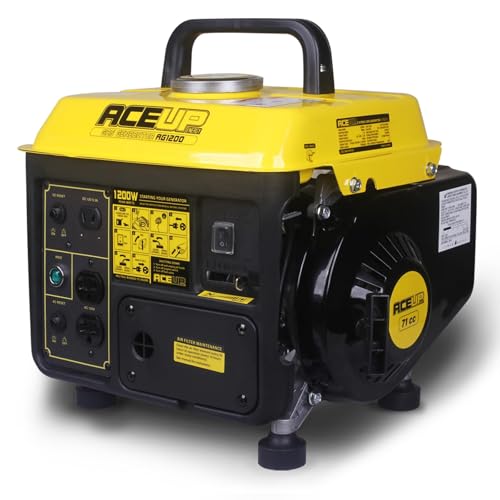
The Aceup Energy 1200W generator delivers 1200 peak watts and 900 running watts with a 71cc engine. It includes a 120V household outlet, a 12V DC power supply, and simple recoil start. Weighing about 35.3 pounds, it’s a compact option ideal for light-duty uses such as camping, small tools, or emergency power. It’s best for minimal load requirements and easy transport.
Best for: Individuals needing a compact, lightweight option for basic devices. Caution: Lower continuous output means it’s not suitable for larger appliances.
AIVOLT 1600W Super Quiet Inverter Generator

The AIVOLT unit delivers 1600 starting watts and 1260 running watts with a 60cc four-stroke engine. It’s designed for portability and fuel efficiency, offering up to 8 hours of runtime at 25% load with eco mode. Notably quiet at 57 dBA at 23 feet, it’s ideal for camping, home backup, or job sites where noise matters. It’s best for power-sensitive electronics and portable use cases.
Best for: Campers and home office backups needing quiet, reliable power. Caution: May be underpowered for high-load appliances like air conditioners.
AMERISUN 2500-Watt Gas Powered Portable Inverter

The AMERISUN inverter offers 2500 peak watts and 1900 running watts in a compact 39.7-pound frame. It emphasizes portability with quiet operation at around 69 dB at 23 feet. This model suits campers, tailgaters, and light home backup where noise and size matter. It provides robust output for essential devices during outdoor activities and emergencies.
Best for: Outdoor enthusiasts needing solid, quiet power without sacrificing mobility. Caution: Noise level is noticeable at closer distances.
Westinghouse 4650 Peak Watt Portable Generator
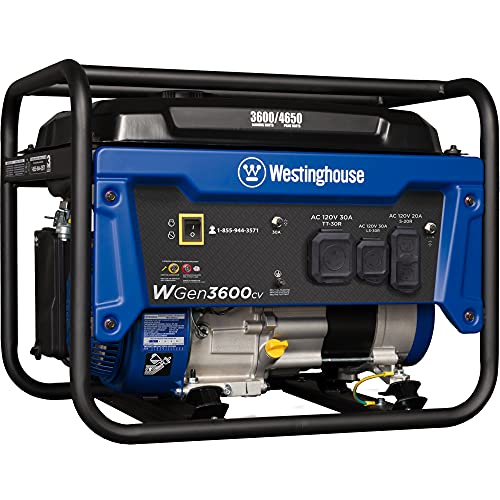
The Westinghouse 4650W model features 3600 running watts and 4650 peak watts with a 4-gallon fuel tank and a long runtime. It includes multiple outlets, such as two 120V duplex receptacles and an RV-ready outlet. It ships with oil, a funnel, a tool kit, and a user manual, enabling quick setup. This unit is best for RV users and households needing substantial portable power with generous runtime.
Caution: Heavier and bulkier than smaller models; ensure you have adequate transport capability.
Buying Guide: Key Considerations For Gas Generators
- Power needs: Match peak watts to start-up requirements of devices and running watts to continuous loads.
- Fuel capacity and runtime: Larger tanks extend runtime but add weight; consider expected load duration.
- Portability: Weight, handle design, and wheeled frames affect how easy it is to move the unit.
- Noise level: Inverter generators typically run quieter and are safer for sensitive electronics.
- Outlets and compatibility: Check available outlets (120V, RV, and 12V DC) to fit your devices.
- Fuel availability and efficiency: 2-stroke vs 4-stroke engines impact maintenance and efficiency.
- EPA/CARB compliance: Ensure local regulatory compliance if used in restricted areas.
- Safety features: Look for automatic low-oil shutdown and overload protection for protection and reliability.
Frequently Asked Questions
- What size generator do I need for home backup? — Choose based on essential loads; common options range from 1000W to 5000W for basic essentials, up to 12500W for more comprehensive backup.
- Are inverter generators quieter than traditional ones? — Yes, inverter generators typically produce less noise and cleaner power suitable for electronics.
- What is running watts versus peak watts? — Running watts cover continuous load; peak watts cover short surges for starting devices.
- Can I run a large appliance like a refrigerator on a 1600W generator? — It may be possible with surge considerations, but verify the refrigerator’s starting wattage and the generator’s peak watt capability.
- How long will a typical generator run on a full tank? — Runtime depends on load and tank capacity; many models offer several hours at light loads and fewer at heavy loads.
- Do I need a permit or transfer switch for home backup? — Some jurisdictions and home setups require transfer switches for safe connection to home circuits; check local codes.